This article contains spoilers for Xenoblade Chronicles X: Definitive Edition.
The Xenoblade Chronicles franchise has always danced on the edge of genre and narrative, stretching the limits of what a JRPG can be. From the sweeping fantasy of the original trilogy to the sci-fi isolation of Xenoblade Chronicles X, Monolith Soft has never been afraid to evolve. With the release of Xenoblade Chronicles X Definitive Edition finally tying its standalone world to the broader series through the metaphysical Rift Between Worlds, the studio now has an unprecedented opportunity to branch the series in two distinct directions.
Instead of forcing all future entries to juggle the differing expectations of fans of the mainline trilogy and X, Monolith Soft could mirror Atlus’ successful structure with Persona and Shin Megami Tensei. By creating two parallel yet philosophically linked games—Xenoblade Chronicles 5 and Xenoblade Chronicles X-2—Monolith Soft could embrace both narrative density and exploratory freedom, satisfying the full breadth of its passionate fan base.

Xenoblade Chronicles X Definitive Edition: 8 Best Party Compositions, Ranked
Use these strong team setups in Xenoblade Chronicles X Definitive Edition to significantly enhance combat damage and outcomes.
Xenoblade Chronicles 5 Can Be the Story Pillar
Like Persona 5, which evolved from Shin Megami Tensei into its own identity with strong themes, deep character arcs, and social metaphors, Xenoblade Chronicles 5 can build directly on the foundations of its predecessors. The original trilogy’s slow build from grounded conflict into cosmic revelations has become a signature of the series. By continuing this approach, Monolith Soft can give players another emotionally layered tale where fantasy and sci-fi collide.
In Xenoblade Chronicles 3, death isn’t just a mechanic—it’s the central question. Characters are literally born to die, cycling through endless war and reincarnation. The series consistently frames death not as an ending, but as a lens through which the meaning of life is understood. Xenoblade Chronicles 5 could return to these themes, pushing them even further now that X’s world is part of the greater continuity. It could explore humanity’s original beginnings—possibly on Earth—tying threads back to Xenosaga and even Xenogears.
The Rift Between Worlds introduced in Xenoblade Chronicles X Definitive Edition doesn't just unify timelines—it also reintroduces theological and metaphysical concepts from earlier Monolith Soft games. This area could be a critical narrative tool in Xenoblade Chronicles 5, allowing cross-world memory echoes or reincarnation as a core gameplay system.
Where Atlus uses Persona to comment on societal repression and identity, Monolith Soft can continue using Xenoblade Chronicles to dive into philosophical questions about memory, continuity, and the self. A new entry could inherit Xenoblade Chronicles 3’s character-driven structure while innovating through dual-world travel or soul-link systems—possibly even letting players embody reincarnated versions of past characters, echoing decisions across timelines.
Xenoblade X-2 Should Embrace Sci-Fi Exploration
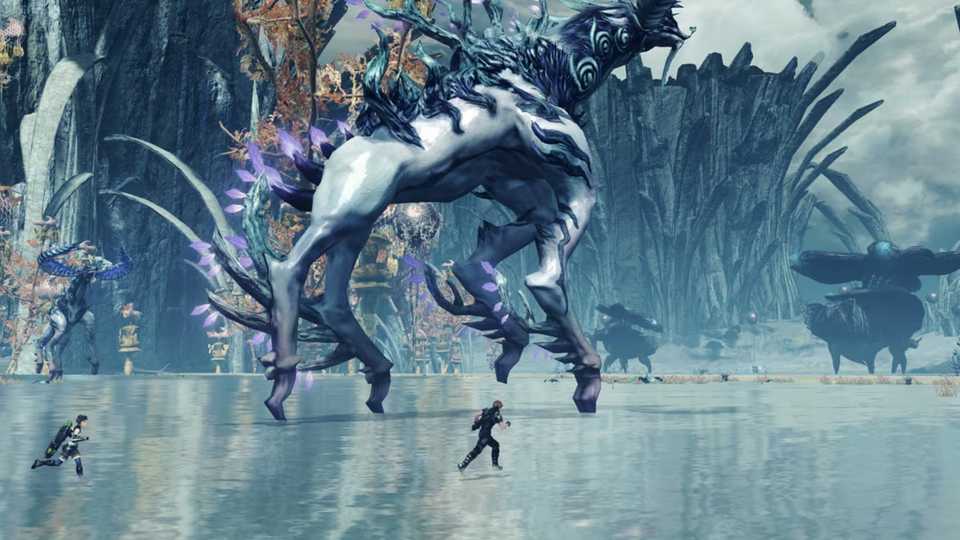
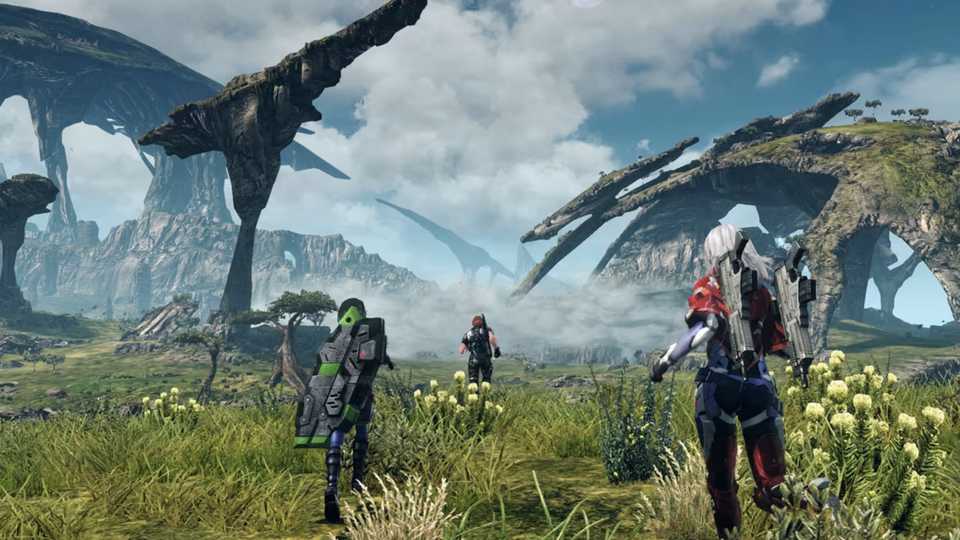
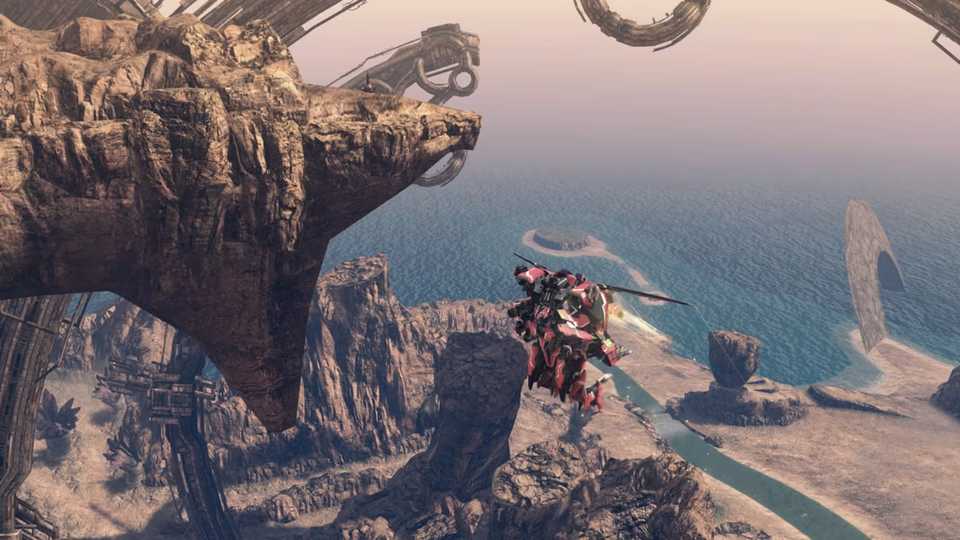
Meanwhile, Xenoblade Chronicles X-2 could fully double down on what made the original X so distinct. That game was never just about survival on an alien world, it was about adaptation. It gave players mechs, massive continents, modular weapon systems, and a sense of scale unseen in most JRPGs. The Definitive Edition confirmed that Mira is part of the larger cosmology, giving X's world a chance to continue as its own living, breathing branch of the Xenoblade narrative tree.
Much like Shin Megami Tensei has a colder, more mechanical approach to its themes compared to Persona, Xenoblade Chronicles X-2 could lean into minimalism, moral ambiguity, and environmental storytelling. Instead of long-winded cutscenes or complex party politics, it could emphasize exploration, player choice, and deciphering the world through ruins, AI remnants, and alien lifeforms. The story could center on the diaspora of humanity after Mira’s collapse: where do they go, and who do they become without a planet to bind them?
A scaled-back script, supported by heavy atmosphere and optional lore pickups, would make the game feel like a natural evolution. With Xenosaga’s Higher Domain and Xenoblade Chronicles 3’s Origin now “canonically” in play, X-2 could place the player in the role of a mythic wanderer—a sci-fi pilgrim whose goal is to find meaning in the remains of a civilization that never belonged to them in the first place.
Monolith Soft’s Kyoto studio has provided support for open-world design on The Legend of Zelda: Breath of the Wild. A team with this pedigree could bring even greater verticality and interactivity to Xenoblade Chronicles X-2, especially if the next game takes advantage of the hardware improvements in the upcoming Nintendo Switch 2.
The game wouldn’t need to feature traditional party systems. Instead, Xenoblade X-2 could offer modular solo builds, co-op play, or AI companions shaped by the player’s moral choices—reminiscent of the affinity-based AI system in X. This kind of title would allow Monolith Soft to keep a faster production cycle without sacrificing thematic ambition.

Monster Hunter Wilds and Xenoblade Chronicles X Are Strangely Two Peas in a Pod
Despite some obvious differences on the surface, Monster Hunter Wilds and Xenoblade Chronicles X share enough in common that fans may find overlap.
Two Xenoblade Games Can Serve One Legacy
A split-path strategy would let Monolith Soft deepen both branches of its universe without forcing compromise. Rather than cramming complex metaphysics and open-world traversal into a single game, it could embrace duality. Fans who love narrative depth, ensemble casts, and tightly plotted themes get Xenoblade Chronicles 5. Fans who want mechs, freedom, and exploration get Xenoblade Chronicles X-2.
This wouldn’t just be a quality-of-life decision; it would serve the lore. The Xenoblade series is inherently about division and convergence: of worlds, of ideologies, of selves. By developing two titles, the studio can turn this motif into a game structure. The concept of duality—present in Xenoblade Chronicles 2’s Blades, Xenoblade Chronicles 3’s Ouroboros forms, and the Rift Between Worlds—becomes literal. Two roads. Two games. One mythos.
It would also future-proof the series. Monolith Soft could stagger releases, using different teams for different games—just as Atlus does with Persona and Shin Megami Tensei. The studio already has four Tokyo branches and one in Kyoto. With smart project management, it could keep Xenoblade games coming at a steady pace without burnout or compromise.
Nintendo’s continued investment in Monolith Soft speaks volumes. From Breath of the Wild to Tears of the Kingdom, the studio has become integral to Nintendo’s ecosystem. Giving it room to lead its flagship JRPG series in two directions could be a defining move for the Nintendo Switch 2’s early life cycle.
In the end, it’s not about choosing between past and future. Xenoblade Chronicles has always been about bringing disparate worlds together. Just as Persona and Shin Megami Tensei coexist to serve different facets of the same core theme, so too can Xenoblade Chronicles 5 and Xenoblade Chronicles X-2: two sides of a philosophical coin, spinning endlessly across time and space.

- Released
- March 20, 2025
- ESRB
- Teen // Animated Blood, Language, Suggestive Themes, Use of Alcohol, Violence
- Developer(s)
- Monolith Soft
- Publisher(s)
- Nintendo
- Multiplayer
- Online Co-Op