


Summary
- Haytham Kenway flipped the script in Assassin's Creed 3, revealing an unexpected allegiance.
- Lucy Stillman's betrayal in Assassin's Creed Revelations was a shocking act of deception.
- Micah Bell's slow betrayal in Red Dead Redemption 2 left players reeling with its emotional impact.
Betrayals in video games hit differently. It's one thing when an enemy lands a killshot from across the map, but it’s another when someone who players trusted pulls the trigger from behind. These aren’t just plot twists—they’re emotional gut punches that make players sit back, drop the controller, and say, “Wait. What just happened?”
Whether it’s a slow-burning deception or a bullet to the face, the following betrayals weren’t just painful. They were personal, and in some cases, players never fully recovered from the experience.
7 Haytham Kenway’s Identity
Assassin’s Creed 3

Assassin's Creed III

- Released
- October 30, 2012



WHERE TO PLAY










- ESRB
- M for Mature: Blood, Intense Violence, Sexual Themes, Strong Language
- Genre(s)
- Action, Open-World


Meeting Haytham at the start of Assassin’s Creed 3 feels like stepping into familiar territory. The game opens with a charismatic British nobleman doing all the classic Assassin things—hidden blades, parkour, secret handshakes. Everything looks right. Until it isn’t.
The big reveal that Haytham is actually a high-ranking Templar hits like a rogue air assassination. Players had unknowingly been setting up the enemy’s operations for hours, believing they were building the next great Assassin legacy. Nope. Haytham’s loyalty lies with the very Order the Assassins have been fighting since the first game.
And the betrayal doesn’t end there. His complicated relationship with his son, Connor, becomes the emotional centerpiece of the story. Haytham isn’t a mustache-twirling villain—he’s a cold, methodical man who genuinely believes the Templars are the right path. That’s what makes his betrayal so hard to dismiss. It’s not born from malice. It’s born from conviction.
6 Lucy Stillman’s Double Game
Assassin’s Creed Revelations

Assassin's Creed Revelations
- Released
- November 15, 2011
WHERE TO PLAY
- ESRB
- M for Mature: Blood, Language, Mild Sexual Themes, Violence
- Genre(s)
- Action, Open-World
Lucy wasn’t just another NPC in Desmond’s story—she was the constant. From the moment he broke out of Abstergo, she was by his side, guiding him through Animus sessions and giving players someone to trust in a sea of corporate lies.
But Assassin’s Creed Revelations changed all that. In a chilling twist, Desmond, under the influence of a First Civilization entity, stabs Lucy to death—a move that leaves players stunned and scrambling for answers. It’s later revealed that Lucy was planning to betray the Assassins and deliver Desmond back to Abstergo. Everything she did was a long con, a perfectly acted performance.
What makes it even more painful is how unresolved it all feels. Desmond doesn’t get closure. Players don’t get answers. Just a dead friend, a bloody hand, and the sickening feeling that maybe Subject 16 was right to be paranoid all along.
5 Atlas Was Never Your Friend
BioShock

BioShock
- Released
- August 21, 2007
WHERE TO PLAY
- ESRB
- m
- Genre(s)
- FPS
“Would you kindly” might be the most chilling phrase in gaming. What started off as a polite Irish guide helping players navigate Rapture turned out to be a masterclass in manipulation. Atlas wasn’t some desperate father trying to save his family. He was Frank Fontaine—a crime boss using mind control to turn Jack into his own personal assassin.
The betrayal is especially devastating because of how invisible it is. Every time Jack obeys, players think they’re making choices. But they’re not. They’re being puppeteered, line by line, through polite commands laced with conditioning.
What stings more than the deception is the realization that even player agency was an illusion. Fontaine wasn’t just betraying Jack—he was betraying the player, right under their nose for hours. That’s what makes it unforgettable. It's not just narrative trickery; it's a violation of trust in the most meta way possible.
4 Edgar Ross’s Ruthless Manipulation
Red Dead Redemption

Red Dead Redemption
- Released
- May 18, 2010

WHERE TO PLAY
- ESRB
- M For Mature 17+ Due To Blood, Intense Violence, Nudity, Strong Language, Strong Sexual Content, Use of Drugs
- Genre(s)
- Open-World, Adventure
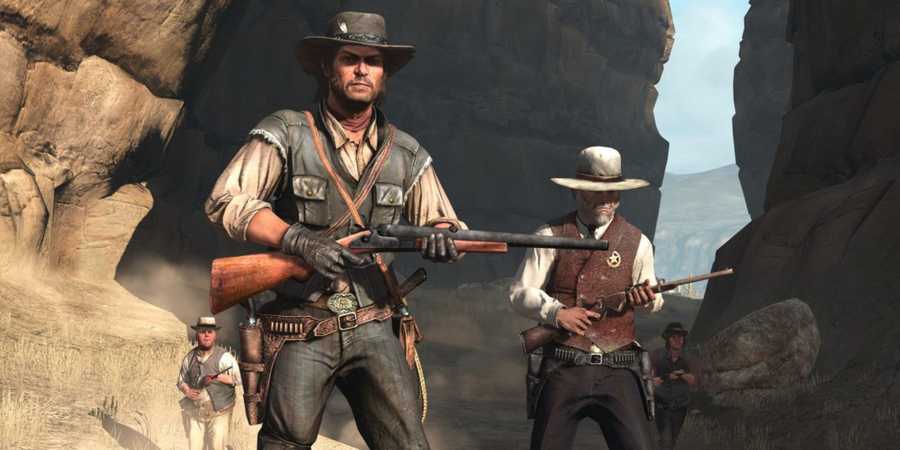
By the end of Red Dead Redemption, John Marston has done everything he was asked to do. He hunted down his old gang, killed his closest friends, and walked the thin line between survival and redemption—all so his family could have a future. And then, after all that, Edgar Ross sends a firing squad to his doorstep.
Ross didn’t just betray John. He used him. He dangled freedom like a carrot, then yanked it away the moment John outlived his usefulness. That final stand at the barn wasn’t just about bullets—it was about principle. John stepped out knowing he wouldn’t make it, but he wanted his death to mean something.
Ross, meanwhile, walked away smiling. Got promoted. Got his photo taken while fishing. And that’s what makes his betrayal so vile. It wasn’t personal to him. Just paperwork. A loose end to be tied up before lunch.
3 Micah Bell’s Backstab
Red Dead Redemption 2

Red Dead Redemption 2
- Released
- October 26, 2018

WHERE TO PLAY
From the moment he opened his mouth, Micah Bell was all wrong. His greasy handlebar mustache, his love for chaos, his weird obsession with violence—it all screamed problem. But Dutch kept him around, and for a while, players assumed there must be a reason. There wasn’t.

8 RPGs With Party Members That Can Betray You
In these RPGs, players can't trust everyone -- even members of their own party may be plotting against them.
Micah was playing his own game the whole time, whispering poison into Dutch’s ear while feeding lawmen information behind everyone’s backs. He sold out the Van der Linde gang piece by piece, setting up ambushes and stashing cash away for himself. The betrayal cuts especially deep because of how long it has been dragged out. It’s not a single act, but a slow corrosion of everything Arthur believed in.
Even Dutch finally saw it, but by then, it was already too late. The gang was gone. Arthur was gone. All that was left was Micah and the mess he helped make.
2 General Shephard’s Bullet
Call Of Duty: Modern Warfare 2

Call of Duty: Modern Warfare 2 (2009)
- Released
- November 10, 2009
WHERE TO PLAY
- ESRB
- M for Mature: Blood and Gore, Intense Violence, Strong Language, Suggestive Themes, Use of Drugs
- Genre(s)
- Shooter
Modern Warfare 2 had players charging through warzones with guns blazing, but the most devastating moment didn’t happen on the battlefield—it happened in the middle of a handshake. After completing one of the most grueling missions in the game, "Loose Ends," players thought they were in for a victory lap. Instead, General Shepherd put a bullet in Ghost’s chest and another in Roach’s, then lit their bodies on fire.
The betrayal was brutal, not just for what he did, but for why he did it. Shepherd wanted to rewrite history with himself as the hero. To him, Soap and Task Force 141 were pawns in a legacy he manufactured through lies, war crimes, and friendly fire.
It’s one thing to be betrayed by a villain. It’s another to be betrayed by the man who gave the orders. No one ever really trusted Shepherd again—not in sequels, not in reboots, not even in memes.
1 Big Smoke’s Greed Over Brotherhood
Grand Theft Auto: San Andreas

Grand Theft Auto: San Andreas
- Released
- October 26, 2004
WHERE TO PLAY
- ESRB
- M for Mature: Blood and Gore, Intense Violence, Strong Language, Strong Sexual Content, Use of Drugs

Nobody saw it coming because everyone wanted to believe Big Smoke was ride-or-die. He was the funniest, flashiest member of the Grove Street crew—the one who made players laugh mid-mission with his over-the-top dialogue and super-sized fast food orders. But somewhere between the drive-thrus and drive-bys, Smoke lost the plot.
It turns out he wasn’t loyal to the set at all. He sold out Grove Street for power, drugs, and a fancy crack palace guarded like Fort Knox. The worst part? He didn’t even try to justify it. “I got caught up in the money, the power… I don’t give a sh*t!” That stung more than any ambush. His betrayal wasn’t tactical—it was emotional. CJ didn’t just lose an ally, he lost his best friend to the very forces they were fighting against.
And let’s not forget Tenpenny’s hand in it all. Smoke might’ve pulled the trigger on Grove Street, but it was the corruption of Los Santos that handed him the gun.

8 Open-World Games Where Your Allies Can Betray You
Not all open-world games feature trustworthy characters. Here are some examples that include allies who can betray the player.