


Summary
- Better audio quality with standalone microphone over gaming headsets for similar price.
- Comfort is essential for gaming; standalone microphones can provide versatility beyond gaming.
- Standalone microphones offer more control over sound without the need for software, promoting growth.
Gaming headsets have been the go-to option for gamer audio solutions for years now. An all-in-one solution that provides game audio and allows you to communicate with teammates and friends — what could be better? Well, if you are looking for higher audio and microphone quality, you might be pretty hard-pressed to find a gaming headset that lives up to the quality of a standalone microphone and a pair of high-quality headphones.
Now, you might be saying to yourself, "I don't need a standalone microphone; I'm not a streamer." But you don't have to be a streamer to produce high-quality audio. Whether you are just on Discord calls or you are looking to create content, good audio makes all the difference.
Audio Quality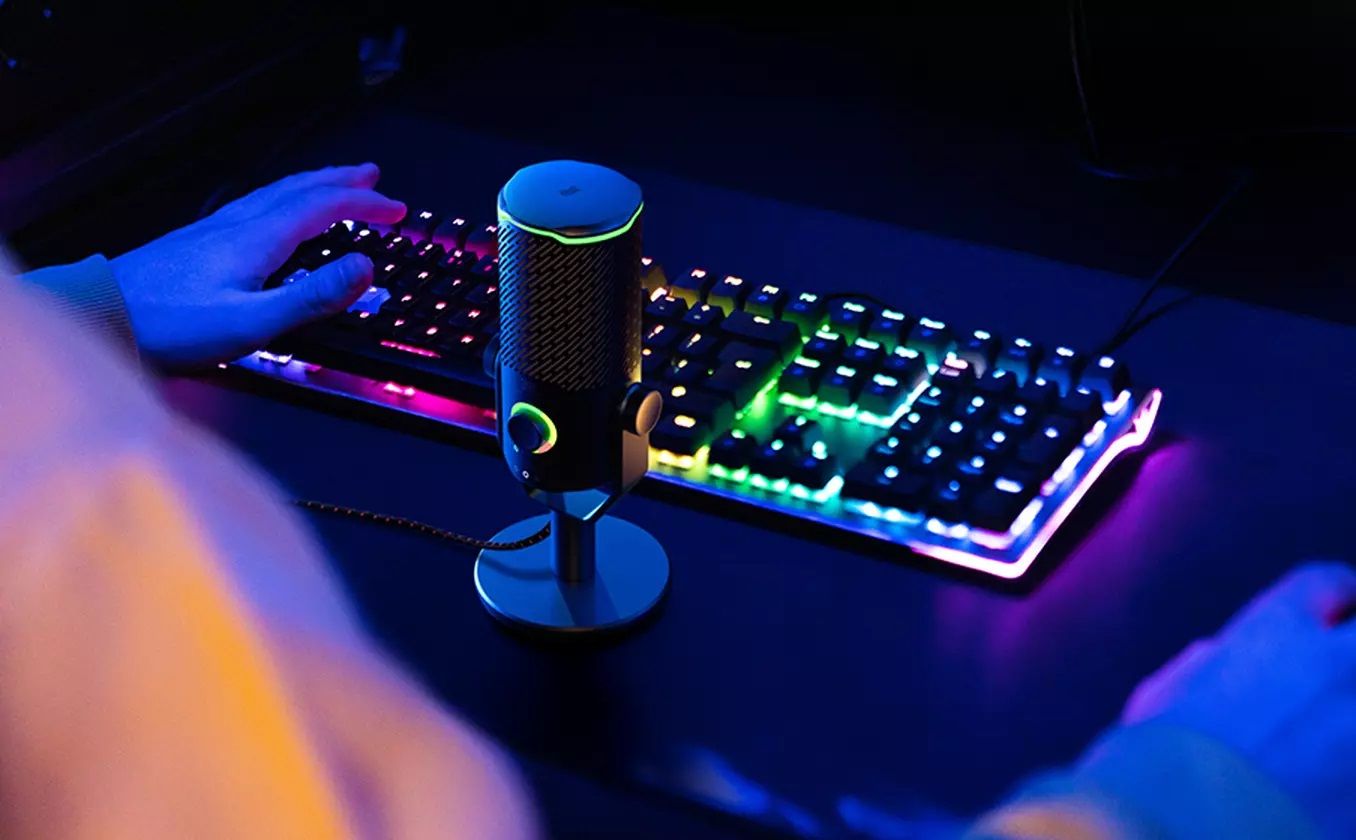
The obvious advantage of a standalone microphone is its overall higher audio quality than a gaming headset. Of course, there are gaming headsets with pretty good microphone quality, but those are few and far between compared to the number of microphones that offer stellar audio quality for a similar price.
One of the biggest reasons that standalone microphones have a sound quality advantage over gaming headsets is the size of the microphone capsule alone. As we have seen with tech over the last ten years, it no longer needs to be big and bulky to offer good performance, but that is still the case with microphones and audio equipment.
The two main types of microphones, dynamic and condenser, work essentially the same way: When your voice and other sounds enter the capsule, a coil vibrates, sending an electromagnetic signal that is converted into recordable audio. So, while getting good-sounding audio out of a smaller capsule is possible, it is much easier to get better-sounding vocals out of a larger capsule.
Secondly, because microphones are designed only to record audio, instead of both recording and producing audio, the design process is allowed to focus only on that one element and really nail it down. This allows for better audio quality at a price point similar to headsets that offer fairly mediocre microphone quality.
Comfort

Comfort is one key to a good gaming experience. While plenty of comfortable gaming headsets are out there, they tend to be way heavier than a pair of headphones and certainly heavier than IEMs that have become increasingly popular in the gaming community.
Although it is possible to forgo any headphones while using a standalone microphone, the biggest problem with speakers is that microphones of any kind can easily pick up external sound if you don't plan accordingly. Unless you are willing to sit down and really dial in the EQ and levels on your microphone speakers, it might be pretty unreasonable even if they are more comfortable, at least while you are on a Discord call or recording.
Versatility

Finally, standalone microphones can be used for much more than gaming. Whether you want to start a podcast, record music, or even perform live shows, a standalone microphone will be more helpful than a gaming headset. To get this versatility and easy growth with the same microphone, it's best to look for an XLR microphone or at least a USB mic that offers an XLR connection like the Shure MV7+.
With XLR microphones, you can also have much more control over your sound without having to use software, which can get pretty clunky, especially while you are recording or gaming. You can go very simple with an XLR interface that has control over levels and gain, or you can go all out and get an audio board that allows you to EQ your microphone and even add effects in some cases.
Does a Standalone Microphone Make More Sense For You?

While a standalone microphone might seem like an extra expense for some gamers when they can just buy a gaming headset for an all-in-one package, the advantages of pairing a nice pair of headphones with a standalone microphone are pretty amazing. Plus, if you are looking to get similar audio quality from a gaming headset, you are probably going to be spending around the same amount on a gaming headset that will not be able to be as versatile.
Related Products
-
Image
 Display card main info widget
Shure MV7+
Display card main info widget end- Type
- Dynamic
- Pattern
- Cardioid
- Power
- Bus Power
- Audio Sensitivity
- -55 dBV at 1 kHz (Min Gain)
- Connector
- USB-C and 3-pin XLR
- Frequency Bandwidth
- 50 Hz to 16 kHz
The Shure MV7+ is a premium and high-performing microphone suitable for all purposes, but ideal for podcasting. It comes with a customizable LED panel, an improved auto level mode, both XLR and USB Type-C connections, and a real-time denoiser.
Checkbox: control the expandable behavior of the extra info -
Image
 Display card main info widget
Austrian Audio MiCreator Studio Microphone
Display card main info widget end- Type
- Cardioid
- Power
- 45mW
- Audio Sensitivity
- - 35dBFS/Pa (low gain)/-15dBFS (high gain)
- Connector
- USB-C, x TRRS for IN/OUT (Link, Instrument, Headphones + 1 TRS (Headphones)
- Weight
- 370g
- Frequency Bandwidth
- 20 Hz – 20 kHz
The Austrian Audio MiCreator Studio blends a high-quality condenser microphone with an easy-to-use USB interface for a great audio solution regardless of your skill or gear level. Just plug in and start recording in top-notch audio quality instantly. Whether you are recording in the comfort of your home or on the go, the MiCreator Studio is a reliable microphone you can take everywhere.
Checkbox: control the expandable behavior of the extra info -
Image
 Display card main info widget
SteelSeries Alias
$150 $179 Save $29Display card main info widget end- Brand
- SteelSeries
- Type
- Condenser
- Pattern
- Cardioid
- Power
- USB
- Connector
- USB-C (Plug & Play)
The SteelSeries Alias is designed for gamers from the ground up. Despite being a plug-and-play microphone, the Alias delivers professional-sounding results out of the box. And with just a few tweaks using SteelSeries' Sonar software like the AI noise suppression, this microphone makes you sound like you are in a recording studio in a matter of seconds.
Checkbox: control the expandable behavior of the extra info -
Image
 Display card main info widget
Razer Seiren Mini USB Condenser Microphone
Display card main info widget end- Brand
- Razer
- Type
- Mini USB Condenser Microphone
- Pattern
- Polar unidirectional
- Power
- 5V 500 mA (USB)
- Connector
- USB
- Weight
- 14.9 ounces
Checkbox: control the expandable behavior of the extra info
This mini mic is simple, ticking the boxes of affordability, functionality, and convenience, key things beginners should look for as they learn the ropes of their respective engagements. The mic features an ultra-precise super-cardioid pickup pattern with a tight pickup angle, ensuring that the focus is solely on the user’s voice and blocks background noises. The microphone has a 14mm condenser capsule and a flat response frequency, translating to excellent vocal clarity with pronounced highs and lows.


The Best Microphones for 2024
Whether people are looking for a mic to upgrade their streaming setup or sound better in Discord calls, a quality mic will go a long way.
FAQ
Q: Is a USB microphone better than a headset?
Unlike gaming headsets, which primarily offer only omnidirectional pickup patterns, standalone and USB microphones offer more polar pattern options. The specific polar patterns vary from microphone to microphone, but overall, they give you a more intentional sound than a gaming headset microphone.
Q: Is an XLR mic better than a USB mic?
USB microphones have improved significantly in recent years, making their performance somewhat similar to XLR microphones at similar price levels. Where they still differ quite a bit is their ease of use. USB microphones are made to be more plug-and-play, whereas XLR microphones tend to need more equipment and setup time to get going.