


Summary
- "The Doomsday Machine" showcases the strengths of Star Trek: The Original Series, including fantastic character moments.
- At the center of the story is an enigmatic and all-powerful weapon that acts as a metaphor for the idea of nuclear deterrence during the Cold War.
- While the iconic Planet Killer has never returned to the series, Star Trek's expanded media has been unable to resist exploring its origins.
Featuring one of the most awe-inspiring titles of any Star Trek episode, "The Doomsday Machine" is the sixth episode of the Original Series’ second season. It introduced the phenomenally powerful titular weapon, an opponent that drew out the great strengths of the series in a taut and emotional episode that consistently ranks highly in fan appreciation.
"The Doomsday Machine" is well regarded for doing what the original Star Trek does well - combining great character moments with solid sci-fi and the tussle between passion and logic. Most tellingly and effectively, the Doomsday Machine of the title is both the opponent in the story and a metaphor for the very real existential worries of the 20th century.

Star Trek: 8 Impressive Things Kirk Did Before Joining The USS Enterprise
Before James T. Kirk was the captain of the USS Enterprise in Star Trek, he was witness and volunteer to a great many adventures and impressive feats.
What happens in Star Trek: The Doomsday Machine?

|
Star Trek: The Doomsday Machine |
|
|---|---|
|
Main Cast |
William Shatner, Leonard Nimoy, DeForest Kelley, James Doohan, William Windom |
|
Writer |
Norman Spinrad |
|
Director |
Marc Daniels |
|
Release |
October 20 1967 |
|
Where To Watch |
Stream on Paramount+ |
They say there's no devil, Jim, but there is. Right out of Hell, I saw it.
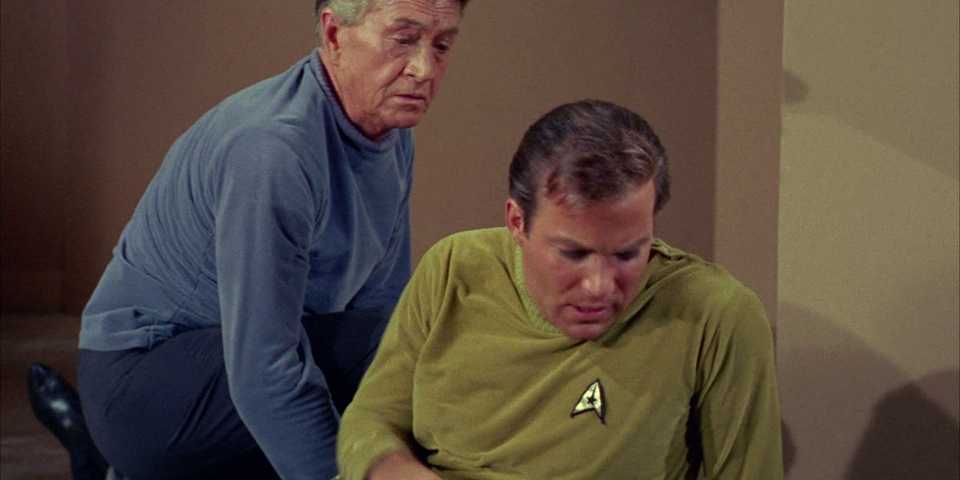
So says Commodore Matt Decker when Captain Kirk and Dr. McCoy discover him alone in the damaged and drifting USS Constellation. When the USS Enterprise discovers solar systems with missing planets and filled with subspace interference, the away team hopes Decker has the answers. Scotty describes the Constellation’s warp drive as “a useless pile of junk,” and they find the commodore alone and in severe mental distress. He explains that he transported his entire crew to a planet when the ship was attacked. As Kirk realizes the planet has been destroyed, the memory of losing his entire crew leaves Decker distraught.
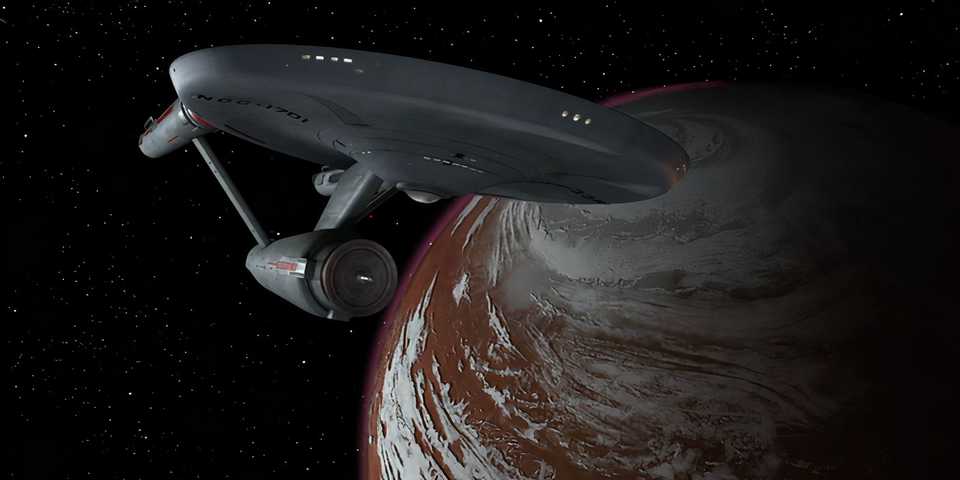
The shaken commodore recalls the attacker was a miles-long enemy vessel with a giant maw that slices through planets with a pure antiproton beam. Back on the Enterprise, Spock posits the machine purposefully destroys planets to repurpose them as fuel on its self-sustaining journey. He tells Kirk that the trail of devastation suggests the vessel is heading to the most populated part of the Galaxy.
Comparing it to a 20th-century H-bomb, Kirk reasons that this Planet Killer is a Doomsday Machine. Also known as a Doomsday Device, it’s a hypothetical weapon capable of such destruction it can never be used. Intended as the ultimate deterrent, Kirk wonders if an extinct civilization created this weapon in another galaxy.
As Decker and McCoy return to the Enterprise, the Enterprise begins to tow the Constellations as the huge planet killer appears and starts to pursue the ships. Spock suggests to Kirk that the uncrewed machine will be difficult to immobilize. When the machine’s vast weapon activates, the ships are separated and unable to communicate until the Planet Killer changes course for the nearby Rigel colony.
When Decker and Spock clash over logic, the commodore seizes control of the Enterprise, overcoming Spoke’s warnings and McCoy’s lack of evidence that he is mentally unstable. Despite the Planet Killer’s impenetrable neutronium hull, Decker attacks while Kirk and Scott attempt to salvage some impulse speed aboard the Constellation.
The Enterprise’s direct phaser hits have no effect on the machine, but Decker is intent on his vendetta. As the Enterprise’s shields fail, its hull ruptures and severe casualties are reported, Spock uses Decker’s continuing suicidal attack as proof that he is too unstable for command. The commodore relents, but it is too late to save the Enterprise from a tractor beam dragging it into the Planet Killer’s maw.

What Alien Race In Star Trek Has The Best Design?
Star Trek's aliens have captivated audiences since 1966. Even in the early days when the budget was limited, simple features like the pointy ears of the Vulcans marked their distinction from the familiar humans. Since then, the franchise has branched out, portraying humanoid species with a wide range of distinctive, alien features. Personally, I love the design features of the Kelpien species. Not only do they have complex facial ridges, but their distinctively shaped feet, their lanky build, and unique gait set them apart from other Star Trek aliens. They were designed to appear strange and unfamiliar, yet viewers can still connect with and relate to Kelpien characters.
Scotty earns his ‘pay for the week' when he reveals he’s charged one of the Constellation’s phaser banks. Kirk’s distracting attack allows the Enterprise to break free. When Kirk is able to contact the ship he tells the shaken commodore, ‘You mean you're the lunatic who's responsible for almost destroying my ship?’
Kirk orders his first officer to relieve the commodore, and Decker steps down when he accepts Spock’s assertion that he’ll have the commodore arrested and that ‘Vulcans never bluff.’ As he’s led to a medical examination, Decker overcomes the security detail escorting him to sickbay in a corridor fistfight and hijacks a shuttlecraft.
As the commodore makes a beeline to the Planet Killer, Spock fails to deter him by pointing out the futility of his actions. Likewise, Kirk’s passionate appeal not to throw his life away is brushed aside. Decker replies that he’s ‘been prepared for death ever since I killed my crew,’ and his shuttle is destroyed in the mouth of the Planet Killer. As Spock offers condolences, Kirk ruminates that his old friend died for nothing until… A negligible power drop in the machine suggests he didn’t. Despite his first officer’s reservations, Kirk stays aboard to repeat the trick with the higher-powered Constellation.
.jpg?q=49&fit=crop&w=140&h=98&dpr=2)
Star Trek: 5 Things You Didn’t Know About Scotty
Even longtime Star Trek fans may not know these interesting tidbits about Montgomery Scott, better known as "Scotty."
Kirk’s calculated risk is based on the Enterprise having 30 seconds to beam him from the damaged ship ready to blow inside the Planet Killer. Scotty warns it’s a “mighty finicky piece of machinery to be gambling” a life on. Still, he fixes the malfunctioning transporters aboard the Enterprise to save his captain just before the USS Constellation detonates, rendering the Planet Killer ‘quite dead.’
Before the story’s customary wry sign-off, Kirk confirms Decker will be reported as lost in the line of duty. He also reasons that he may have been the first to use what was effectively an H-bomb, the old Earth Doomsday Machine, for constructive purposes.

6 Biggest Retcons To Star Trek History
The iconic Star Trek franchise and history is not without retcons that leave it open to different interpretations.
Why is the Doomsday Machine so popular?
"The Doomsday Machine" is packed with much of what made Star Trek great thanks to a simple idea executed well: the heroes of the Enterprise come up against an inexplicable, all-powerful, and apparently unstoppable enemy. It’s a solid concept that stands up after six decades of genre TV and movies have mined a similar theme.
The story shares similarities with Arthur C. Clarke’s 1973 novel Rendezvous With Rama, in which a vast and mysterious cylindrical spacecraft enters the solar system. Although the Planet Killer is unambiguously destructive, the crux of both stories is not in the machine’s origins or purpose but in the different responses of the humans facing it.
"The Doomsday Machine" presents a crisis that packs in twists, gambles, tension, emotion, and what could be a greatest hits of character traits. Spock gets to logically set his case out many times, and even though he’s underused, McCoy gets to have a classic Bridge chat with the science officer. Separated from his ship for most of the episode, Kirk is a passionate and decisive leader in stark contrast to the traumatized Decker. Unlike the commodore, whose poor decisions cost his entire command, Kirk shows constant faith in his crew — faith that is repaid. The scene where Spock pleads logic and Kirk implores his friend ‘We're stronger with you than without you’ is Star Trek gold.
In Decker, brilliantly played by William Windom, Star Trek unwittingly set a trend that would become a hugely important part of the franchise. He was fans’ first sight of a Starfleet officer, and notably a rank above captain, overcome by the consequences of his decisions. Those manifest in a destructive vendetta that would be echoed in the campaigns of Khan Noonien Singh in Star Trek II: The Wrath of Khan. Norman Spinrad, who wrote "The Doomsday Machine ," revealed the influence of Herman Melville's Moby-Dick on his story, which would go on to influence Star Trek II. The same obsession is also seen in Picard’s struggles with his assimilation in Star Trek: The Next Generation, and the conflict of Eddington and Sisko in Star Trek: Deep Space Nine.
Then, there is the central idea of the Doomsday Machine. Much of Star Trek: The Original Series explored the themes and issues of the mid-20th century through the prism of the 23rd century. In "The Doomsday Machine" it is the dawn of the atomic age and nuclear deterrents during the Cold War, as also explored in Stanley Kubrick’s Dr. Strangelove three years before. It’s this proliferating weaponry that, a few hundred years in the future, Kirk uses to save millions of lives.

Star Trek: Why Was Jeffrey Hunter Replaced With William Shatner?
Christopher Pike's current popularity owes much to the man who first played him and his abrupt departure from the role.
Did the Doomsday Machine Appear In Star Trek Again?

The Planet Killer is particularly memorable because it’s never returned to the show, despite the hanging possibility at the end of the episode that other weapons are working their way through the universe. However, it’s proved just too good for the expanded universe to ignore.
As explored in the unauthorized reference book The Fifty-Year Mission: The Next 25 Years, it’s been suggested that J. Michael Straczynski and Bryce Zabel’s proposal for a new Star Trek series in 2004 would have returned to the Planet Killer and the ethical dilemmas it creates.
The Planet Killer has appeared in several Star Trek video games, including Star Trek: Shattered Universe, Starfleet Command, Starship Creator, and Star Trek: 25th Anniversary.
More recently, the weapon has resurfaced in Star Trek Online as part of the Temporal Cold War storyline in the missions, "The Doomsday Device," "The Core of the Matter," and "Days of Doom".
The Planet Killer has proved irresistible in non-canonical stories, and its mystery and immense power have inevitably been linked to one of Star Trek's other great threats.
Peter Davids's novel Vendetta suggested the machine had been developed as an ultimate weapon to defeat the Borg and that the Enterprise had disabled a prototype on its way to Borg Space. The theory is developed that its self-sustaining destruction was intended for assimilated worlds. Further books, Armageddon's Arrow and Before Dishonor, expanded on the idea and its significance as a Borg-destroying weapon.

Star Trek: Voyager - How Did The Ship Get Home?
In Star Trek: Voyager, a 70,000 light-year journey home is a trial that just might require bending space-time itself.
Wildstorm's Star Trek comics had the USS Voyager encounter another Planet Killer. In classic sequel style, the story acknowledged and confronted Kirk’s solution to the problem, although it’s a long way from the original metaphor. When they fail to replicate Kirk's trick, Captain Janeway’s crew sends an undetectable EMH Doctor into the machine to inject it with Borg nanoprobes. The Planet Killer is stopped by what is effectively a virus.
While the Planet Killer has remained an enthralling mystery in canonical Star Trek since the 1960s, it can never be ruled out that the thriving franchise may delve into its origins in the future.

- Release Date
- 1966 - 1969-00-00
- Network
- NBC
- Showrunner
- Gene Roddenberry

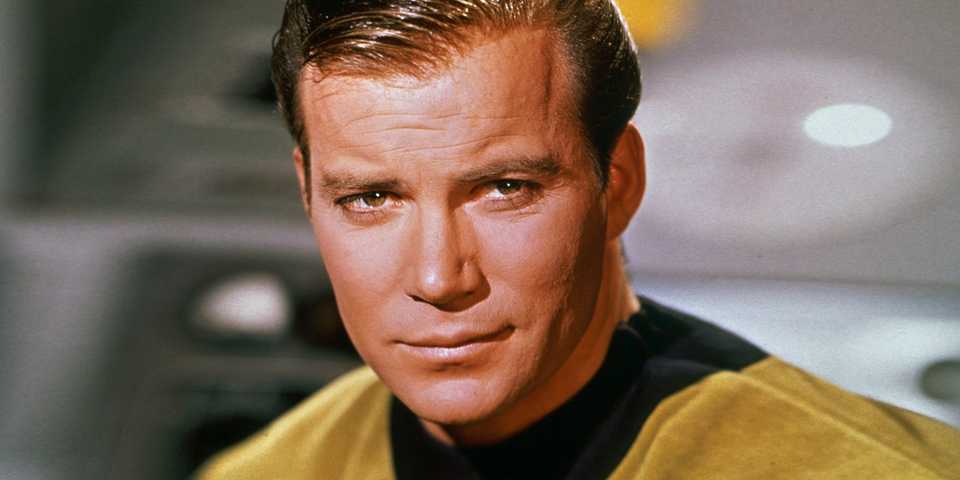
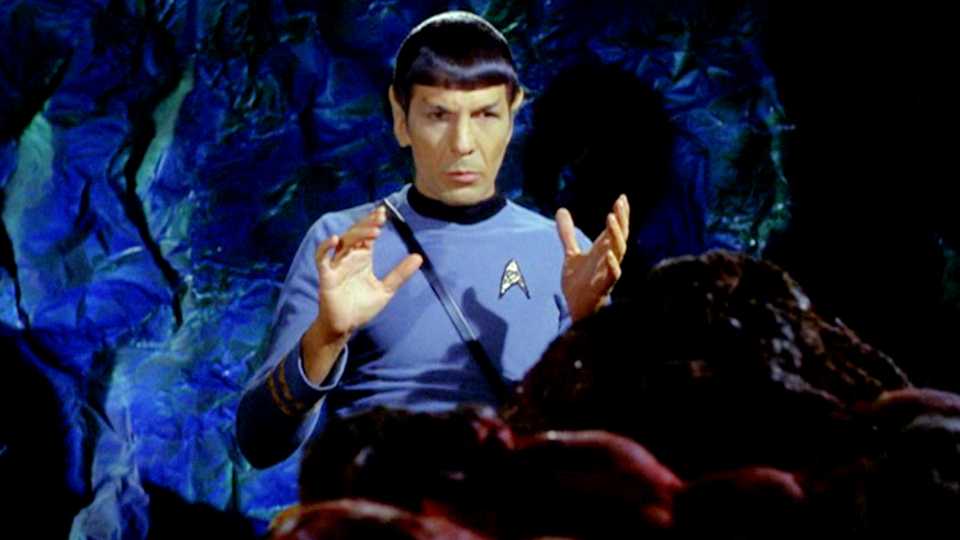
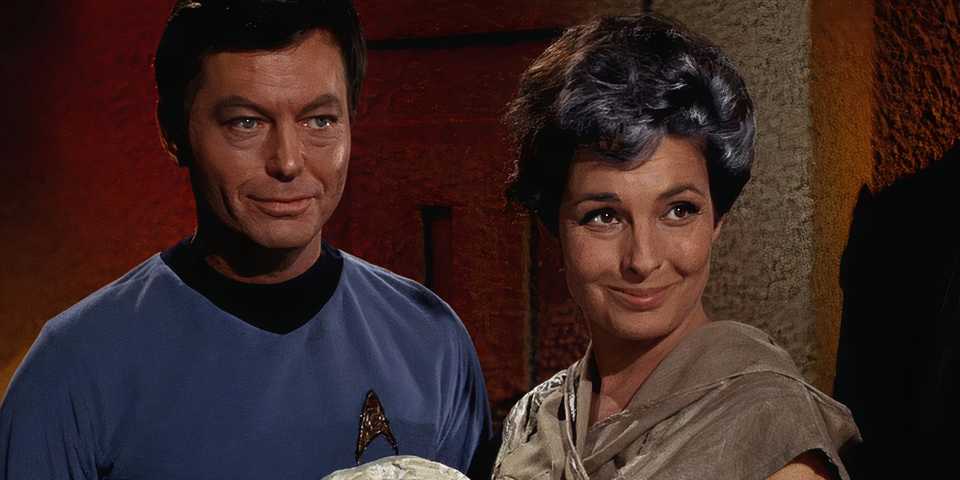
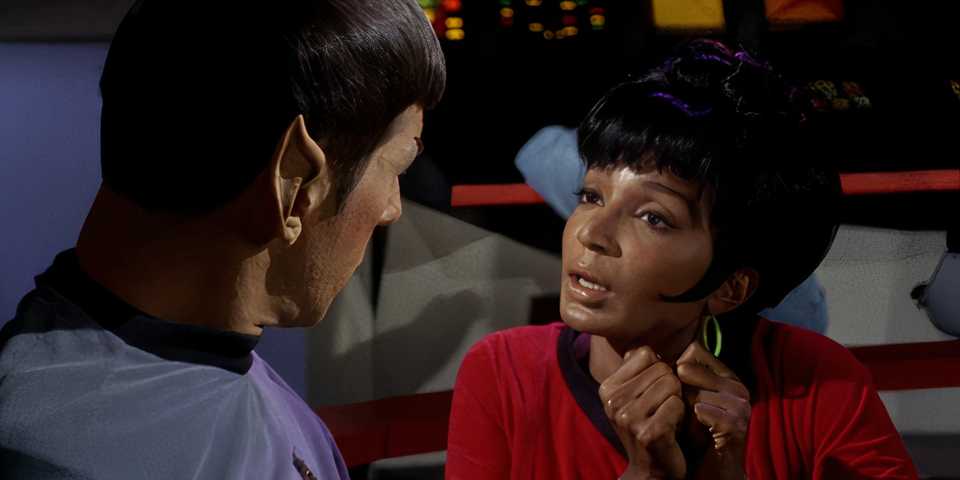
Cast
-
 William ShatnerJames T. Kirk
 -
 Leonard NimoySpock
 -
 DeForest KelleyDr. McCoy
 -
James DoohanScott
- Seasons
- 3
