


Video game fans often think about the almighty “what if” scenario. It’s fun to question how the industry has shaped itself over the years. For example, Nintendo launching a motion-based console, the Wii, could have been a disaster. Instead, they set the standard for motion controls for over a decade. Had motion controls not taken off, who knows where the technology would be right now? Would there be VR without good motion tracking systems?
That’s an example of how something positive helped shape the gaming industry. Now, let’s look at the opposite end of the “what if” spectrum: the failures. Hindsight is 20/20, and thanks to these video game disasters, fans can now see how the market benefited in a net positive way.
The Video Game Crash Of 1983
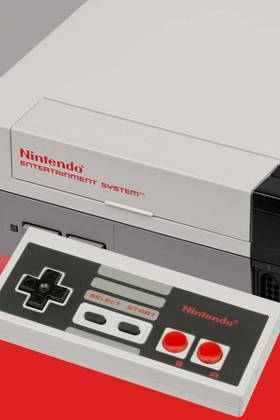
Nintendo Had To Rebrand As A Toy, Which May Have Helped Them
- Brand
- Nintendo
- Original Release Date
- July 31, 1989
- Original MSRP (USD)
- $179
- Weight
- 5 lbs.
The home console video game market crashed in 1983, which is to say: Atari and other consoles became unpopular thanks to the rise of computers, among other trends. Atari moved to dump cartridges in landfills, which were later uncovered in a Microsoft-funded documentary called Atari: Game Over. This was more about the Atari E.T. Games, but it’s all looped together. Any company that wanted to put out a home console after this crash would not have done well, based on market trends. That said, starting in 1985, Nintendo decided to be more clever about bringing its reformed Famicom console to North America as the Nintendo Entertainment System, or NES. It was not marketed purely as a console, but as a toy instead.
That’s why there were so many extra accessories added around launch; it was seemingly a bid to fool retailers and customers alike. There was the NES Zapper that worked with light gun games, and R.O.B., a robot that worked with a game called Gyromite. The star of the show was, of course, Super Mario Bros., which helped the console take off, whether people believed it was a toy or not. If it hadn’t been for the video game crash a few years prior, Nintendo may not have been as successful. Their tactics were like the Trojan Horse of the gaming industry, and what popped out was Super Mario Bros., which helped establish Mario as a brand.
The Failed Partnership Between Sony And Nintendo
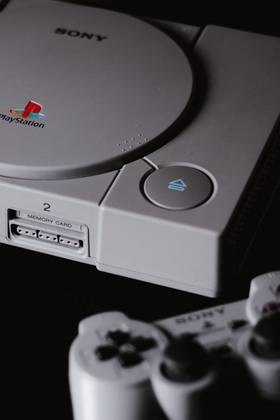
Now We Have PlayStation Consoles
- Brand
- Sony
- Original Release Date
- September 9, 1995
- Original MSRP (USD)
- $299, £299
- Weight
- 3.2 lbs
The SNES was an even more popular console than the NES, which led to even greater success for Nintendo. To keep the console alive and selling, there were several discussions about how extend its lifespan. One was to add a CD peripheral to the system, and another was to make a whole new console, similar in design to the SNES. Nintendo wanted to partner with Sony to make this new console, and they eventually made a prototype that is now one of the rarest consoles in the world. This console was announced at CES 1991 by Sony, but Nintendo surprised them a day later by revealing a partnership with Philips at that show instead, which was a huge slap in the face.

10 Biggest Mistakes In Nintendo History, Ranked
Nintendo has led the video game industry for decades, but that doesn't mean that it is without its fair share of issues.
Thankfully, cooler heads prevailed that day, and while nothing ever came of this prototype, it did lead its team into creating a console of their own: the PlayStation. While it wasn’t a breakout hit at first, the PS1 slowly gained momentum between its 1994 release in Japan and its 1995 North American launch. Sony dominated the N64 with the PS1, and the PS2 beat both the Xbox and GameCube combined, and is now one of the best-selling consoles of all time. If ties between Nintendo and Sony hadn’t failed, who knows what the market would look like today? The Switch could have been developed by Sony, or perhaps Nintendo would never have thought of making a hybrid console.
The Poor Launch Of The Dreamcast
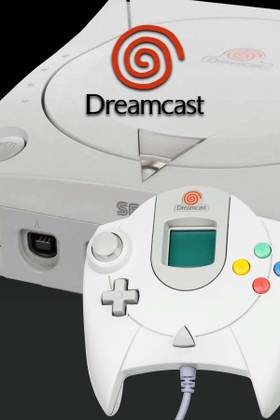
Sega Got Out Of The Console Game
- Brand
- Sega
- Original Release Date
- September 9, 1999
- Original MSRP (USD)
- $199, £200
- Weight
- 3.3 lbs.
There are many reasons why Sega eventually got out of the console market. They had a strong rivalry between the Sega Genesis and the SNES, but their follow-up, the Sega Saturn, failed to live up to expectations out of the gate when compared to the cheaper PS1. For a company, one failure after another can have a snowball effect, and while the Sega Saturn did not cause the Dreamcast to fail, it certainly didn’t help. At the time, the Dreamcast was way ahead of the game, launching in Japan in 1998 and North America in 1999. This was still in the middle of the N64 and the PS1 era, so needless to say, its graphics were much better, as were its online capabilities, which were mind-blowing.
It was a good console, but it was eventually replaced by the PS2 in 2000, which had equally compelling graphics along with a built-in DVD player, which is a key reason why it sold so many units so quickly. The Dreamcast just couldn’t compete. Finally, in 2001, Sega announced it was getting out of the console market, and the company announced a discount on the Dreamcast simultaneously, effectively waving the white flag. Sega helped give Nintendo and Xbox exclusives to compete with the PS2, like Billy Hatcher and the Giant Egg for the GameCube and Jet Set Radio Future for the Xbox. While these games didn’t help either console topple the PS2's reign, Sega eventually righted itself, and now they both make and publish some of the best game franchises out there, such as Persona and Yakuza.
The Xbox 360’s Red Ring Of Death
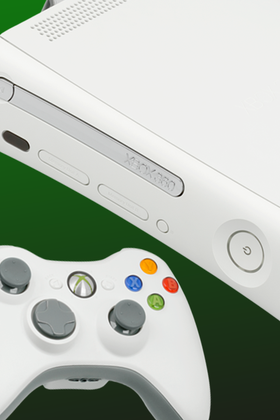
No More Rushing To Market
- Brand
- Microsoft
- Original Release Date
- November 22, 2005
- Original MSRP (USD)
- $299, £209, €299
- Weight
- 7.7 lbs
The PS2 generation was a heated one between all three console markets. Not to be outdone again, Microsoft launched the Xbox 360 ahead of the PS3 in 2005. There was a huge promotional campaign on MTV, hosted by Elijah Wood, and the console's marketing in general was out of control. Things were looking up for Microsoft, as the Xbox 360's launch games were impressive for the world’s first fully HD console. That said, it didn’t take long for reports about the now-infamous Red Ring of Death to surface shortly after its November launch.

10 Biggest Mistakes In PlayStation History, Ranked
Though Sony's PlayStation has dominated the console industry for years, the company is not without its fair share of blunders and mistakes.
There was a malfunction in the system’s makeup that overheated the console, causing the usually bright neon green ring to start flashing red. To Microsoft’s credit, they did offer to take consoles back and repair them, which cost them about $1 billion in repairs. The Xbox 360, despite this controversy, was still a wildly successful system and predominantly the one most gamers had during this first wave of HD consoles. There had been bad console launches before this, but never on this level of bad functionality, which may have taught console makers that rushing to market is a bad idea.
The Xbox One’s All-In-One Dream
Closed TV Studios And Made Sure No Console Would Require Always-Online Activation
- Brand
- Microsoft
- Original Release Date
- November 22, 2013
- Original MSRP (USD)
- $499, £429, €499
- Weight
- Base: 7.7 lbs S: 6.4 lbs X: 9.8lbs
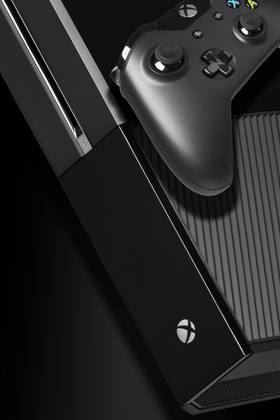
Microsoft had some issues with its next console as well, the Xbox One. The idea was that it was going to be the family’s one-stop shop for all media-related entertainment, from TV shows to movies to gaming, hence the name. Players could integrate their cable into the console and watch TV with voice activation, thanks to Microsoft also doubling down on the Kinect hardware. On top of that, they also announced that the console would periodically require online connectivity to ensure that users were who they said they were. It was seemingly one wrong and confusing decision after another. With the console's price being set at $500, Xbox fans were not happy with all of these announcements at E3 2013.
Subscribe for lessons from gaming’s biggest console failures
Sony’s press conference for the PS4 reveal came after Microsoft’s, and they essentially received a standing ovation for all of their announcements, some of which seemed directly targeted at Microsoft's audacious new hardware. Sony's announcements included no online requirements beyond PS+ for multiplayer, the ability to share game discs with friends, and a $400 launch price. It was a metaphorical mic drop moment. Eventually, Microsoft backpedaled on the all-in-one support for the Xbox One, leading to the end of their support for the Kinect, the closing down of TV connections, and ceasing online restrictions. Thanks to Xbox fans and gamers everywhere uniting over these restrictions, this controversy is probably why there are still game discs being manufactured and why always-online requirements don’t exist beyond certain services. Had the Xbox One succeeded, the infrastructure of the Switch, Switch 2, PS5, and Xbox Series X/S might be a lot different today.

The Greatest Bad Games Of All Time, Ranked
Sometimes, even a bad game can be a good time. These iconic titles prove that by being so bad that they're actually brilliant.