


Summary
- Starfield's NASA-punk aesthetic sets it apart from other sci-fi games, offering a plausible evolution of existing technologies and a distinct, original look.
- The NASA-punk aesthetic gives Starfield a lived-in feel, with practical and functional designs that look like they serve a purpose.
- Incorporating retro-futurism into Starfield's technology adds a tactile feel and enhances the game's grounded, hard sci-fi setting, while still offering players plenty to do and see that is not plausible from a realistic perspective.
From carefully constructed ships cruising the galaxy and the multitude of modular outposts scattered across its countless planets to the spacesuits on players’ backs, nearly everything in Starfield bears the unique look of Bethesda’s self-dubbed NASA-punk aesthetic. Standing in stark contrast to sci-fi games like Mass Effect that lean towards the fantastical, most of what players encounter in Starfield seems like a plausible evolution of existing technologies. This gives Starfield a distinct look when compared to the numerous sci-fi games that vie for gamers’ attention each year, letting Bethesda deliver a planet-spanning open-world title that feels truly original.
The influence of spaceflight’s past and present in the real world is impossible to miss in Starfield. Bethesda coined the term NASA-punk during development to describe what lead artist Istvan Pely hoped was a world more “grounded and relatable” than those in typical sci-fi games. Even though players will explore some incredible locations during their time with Starfield, the developers wanted to ensure that the technology underlying the world never felt too far-fetched. The resulting NASA-punk aesthetic perfectly blends form and function and gives Starfield a decidedly retro-futuristic feel that helps it stand out from standard sci-fi games.
Starfield’s NASA-Punk Aesthetic Is A Stylish Blend of Form and Function

The NASA-punk aesthetic of Starfield lends itself remarkably well to creating a world that feels truly lived-in. Rather than the sterile, too-clean look of many sci-fi games, the world of Starfield comes across as a place that humans could actually inhabit. With a few notable exceptions related to the game’s story, nearly every element of Starfield’s design feels like a plausible and practical evolution of existing space travel technology. This is particularly visible inside the game’s ships which, apart from grav drives that push the limits of scientific plausibility, look similar to the inside of the International Space Station.
Part of what helps Bethesda sell its NASA-punk aesthetic is the fact that everything in the world looks like it serves a purpose. Whether it’s the visible ducts snaking their way through the crowded corridors of the hedonistic city of Neon or the clamps and hoses cluttering Starfield’s space suits, the details on in-game architecture and items all appear practical and functional rather than purely decorative. Tying the whole thing together is a decidedly retro-futuristic feel pervading Starfield that makes technology in the world seem slightly removed from real life despite sharing so many similarities.
The NASA-Punk Tech of Starfield Gives It A Dash of Retro-Futurism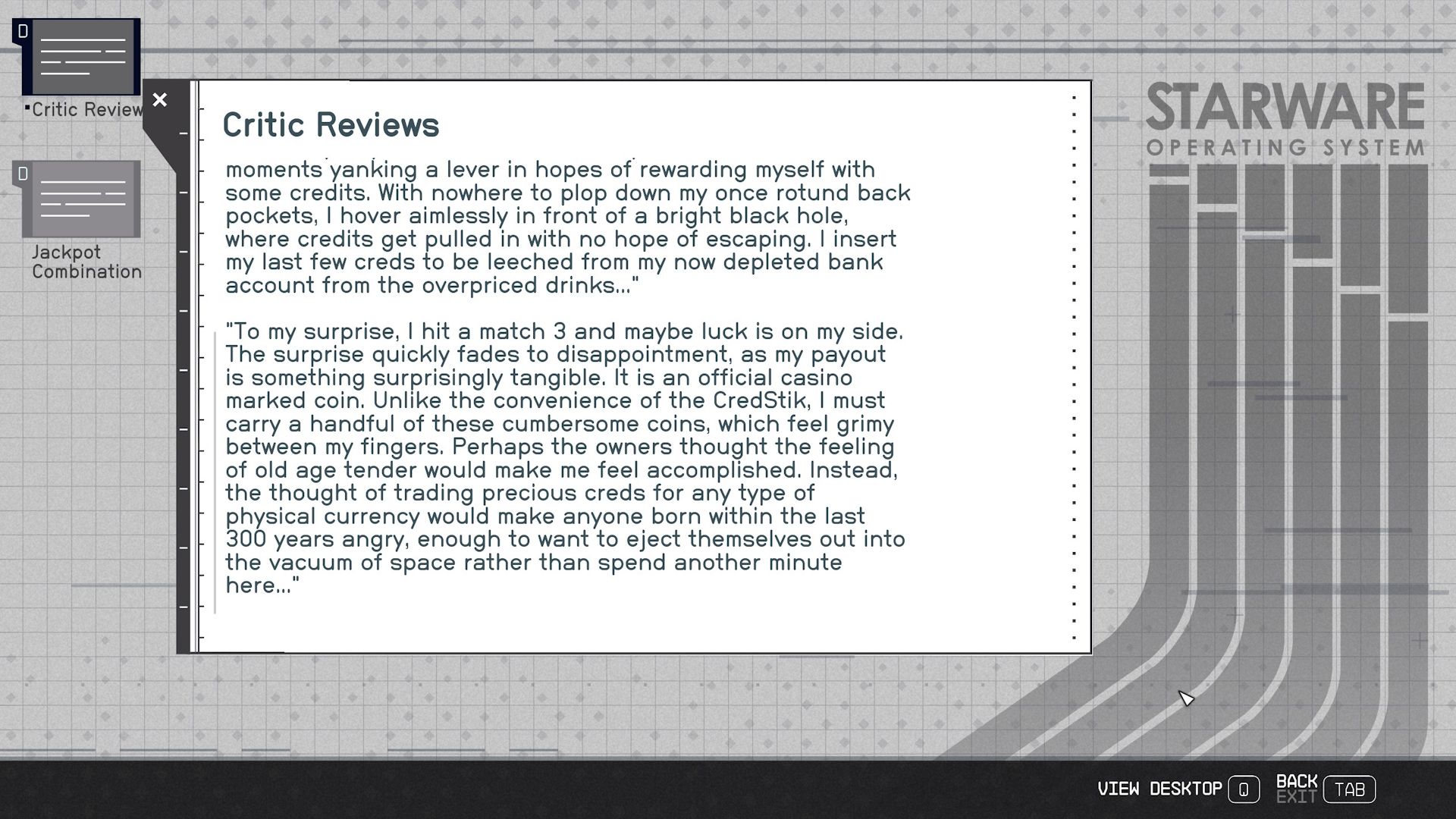
Even though the ships and space stations of Starfield feel like natural evolutions of current advances in manned space travel, much of the technology powering day-to-day life across the galaxy has a decidedly retro feel. Surprisingly, though, this technological mismatch actually helps further drive home Starfield’s hard sci-fi setting.
Incorporating this sort of retro-futurism theme into Starfield’s NASA-punk technology gives it a far more tactile feel than would otherwise be likely. If Bethesda had chosen to directly mirror real-world advances in space flight, for example, there would be little for players to do once they stepped foot into their ships as most flight systems would be handled autonomously. By taking a retro-futurism approach to systems like spaceship controls, Bethesda gives players more to do while never taking away from Starfield’s generally grounded feel.
The massive size of Starfield’s explorable galaxy received the lion’s share of attention in the lead-up to the game’s launch, but the NASA-punk aesthetic found throughout the tech players use to explore it is what gives the game such a unique feel. And while not everything players will find in the deepest reaches of space is necessarily scientifically plausible, Starfield’s overall vision of the future seems like one that’s possible.
Starfield is available now for PC and Xbox Series X/S.