


Stardew Valley offers players a wide variety of elements to optimize. Relationships, combat, mining, and foraging are key areas for min-maxers eager to master this classic cozy game. However, most players will discover that their farms are the beating heart of their in-game success. It’s where the bulk of the income is made, your seasonal rhythm is set, and long-term goals come to life. Some players have their farms down to a science thanks to this fact.
For the rest, a farm is more like an experiment. With seasonal crops, decorations, and animals to manage, no two farms in Stardew Valley look exactly alike. But casual players might be surprised to find that a relaxed, hands-off approach can limit what they get from the game. Others simply want to showcase their efficiency by having an undeniably optimized farm. Regardless of where a player falls on this spectrum, one thing remains certain: some farms are better than others, and there’s a farm setup that will make anyone the envy of Pelican Town.

Stardew Valley: Things You Have To Do Your First Year
Stardew Valley is an awesome game that runs in a seasonal format - here's what players should do in their first year.
A Forest Map Is the Backbone of an Unbeatable Farm Setup

In Stardew Valley, the best farm is set up in stackable steps. If someone is ever looking at their plot and wonders why money isn’t rolling in faster, or why they’re constantly out of time and energy, it’s not due to there being too many things to do in a day. It might be the layout and planning that’s holding them back.
The truth is, success lies within one of the first choices in the game: the farm map. Specific farm maps in Stardew Valley are better than others for both profit and ease of play, which is true for veterans and newbies alike. One, in particular, stands out as virtually unbeatable: a forest map. The forest farm map is designed for long-term sustainability, minimal daily effort, and substantial year-round income. Unlike beach or hilltop farms that rely somewhat on gimmicks, the forest map lets players maximize the efficacy of their farm.

Stardew Valley: 9 Things to Do in Your Second Year
Stardew Valley is an irresistibly addictive game where you can start a new life from scratch. Here’s everything you need to do in your second year.
The Core Strategy for an Unbeatable Farm

This initial setup works because it’s built in stackable phases that never waste a season’s potential. Stardew Valley’s forest map offers naturally regenerating hardwood stumps, a steady flow of forageables, and pockets of water for fishing while leaving plenty of tillable soil for crops; something that a river map struggles with in comparison. The foundation blends three priorities:
- Profitability: Foraging makes the forest setup incredibly popular. With mushrooms and weeds that give out a healthy amount of mixed seeds, being on the land itself guarantees a profit. Also, there’s a surprising potential for fishing with enough patience.
- Sustainability: This map has renewable resources like hardwood that keep producing without replanting.
- Low Maintenance: This map’s friendly approach to foraging and farming makes it a great map for those wanting to avoid a long grind. This map also does not have sprinkler exclusions like the beach map. Low effort means more energy to spend on other activities, like attending festivals in Stardew Valley.
Sometimes, simpler is better. Unlike some overly complicated farms, this approach strikes a balance between diversity and output, ensuring players never get stuck waiting on a single crop, scrambling to buy seeds in town, or scratching their heads between seasons.

Year-by-Year Breakdown for an Unbeatable Stardew Valley Farm

Year 1: Build the Foundation

The first year sets the tone for everything that follows, so one should focus on establishing basic income streams in Stardew Valley and unlocking key upgrades. The flow goes as follows:
- Spring: Plant a mix of Strawberries and Cauliflower for high profits, while mixing in Potatoes for quick early returns. Forage every day to boost income and level up skills faster. Save up on hardwood to ensure enough is available when the time comes to build.
- Summer: Switch to Blueberries for consistent harvesting and Melons for big single-crop payouts. Upgrade the watering can to copper before the season ends.
- Fall: Invest in Cranberries. Cranberries are a powerful end-of-year crop that can carry the player financially into Year 2. Grow Pumpkins for extra profit and to complete community center bundles.
-
Other Milestones in year 1:
- Push to unlock the Greenhouse by completing pantry bundles.
- Start crafting basic sprinklers, and begin upgrading tools for winter prep.
- Players should place buildings in green areas. A common complaint about the forest map is that there isn’t enough space for crops. To get around this, players simply need to approach the map with a plan. Place buildings in non-tillable soil.
Year 2: Automate & Expand

Now that the basics are in place, players can streamline their workflow and scale up production.
- Spring: Focus on Rhubarb (Oasis purchase) and Strawberries inside the Greenhouse for constant output. Upgrade to Quality Sprinklers for near-complete watering automation.
- Summer: Fill the Greenhouse with Starfruit, one of Stardew Valley’s top-tier crops, while planting Blueberries outdoors for easy cash. Build Barns and Coops to start producing cheese, mayo, and other artisan goods.
- Fall: Transition outdoor plots to Cranberries again while building Kegs and Preserve Jars for an artisan empire.
-
Other milestones year 2:
- Upgrade to Deluxe Barns/Coops
- Add Bee Houses for seasonal honey
- Begin using sheds for processing space
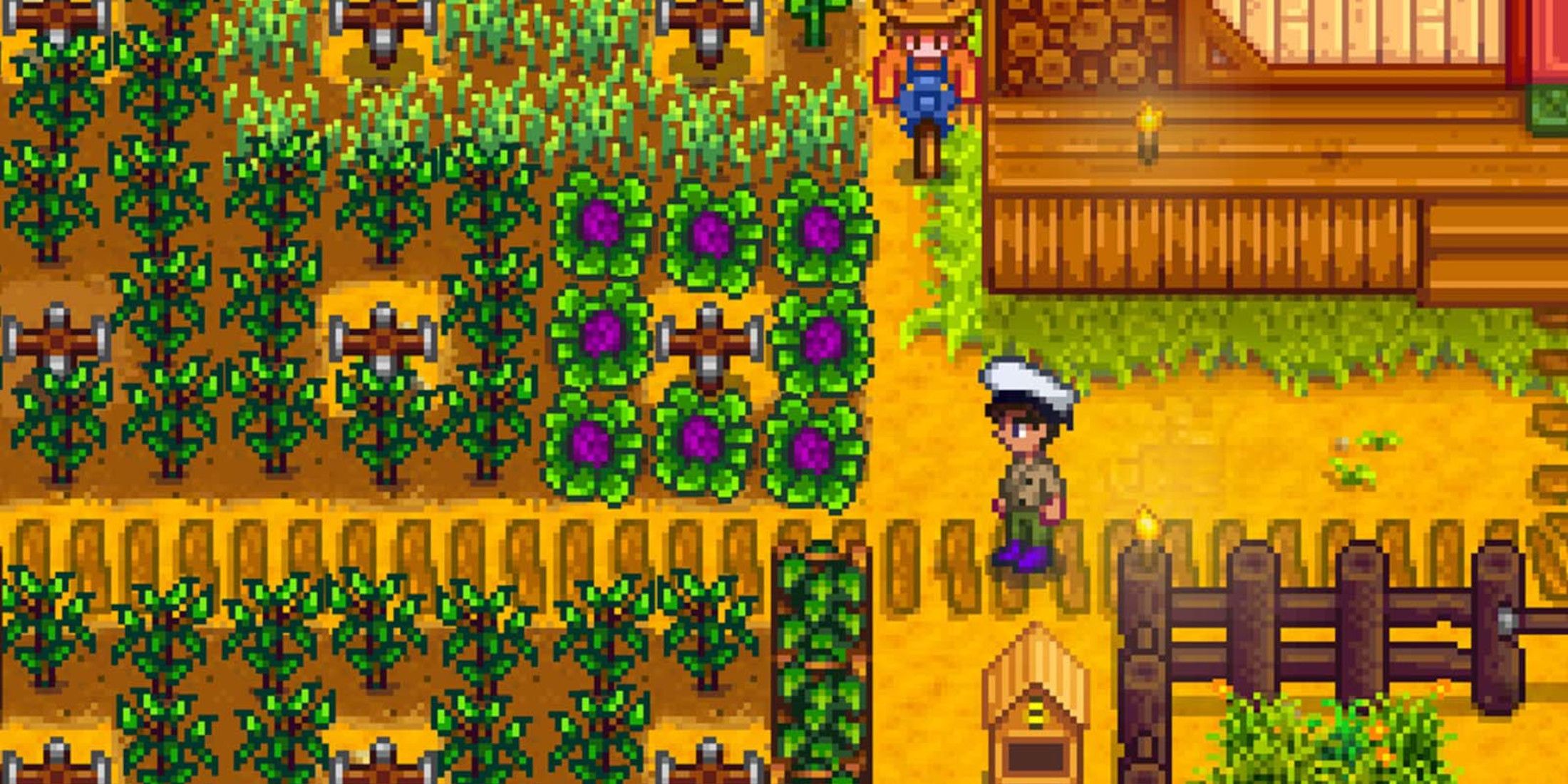
Year 3 and Beyond: Perennial Perfection

By this stage, a farm should run like clockwork year-round.
- Greenhouse & Ginger Island: Plant Ancient Fruit or Starfruit in the Greenhouse and on Ginger Island for year-round harvests without seasonal resets.
- Profit machines: Convert a significant portion of crops into artisan goods.
-
Other milestones in year 3 and beyond:
- Aesthetic & Efficiency: Aesthetic Stardew Valley farms are meant for more than just a pretty facade. They prevent the need for micromanaging. Lay down paths to prevent weed growth, organize storage sheds for efficiency, and add decorative elements now that money should be of no concern.
- Full Automation: Use Iridium Sprinklers for 100% coverage and the Gold Clock to prevent fence decay forever.
With this setup, a farm will essentially run itself, leaving players free to explore, build relationships with Pelican Town villagers, and still make a small fortune without constant micromanaging. It’s a perfect blend of beauty, efficiency, and long-term dominance in Stardew Valley.

Stardew Valley





-
 OpenCritic Reviews
- Top Critic Avg: 90 /100 Critics Rec: 99%
- Released
- February 26, 2016
- ESRB
- E for Everyone (Fantasy Violence, Mild Blood, Mild Language, Simulated Gambling, Use of Alcohol and Tobacco)
- Developer(s)
- ConcernedApe
- Publisher(s)
- ConcernedApe



WHERE TO PLAY






- Genre(s)
- RPG, Simulation
