


It's not an overexaggeration to say that the mechanics pioneered by Dark Souls developer FromSoftware have been the most influential of the past decade. Its impact can be felt within the ever-growing Soulslike genre space, of course, but also in other games like The Witcher 3 and 2018's God of War, whose developers both cite FromSoftware's work as a core combat inspiration.
Soulslike conventions are numerous, but the genre's most central mechanics include a bonfire-like checkpoint and respawn system, commitment-heavy melee combat, minimal tutorialization, and brutal difficulty. Some Soulslike-adjacent games may borrow elements from one or two of these design pillars, but "proper" Soulslikes such as Lies of P or Lords of the Fallen adopt most or all of them. This has led to mixed results industry-wide. FromSoftware's approach to design is undeniably compelling and popular, and while the likes of Demon's Souls and Dark Souls certainly offer a lot of mechanical wisdom for developers to learn from, it feels like the industry is going a bit overboard. Just like the ubiquitous cover-shooter or DOOM-shooter subgenres before them, Soulslikes are reaching a point where volume is beginning to outstrip quality.
FromSoftware-Inspired Soulslike Games Have Been Inescapable for Years
The Soulslike genre is a spectrum. A game can have, for instance, a checkpoint system inspired by FromSoftware's bonfire mechanic without being considered a Soulslike. It's for this reason that, unlike many others, I don't consider something like Hollow Knight to be a true Soulslike since it has much more in common with metroidvanias and 2D action-platformers, only borrowing from FromSoft with respect to certain mechanics. In whatever case, several IPs are clearly attempting to be full-fledged Soulslikes, with some of the most significant including:
- Remnant: From the Ashes
- Lords of the Fallen
- Thymesia
- The Surge
- Enotria: The Last Song
- Nioh
- Mortal Shell
- Lies of P
- Another Crab's Treasure
- Steel Rising
- Code Vein
- Star Wars Jedi: Fallen Order
- The First Berserker: Khazan
- Wuchang: Fallen Feathers
This is to say nothing of the innumerable low-budget and indie Soulslikes that flood Steam each year. Several of the aforementioned titles, including Remnant: From the Ashes and Code Vein, have also spawned sequels, with more likely to come in the future.
Soulslike Trend-Chasing Has Led to Stagnation and Oversaturation
There's a lot to like in the genre right now. Games like Lies of P and Nioh have been hailed as some of the best melee-action games ever, with some fans arguing that they are on par with FromSoftware's own body of work. Simultaneously, however, there have been releases like Enotria: The Last Song and Lords of the Fallen, which received lukewarm to negative receptions due to their lack of polish or innovation. It's these lukewarm projects that may have a more detrimental impact on the Soulslike market space in the long run.
Every genre has bad games, but a series of bland or uninspired games indicates that developers may be leaning on an assumed rubric or format a bit too much, restricting themselves to a set development plan or concept. In the case of so many Soulslike games, this can result in experiences that feel like shallow imitations of their progenitors, those being the FromSoftware Souls games. Put another way, the Soulslike space features a lot of titles which, while not without their merits, feel underwhelming and interchangeable. These lesser games are treading water while FromSoftware keeps swimming forward.
For every Lies of P, there is at least one Lords of the Fallen or Mortal Shell. I don't wish to bash these games too much, but while playing them, I often feel that I'd be better served replaying Dark Souls or Bloodborne again instead. They attempt to add their own twists to combat, progression, or character customization, and although these can be valuable, they aren't enough to make them truly exceptional or boundary-pushing. This category of Soulslike is defined by being "good enough," offering more content for fans of the genre. But the best Soulslike games aren't just good enough—they are revelatory and inspired. And as the Soulslike frenzy starts to dwindle due to oversaturation, these titles will continue to see their cultural and commercial impact diminish.
What Does the Future Look Like for Soulslikes?
Developers will undoubtedly continue to be influenced by FromSoftware Soulslikes when making melee-focused action games: FromSoft's Souls games are as foundational to the modern ARPG as Call of Duty has been to the modern FPS or Super Mario to 2D platformers. But the difference between those Soulslikes that will excel and those that won't is innovation.
For instance, Lies of P is clearly FromSoft-inspired, but it's also remarkably creative and inspired. Ingenious mechanics like weapon-crafting and scaling, breaking enemy weapons through parrying, and deeper progression via Quartz-activated abilities, make Lies of P meaningfully iterative, expanding and recontextualizing core Soulslike design pillars while still honoring them. Lies of P pushes the Soulslike genre forward, rather than just following FromSoft's lead and hoping to be "good enough" to attract wandering Souls fans.
As new gaming trends rise and fall, we will probably see a smaller number of mediocre or merely serviceable Soulslikes. Audiences at large are already more than familiar with basic Soulslike conventions—many gamers would likely argue that they are getting sick of them, actually—so publishers and developers that make little to no attempt to go past these fundamental genre conventions are sure to see diminishing returns over time, leading to a reduction in funding and support for such projects. In this scenario, we will get fewer Soulslike games overall, but the ones we do get will be more likely to be like Lies of P: truly exceptional and original games that aren't satisfied with simply playing second fiddle to FromSoftware.


Dark Souls




-
 OpenCritic Reviews
- Top Critic Avg: 84 /100 Critics Rec: 88%
- Released
- September 22, 2011
- ESRB
- M for Mature: Blood and Gore, Partial Nudity, Violence
- Developer(s)
- From Software
- Publisher(s)
- Namco Bandai





WHERE TO PLAY





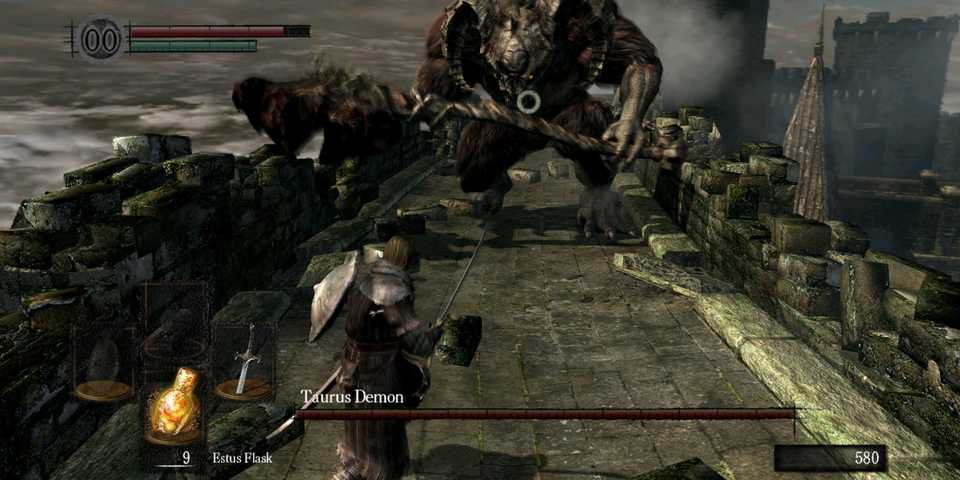
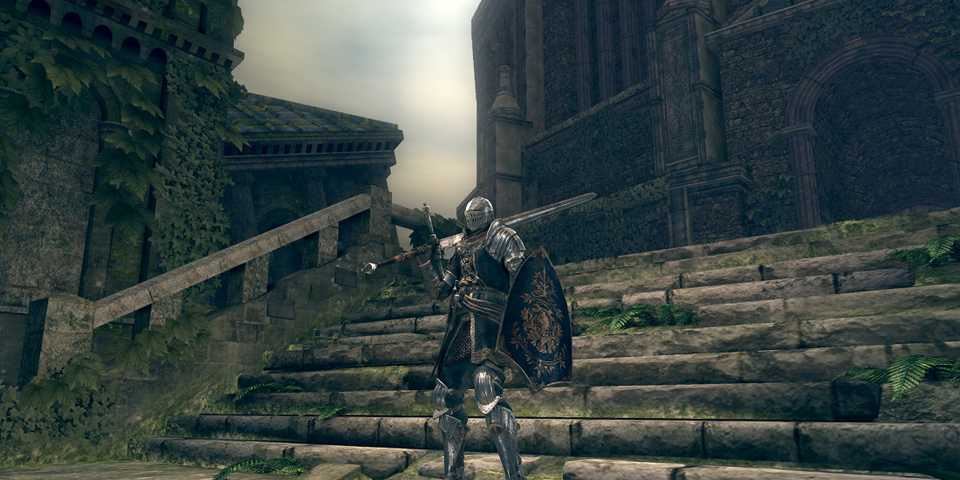
Re-experience the critically acclaimed, genre-defining game that started it all. Beautifully remastered, return to Lordran in stunning detail. DARK SOULS: REMASTERED includes the main game plus the Artorias of the Abyss DLC. This marks the franchise’s debut on a Nintendo platform, and for the first time ever can be played on-the-go with Nintendo Switch™.
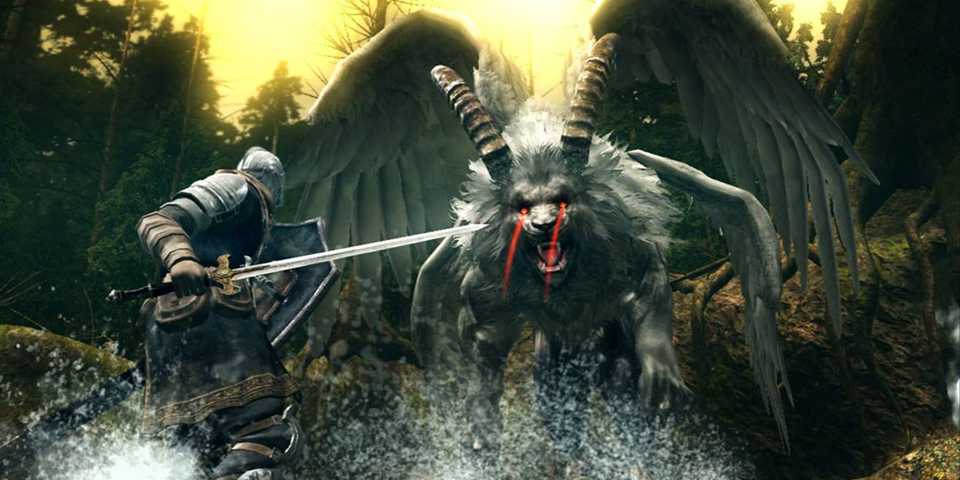
Deep and Dark Universe— Delve into an epic dark fantasy universe stricken by the Curse. Explore its intricate world design, full of hidden passages, dungeons and secrets.
Each End is a New Beginning— Each playthrough surprises you with new challenges and discoveries.
Gameplay Richness and Possibilities— Use hundreds of unique weapon, armor, magic, and crafting combinations to create your own playstyle and gaming experience.
The Way of the Multiplayer (up to 6 players)— Whatever your motivations are to play online – collaboration or confrontation, support or betrayal – you’ll find your true home among the nine covenants.
- Multiplayer
- Online Multiplayer
- Cross-Platform Play
- No, Dark Souls 3 is not cross-platform between PS4 and PC
- Cross Save
- Dark Souls always save your game data using steam cloud
- Franchise
- Dark Souls
- Steam Deck Compatibility
- yes
- PC Release Date
- August 24, 2012
- Genre(s)
- Action RPG, Soulslike, Adventure
- Platform(s)
- Xbox 360, Xbox One, PC, PlayStation 3, PlayStation 4, Nintendo Switch
- OpenCritic Rating
- Mighty
- How Long To Beat
- 100 hours
- X|S Optimized
- no
