


As far as decades go, the 90s were one of the biggest in the history of gaming. In just a few years, players were introduced to everything from Resident Evil to Half-Life to Pokemon, and underneath all these massive releases lies a sea of exceptional games that many players either missed at the time or have simply never heard of.

6 Video Games Based On 90s TV Shows, Ranked
The 1990s were a great time for television shows, and these video games based on popular 90s series brought them to life in spectacular ways.
Many of these games come from established franchises or were the beginning of one, while others were one-offs left in the past, despite being some of the best of their era. Whatever the case, it's always nice to revisit history and find out more about just how far certain franchises, genres, and the gaming industry as a whole have evolved in the years since.
Fit the 9 games into the grid.
Gunstar Heroes
Arcade Chaos Perfected
- Deep weapon-combination systems.
- Inventive, screen-filling boss encounters.
Released in 1993, Gunstar Heroes remains one of the most technically impressive run-and-gun shooters of the 16-bit era. Built for the Sega Genesis, it pushed the hardware with rapid sprite scaling, layered parallax backgrounds, and screen-filling boss encounters that felt years ahead of their time.
Rather than locking players into static weapon upgrades, it introduced a clever system that allowed combinations of elemental shots, creating varied playstyles and encouraging experimentation across repeated runs. Despite the critical praise at the time, it was often overshadowed by more mainstream platformers of the decade, yet very few managed to match its mechanical innovations and relentless momentum.
Einhander
Precise Cyberpunk Action
- Weapon theft and loadout swapping.
- Striking dystopian visuals.
Einhander was released in 1997 as a bold departure from Square's RPG dominance, but that diversion didn't cause any reduction in quality. Set during a dystopian conflict between Earth and a lunar colony, players pilot a sleek fighter capable of stealing enemy weapons mid-battle. That alone transforms encounters into constantly evolving battles that reward adaptation rather than complacency.

The Greatest Video Game Of Every Year Of The 1990s
From 1990 to 1999, there was a groundbreaking game each year. Here are the titles that left a permanent mark in gaming history.
The polygonal visuals and cinematic camera angles made it one of the most visually striking PlayStation shooters of its era, and the soundtrack amplified its industrial tone, reinforcing its oppressive yet alluring atmosphere. While the shoot-’em-up genre was already losing mainstream popularity in the late ’90s, Einhander stood as a refined, forward-thinking example of what could be achieved in the space.
Thief: The Dark Project
Stealth Before It Was Mainstream
- Groundbreaking light and sound mechanics.
- Emergent stealth gameplay.
Thief: The Dark Project fundamentally changed how first-person games approached player power. Released in 1998, it rejected power fantasies in favor of vulnerability and patience, thrusting players into the boots of a master thief navigating a grim, industrial fantasy city.
Features like light and shadow were not cosmetic details but core survival systems, with visibility meters and dynamic sound propagation shaping every decision that players made in the world. Although immensely influential on later stealth franchises, Thief rarely pops up in discussions nowadays, but it will forever remain an important stepping stone in the history of gaming.
Total Annihilation
Unmatched RTS Scale
- Massive real-time unit counts.
- Physics-based combat.
Total Annihilation expanded real-time strategy to an unprecedented scale, replacing smaller armies with sprawling battlefields filled with dozens upon dozens of units operating simultaneously. The fully 3D terrain influenced projectile arcs and line-of-sight calculations, introducing realism rarely seen in the genre at the time, and much of that depth was carried forward into some of the biggest names in the RTS space.
Massive artillery barrages, experimental super-units, and long-range missile systems created wars that felt industrial and overwhelming, and the size of the conflicts became a major factor in the praise Total Annihilation received at the time. However, as it was less accessible than other titles in the genre, it fell into the shadows for many years, becoming an obscure turning point that was arguably one of the most impactful games of the generation.
Myth: The Fallen Lords
Dark Fantasy Tactics
- Tactical squad-based gameplay.
- Gritty, mature narrative.
Myth: The Fallen Lords stripped away base-building to focus purely on tactical squad combat. The game presented players with a grim fantasy world where units had to be carefully positioned to survive brutal encounters, with everything from formations to elevation being important factors in deciding the outcome of a fight.

Games Everyone Was Obsessed With In The 90s
These may not have been the undisputed "best" games of the 90s, but they were undiniably the most popular, and their influence is still around today.
The campaign missions unfolded like chapters of a tragic war chronicle, with losses carrying emotional weight and adding a heightened sense of immersion that was uncommon in the genre at the time. Though critically acclaimed, its time in the limelight faded quickly, despite how well it not only competed in its era, but also holds up today.
Marathon
Before The Modern Revival
- Vertical level design.
- Pioneering FPS gameplay.
Before redefining console shooters, Bungie crafted Marathon in 1994, a narratively ambitious first-person experience unlike any other. Rather than focusing purely on action, it embedded its story within in-game terminals filled with AI transmissions, political arcs, and philosophical undertones, giving the game a more mature feeling overall.
From a combat perspective, players needed to be much more vertically aware of their surroundings, as they were expected to navigate the complex environments without getting lost or running out of resources. Even with the modern revival, many players still have no idea that Halo wasn't Bungie's first rodeo, and that there is a richer history out there for Marathon that has since been lost to time.
Dungeon Keeper
A True Evil Genius Simulator
- Villian-centric dungeon management.
- Memorable humor and personality.
Dungeon Keeper inverted fantasy conventions by casting players as the dungeon’s architect rather than its invader. Released in 1997, its central mechanics revolved around creature recruitment and trap placement, with a humorous tone that turned strategic placements into acts of comedy.
Maintaining morale among monstrous minions required careful room construction and economic balance, while invading heroes threatened to dismantle carefully planned defenses, creating a constant loop of engagement from every angle. While fondly remembered by some, it's often absent from mainstream retro discussions, yet despite this lack of attention, it remains refreshingly unique even decades later.
Starsiege: Tribes
Multiplayer Action Ahead Of Its Time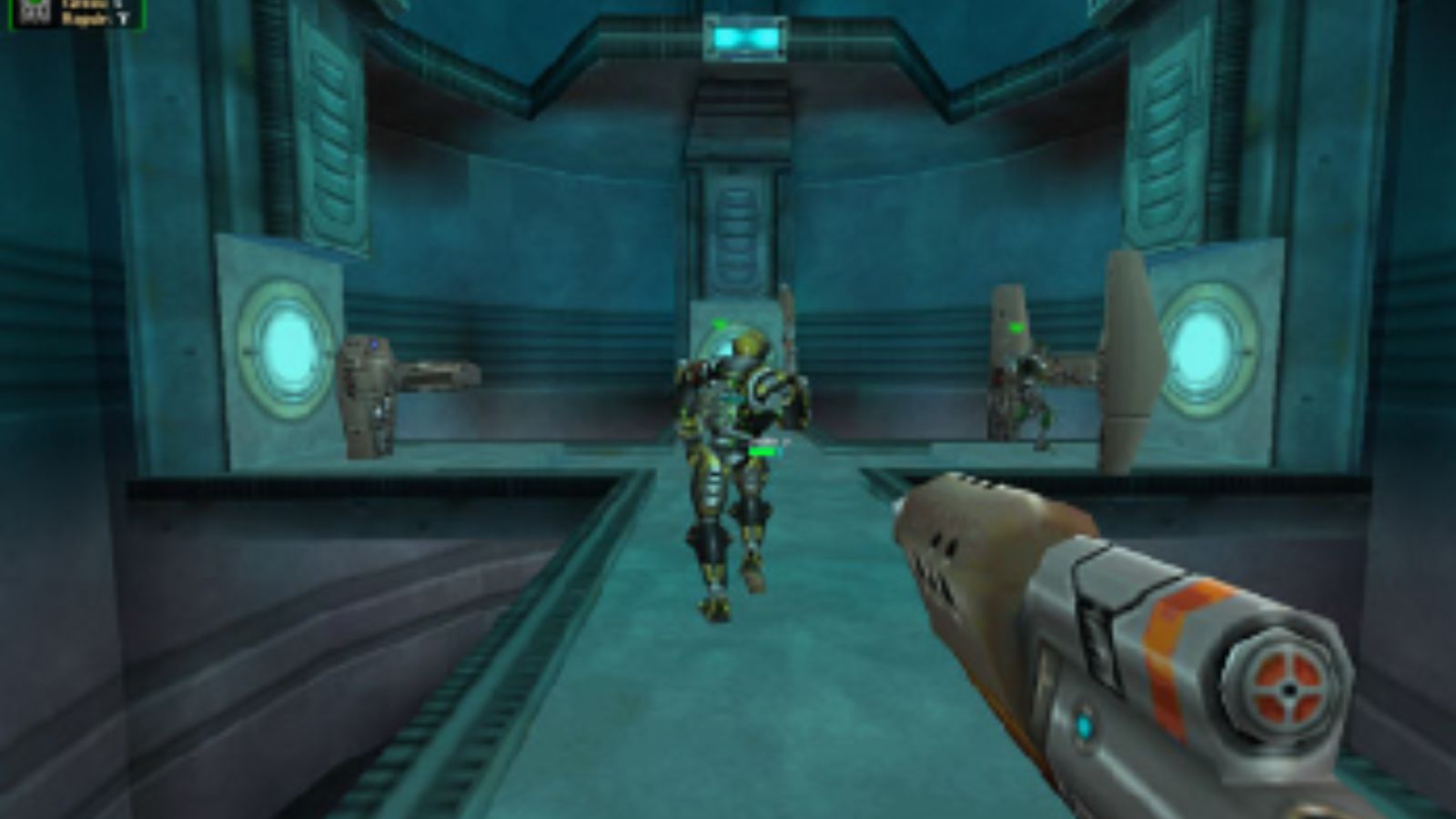
- Large-scale objective-based matches.
- High-speed movement.
Starsiege: Tribes reimagined online shooters with more speed and verticality than anyone had seen before. Supporting large player counts, the game introduced objective-based modes years before they became standard, and the movement potential allowed players to traverse maps at astonishing speeds whilst firing accurate shots at any enemy in sight.
Team coordination determined victory, with roles ranging from flag defenders to high-speed attackers, but above all else, player skill was what really decided the outcome of a match. There have been several attempts to revive the original feel of Starsiege: Tribes, but as impressive as some of them are, the game's legacy will mostly remain in its influence on multiplayer design rather than in modern player counts.
Star Control 3
Expansive Cosmic Diplomacy
- Intergalactic tactical combat.
- Strategic fleet engagements.
Star Control 3 blended exploration, diplomacy, and tactical combat within a sprawling galaxy for players to discover. Released in 1996, it tasked players with negotiating alliances while uncovering interstellar mysteries, an interesting blend that was equal parts strategy and discovery.
A lot of the progression is shaped by dialogue trees and the different alien cultures, emphasizing communication over brute force. The fleet battles are still just as engaging, requiring a huge amount of tactical positioning and awareness to complete successfully. Though divisive among series fans, its ambition and execution remain immensely impressive considering the era it was released in.
MDK
Surreal Sci-Fi Action
- Hybrid sniper and third-person shooting.
- Surreal art direction.
MDK arrived in 1997 with a striking visual identity and hybrid gameplay style that looked and felt completely distinct from everything else in the medium. Blending third-person shooting with long-range sniper mechanics, it encouraged both precision and mobility, forcing players into two opposing playstyles that flowed together absolutely perfectly.
The alien environments defied conventional design, filled with exaggerated geometry and bizarre enemies, and levels were full of satisfying platforming segments that broke up the combat sequences, adding variety to each stage. As great as it was, MDK gradually slipped from the mainstream conversation, but from a creative perspective, it is pretty hard to find anything like it.

90s RPGs That Aged Like Fine Wine
Though the RPGs debuted in the 90s, they have aged incredibly well thanks to their incredible stories, gameplay, and characters.