


Summary
- Climbing in Ghost of Tsushima is intentional, contextualized, and serves a deeper purpose.
- Shadow of the Colossus emphasizes survival and emotional struggle in climbing through unique architecture.
- Genshin Impact transforms climbing into a full-blown survival mechanic with stamina management and puzzle-solving.
Climbing in open-world games can be a pain. Sometimes, it’s a sluggish chore; other times, it feels like the character is made of velcro and gravity has checked out. But then there are those rare titles where scaling a cliff, a cathedral, or a colossal beast becomes the highlight of the entire experience. These are the games that make players want to climb rather than put up with it.

14 Most Satisfying Climbing Mechanics In Video Games
Climbing mechanics can be a tricky thing to pull off successfully in a video game. These titles, however, nailed it.
Some of them strip climbing down to its rawest form, while others turn it into a complex dance of stamina, momentum, and strategy, adding something distinct to the art of vertical traversal. Here are some open-world games where climbing doesn’t just feel good—it feels unforgettable.
6 Ghost Of Tsushima
Like Climbing A Waterfall With Just Your Fingertips









- ESRB
- M for Mature: Blood and Gore, Intense Violence, Language, Partial Nudity
- Developer(s)
- Sucker Punch
- Platform(s)
- PC, PlayStation 4, PlayStation 5

In Ghost of Tsushima, climbing isn’t flashy. It’s not about leaping across rooftops like a parkour ninja or scaling physics-defying cliffs with superhero grip strength. What it is, though, is intentional. Jin Sakai doesn’t climb just to climb—he does it to get somewhere. Whether it's to reach a hidden Shinto shrine tucked away at the top of a foggy mountain or to chase a golden bird to a secret hot spring, verticality in Tsushima always feels like it serves a deeper purpose.
While the climbing itself might feel slower or more measured than in other games, it’s contextualized beautifully. Handholds are realistic, rope grapples make logical sense, and the terrain is organically integrated into the world rather than plastered with glowing markers. The game doesn’t shove climbable walls in the player’s face; it trusts them to look, learn, and move with intent. It’s the kind of system that respects its environment and, more importantly, the player’s patience.
5 Shadow Of The Colossus
The First Time The Player Scales A Titan Feels Like A Religious Experience




No game has ever made climbing feel more desperate than Shadow of the Colossus. Here, climbing isn’t about speed or fluidity; it’s about survival. Wander, a lone figure in a desolate and silent world, must claw his way up the bodies of towering creatures, with each one essentially acting as a puzzle made of fur, stone, and pain. And the moment players lose their grip halfway through a colossus’ shoulder lurch? That’s the game reminding them that they're tiny, fragile, and not welcome here.

8 Best Open-World Games Set In A Dying World, Ranked
Often synonymous with post-apocalyptic settings, these dying open worlds create a palpable atmosphere of loneliness and constant danger.
The stamina meter defines everything. Players have to plan each move carefully—where to rest, when to jump, and whether it’s even safe to let go. These aren’t pre-designed climbing routes either. Each colossus has its own quirks and architecture, and the only way to the top is to learn it, feel it, and hold on for dear life when the sky starts spinning. Climbing, in Shadow of the Colossus, is emotional. It’s a quiet, aching struggle, and every successful ascent feels like a small miracle.
4 Dying Light 2: Stay Human
Grappling Hooks Make Everything Better






- ESRB
- M for Mature: Blood and Gore, Intense Violence, Strong Language, Suggestive Themes
- Developer(s)
- Techland
- Platform(s)
- Nintendo Switch, PC, PlayStation 4, Xbox Series X, Xbox Series S, Xbox One, PlayStation 5

Parkour is the name of the game in Dying Light 2, and climbing is the core that holds it all together. While the streets are infested with Infected, the rooftops are a sanctuary, and getting up there fast can be the difference between life and death. Aiden Caldwell doesn’t just hop around like a trained acrobat; he climbs with momentum, urgency, and just a little bit of panic.
The climbing mechanics take into account stamina, swing physics, and wall types, forcing players to improvise. But what really pushes it to the next level is the grappling hook, which functions more like a momentum-based swing than a teleportation device. Combine that with wall runs, vaults, and zip lines, and it starts to feel like players are turning the entire city into their jungle gym. Verticality isn’t just an option here; it’s survival. The city’s buildings are designed to encourage upward movement, with interiors, ledges, pipes, and cranes all giving players a path to freedom (or a higher place to scream from).
3 Genshin Impact
Stamina Bars And Sky Cliffs






- ESRB
- Teen / Alcohol Reference, Fantasy Violence, In-Game Purchases (Includes Random Items), Users Interact
- Developer(s)
- HoYoverse (Formerly miHoYo)
- Platform(s)
- PlayStation 5, PlayStation 4, Xbox Series X, Xbox Series S, PC, iOS, Android
- Genre(s)
- RPG, Action, Adventure, Gacha, Open-World
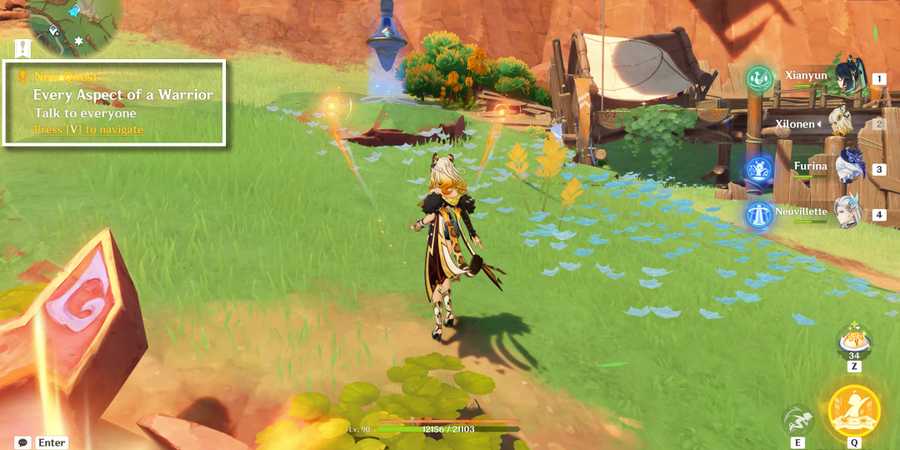
At first glance, Genshin Impact seems like a colorful anime fantasy RPG where climbing is just something players do on the way to the next treasure chest, but the game actually turns vertical traversal into a full-blown survival mechanic. Every cliff face, every sheer wall, becomes a puzzle because of one thing: the stamina bar.

Best Games To Play If You Love Genshin Impact
miHoYo's Genshin Impact is overflowing with content, but if fans want a change of pace, they should check out these other games.
Players need to manage how far they can go, what path to take, and whether they’ve got enough juice left to hoist themselves onto that final ledge. Rain makes climbing harder, food items can temporarily boost stamina, and the world is designed around encouraging experimentation. Thinking of scaling that mountain? Players might need to find a clever route, stop for breaks, or straight-up come back later when their stats are better. That’s what makes climbing in Genshin so satisfying. It’s not automated or guaranteed; it’s something players earn, every inch of the way, with careful planning and just a touch of reckless optimism.
2 Assassin’s Creed Unity
Assassin Parkour At Its Flashiest

While most Assassin’s Creed games have featured some form of parkour or climbing, Assassin’s Creed Unity refined the formula in a way that still holds up. Arno Dorian’s movement system was overhauled to add more fluidity, more logic, and more flair. The introduction of separate upward and downward parkour buttons gave players greater control over how they moved through Paris’ dense architecture.
Climbing in Unity feels deliberate and stylish. Arno reaches out for ledges that make sense, flows across rooftops like he’s memorized every inch of them, and doesn’t magically latch onto walls that don’t look climbable. The movement has a certain heaviness to it, anchoring it in realism without feeling clunky. And few settings lend themselves to climbing quite like Revolutionary Paris. Gothic cathedrals, towering tenements, and ornate rooftops create a vertical playground filled with historic detail. Notre-Dame alone is a masterclass in how climbing should feel—dangerous, majestic, and rewarding.
1 The Legend Of Zelda: Breath Of The Wild
Climbing As A Way Of Life

The Legend of Zelda: Breath of the Wild

- Released
- March 3, 2017


WHERE TO PLAY

- ESRB
- E for Everyone: Fantasy Violence, Use of Alcohol, Mild Suggestive Themes
- Developer(s)
- Nintendo EPD
- Platform(s)
- Nintendo Wii U, Switch
In Breath of the Wild, climbing is a philosophy. The world is built around it. From the very beginning, Link is given a stamina wheel and a dream, and players can go just about anywhere that catches their eye. If it looks scalable, it probably is.
But what makes it sing is how interconnected it is with everything else. Climbing becomes a way to explore, a way to gather ingredients, escape danger, and even solve shrine puzzles. Weather plays a role—rain sends players slipping down walls unless they plan around it, and climbing gear can be equipped to boost speed and efficiency. There are even elixirs specifically brewed to enhance climbing. Unlike most games where climbing is limited to certain ledges or glowing grips, Breath of the Wild says, “See that mountain? Go ahead.” It’s one of the few open-world titles where vertical freedom is just that—freedom. That’s why it still sets the standard.