


Summary
- The Imperial City has a rich history starting with the Ayleids in the Merethic Era.
- Reman Cyrodiil restored the city's prominence, creating the Blades after the Akaviri invasion.
- The Fourth Era saw the Empire decline, with the Thalmor sacking the city before its recapture and the signing of the White-Gold Concordat.
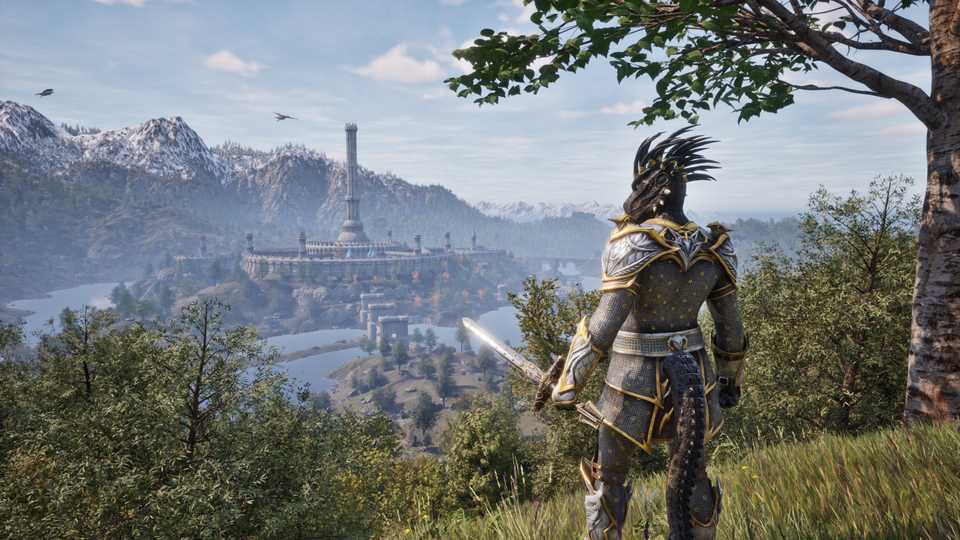
Players of Oblivion Remastered will no doubt have spent hours in the updated depiction of the Imperial City. Having played an important role in Tamriel’s history, the Imperial City has been home to many different races and factions, and it can be seen in some form in three Elder Scrolls games.
In the main quest of Oblivion Remastered, a Daedric invasion subjected the inhabitants of the Imperial City to the wrath of Mehrunes Dagon, almost consuming the entirety of Nirn. But this was only one of many times that the center of Cyrodiil has been at the heart of chaos and conflict, and as a powerful symbol of the rule of men, mighty warriors and petty kings have fought over it for millennia.
Spoilers ahead for Oblivion Remastered.

Oblivion Remastered: Best Witchhunter Build Guide
Here's a full Class guide with some of the best tips to become the most fearsome Witchhunter in Oblivion Remastered.
The Imperial City’s Origins With the Ayleids
Although many of the buildings within appear very human in their architecture, and the name Imperial City implies the many empires of men made it, the city began with the Ayleids. The heartland elves, descendants of the Aldmer, made Cyrodiil their home in the Merethic Era, one of the earliest periods of Tamrielic history. They constructed the White-Gold Tower in the image of the Adamantine Tower, and it and the surrounding walls match the architecture of the Ayleid ruins found around Cyrodiil.
The Ayleids did not live in the city for long. In 1E 243, the Alessian slave rebellion toppled the elven rulers, making the tower the center of the new regime. The Imperial City fell into human hands, and the Alessian Empire ruled from it. The Empire broadly accepted many races under its banner, but a couple of generations after Alessia’s death, the Alessian Doctrines of Marukh found favor, sidelining the non-human races in the Empire, and expelling the remaining Ayleids from the city.
Worship of the Divines in the city began to revolve more around The One, an idea put forth by the prophet Marukh, where a representation of Alessia carried everything divine within itself. The Marukhati Selective, a zealous religious order, operated from the Imperial City, attempting to separate the elven elements from Akatosh. The resulting calamity caused a Dragonbreak, a period of uncertain time when everything happened at once, which was said to last for a thousand years.
The City would then be improved upon over the centuries, adding features such as the Arena, and generally hosting the most important Imperial business. After the Alessian Empire collapsed, nobles fought over the city, with the last puppet emperor of the Alessians being controlled by the nobles of Skingrad.
Reman Cyrodiil Revived the Prominence of the Imperial City
When he was born with the Amulet of Kings in his forehead, the locals of Cyrodiil unquestioningly took Reman to the Imperial City and sat him on a throne that had not seen a proper ruler in centuries. Revitalizing the Imperial spirit, Reman launched his campaigns to rebuild the Empire, eventually coming up against an invasion force of Tsaesci warriors from their distant continent. Recognizing his dragon blood, the Akaviri bowed to Reman, beginning an order of bodyguards and agents called the Dragonguard. The Dragonguard protected the emperor, and soon expanded to include other races in their ranks, becoming the Blades.
The Reman dynasty would continue to rule the city for several generations, restoring the city’s prominence. The emperor’s closest advisors, the Potentate Versidue-Shaie, took over the task of ruling when Reman III was assassinated, arriving in the city to much fanfare, proclaiming the end of the First Era to mark his rule. Eventually, the Potentates would also be assassinated too, and the Reman Empire fell apart, beginning the period known as the Interregnum.

Oblivion Remastered: Should You Join the Blades?
The Blades are the Emperor's elite bodyguards serving the Emperor in Oblivion Remastered. Here's how to join them.
The Interregnum Period and the Soulburst
Many petty warlords would try to claim the throne during this time, but the lack of any Dragonborn made attempts at dynasty shaky. The most successful pretenders were the Longhouse Emperors. Seen as little more than savages by many, the Reachmen under Durcorach the Black Drake successfully conquered the region, and Durcorach established the dynasty of Longhouse Emperors.
The Longhouse Emperors would last for three generations until Emperor Leovic legalized Daedra worship in Cyrodil. Already a questionable ruling line, this was all it took for a full-on rebellion, and the Longhouse dynasty was crushed. The ambitious noble Varen Aquilerios led his forces into the city in a battle that completely destroyed the market district, and was ultimately successful, becoming the de-facto ruler of Cyrodiil. But Varen was not a Dragonborn, and in an attempt to become one, he trusted the necromancer Mannimarco to use the Amulet of Kings to make him one.
When Mannimarco betrayed Varen, he unleashed the Soulburst, a massive wave of arcane energy that emanated from the Imperial City. This heralded the Planemeld, where Molag Bal began to merge his realm of Coldharbour with Tamriel. With so much confusion about who had caused it, blame for the Soulburst fell on the Imperial City Mages Guild, who were expelled. In its place, the Fellowship of Anchorites was installed, a cover for Mannimarco’s Worm Cult.
Among the chaos, three factions made up of Tamriel’s many provinces aligned to fight the Three Banners War for control of the Imperial City. With the provinces occupied, Molag Bal’s worshippers searched for the Sublime Brazier, the key to relighting the Dragonfires, as destroying it would forever open Tamriel up to the Daedra. As the various battles came to a head, the Vestige was capable of returning the Amulet of Kings to the city, stopping Mannimarco and ending the Planemeld.
Tiber Septim Claims the Imperial City
The Interregnum persisted for centuries, until King Cuhlecain conquered Cyrodiil with his general, Talos of Atmora. But Cuhlecain would never be properly crowned, as he was killed in mysterious circumstances, so his most prominent general, and a man of dragon blood, took the throne. Talos of Atmora became Tiber Septim, beginning the Septim line of emperors, restoring the Dragonborn status to the Empire.
While the Septim line remained mostly unbroken, the War of the Red Diamond in 2E 121–127 was the first proper challenge to the Third Empire. Instigated by Potema, the Wolf-Queen of Solitude, many provinces, most notably Skyrim, rose up against the Imperial City. While it was unsuccessful, the war dragged on for decades, leading up to the siege of Solitude, which includes the genesis of the fan-favorite Skyrim quest The Mind of Madness.
In the late fourth century of the Third Era, Uriel Septim VII was imprisoned by his battlemage, Jagar Tharn, who ruled the Empire as if he were Uriel. It suffered greatly in his hands, and many Imperial allies were alienated by Tharn until the eight parts of the Staff of Chaos were united and Tharn was destroyed. Many locals of the city were uneasy following Tharn’s defeat, suspecting Uriel’s real children of being Tharn’s puppets, causing a riot that attracted a bloody reprisal from the Imperial Guards.
In 3E 433, the Oblivion Crisis erupted. Mankar Camoran had seeded Mythic Dawn cultists all throughout Tamriel, and in one move, killed Uriel Septim in the sewers beneath the city, with his sons falling just before. Mankar would use the city as a recruiting ground, attracting followers with his Mythic Dawn Commentaries, until the Hero of Kvatch and Martin Septim confronted him and stopped the invasion by Mehrunes Dagon.

Oblivion Remastered: All Heaven Stones & Where to Find Them
Here’s how you can find, and activate, all of the heaven stones to get powerful spells in Oblivion Remastered.
The Imperial City in the Fourth Era
The Fourth Era saw a rapid decline in the Empire. With no more Dragonborn emperors, and provinces recovering from the Oblivion Crisis, the authority of the White-Gold Tower seemed distant to many. In Morrowind, the Empire was hated for abandoning it during the crisis, and soon invaded by the Argonians, causing both provinces to eventually leave the Empire. In Cyrodiil, ambitious warlords arose, with Titus Mede of the Colovian Estates proving the victor. Umbriel, part of Clavicus Vile’s Daedric realm, arrived above the city in 4E 48, seeking to use the White-Gold Tower to sever itself from the Daedric Prince forever.
With the Mede dynasty installed, the Empire regained some sense of stability, but it was not enough to keep the provinces onside. The rise of the Third Aldmeri Dominion and Thalmor led to Elsweyr and Valenwood seceding from the Empire with Alinor, culminating in the Great War. After several years, the city was sacked by the Altmer, claiming it for themselves.
But in a surprising reversal, the Battle of the Red Ring saw the Imperial forces under Titus Mede II reclaim the city. With both sides heavily bruised from the conflict, a compromise was reached, and the White-Gold Concordat was signed, outlawing worship of Talos, with southern Hammerfell given away to the Aldmeri Dominion.
After this, the state of the Imperial City is unknown, although, given the weakened Empire of the Fourth Era, and the ascendency of the Thalmor, it is unlikely to return to prominence soon. Players of Oblivion Remastered will possibly get the last look at the city at its height in the late Third Era, but perhaps a new Empire will rise again some day, and Cyrodiil will be restored.




-
 OpenCritic Reviews
- Top Critic Avg: 82 /100 Critics Rec: 87%
- Released
- April 22, 2025
- ESRB
- Mature 17+ // Blood and Gore, Sexual Themes, Violence
- Publisher(s)
- Bethesda







WHERE TO PLAY





- Engine
- Unreal Engine 5
- Genre(s)
- Action, RPG, Open-World, Adventure
