


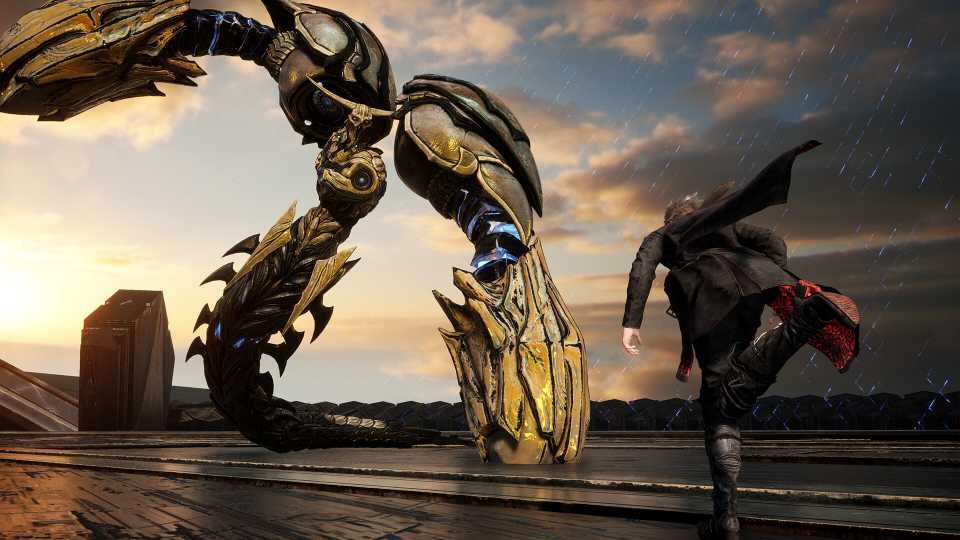
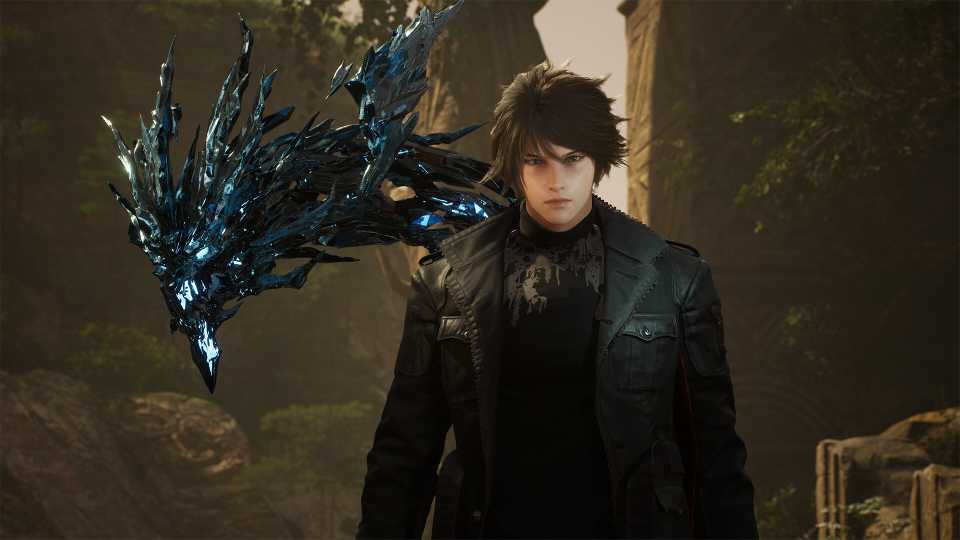
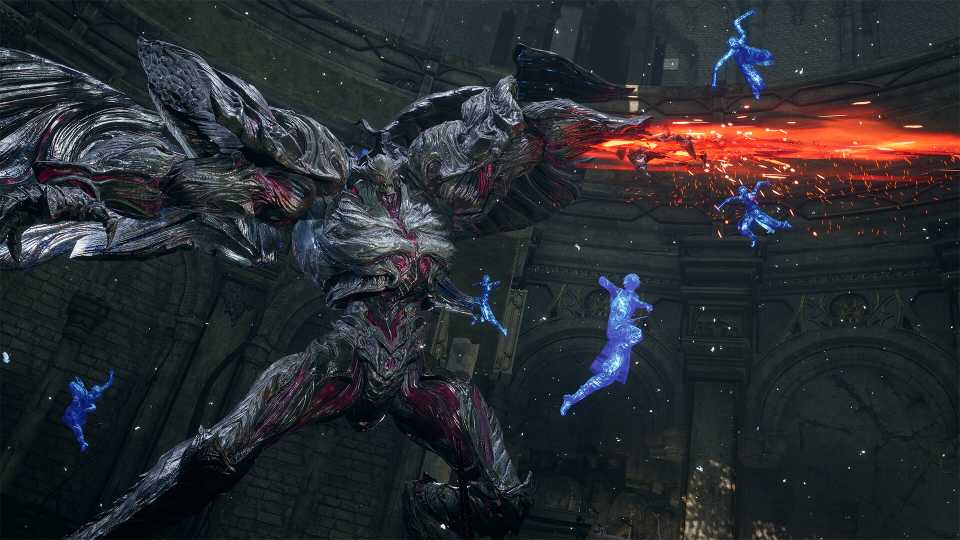
While it certainly has a story to it, the heart and soul of Lost Soul Aside is its combat. This is clearly evidenced by the fact that the game is essentially a boss-rush game, with very limited exploration and combat encounters between bosses. With such an emphasis on combat, then, Lost Soul Aside's protagonist, Kaser, needs plenty of power at his disposal, and the majority of that comes by way of Arena, a mysterious dragon who ends up accompanying Kaser for his own benefit.

In just about every way, Lost Soul Aside's Arena is as "backseat driver" as they come, with regular commentary about the game's story, combat, exploration, and even Kaser, the protagonist. Unfortunately, once he unites with Kaser, he's there for good, meaning players who find him grating will have no choice but to put up with him for the game's 20-hour runtime. That being said, at least Kaser gets a lot of his power from Arena, otherwise there wouldn't be much reason to keep him around.
Lost Soul Aside's Arena Is the Classic Overbearing Companion

It's Been Done Before
One of the main reasons why the characteristics of Lost Soul Aside's Arena are hard to ignore is because a companion like him has been done many times before, and almost every time it has been done, it has been met with criticism. In many ways — primarily during the first half of his relationship with Kaser — Arena is reminiscent of Forspoken's Cuff, who quickly became infamous for his non-stop banter with Frey, the game's protagonist. Rather than being seen as witty or endearing, however, Cuff's dialogue was more on the repetitive, grating, and tonally-awkward side of things.

Forspoken's Cuff is just one of the more recent companions like this, as there is actually a whole lineage of Cuff-like companions that have rubbed players the wrong way. Zelda: Ocarina of Time's Navi, for instance, while she wasn't always rude, was still seen as annoying for how often she interrupted or overexplained things. Borderlands' Claptrap is yet another companion that many fans of the series and those who choose to stay away from it have come to hate, to the point that there's even a volume slider for his dialogue in Borderlands 4. Needless to say, the gaming industry didn't need another companion like this, but here comes Lost Soul Aside's Arena.

And Arena is very much the same as his spiritual predecessors. For one thing, he's incredibly arrogant, constantly talking about how powerful he is despite needing Kaser in order to break out of prison and walk — or float — among the living. Something else, though, is that he tends to overexplain things. One of his first instructions given to Kaser, for example, was "There is a console ahead, use it to overload the energy chamber," even though it was clear by the level's design that was the objective. Finally, any assistance he attempts to provide in combat is either too late or misplaced, due to the fast-paced, chaotic nature of Lost Soul Aside's combat encounters.
Kaser's Forced to Stay With His Arrogant Backseat Driver
As it was with Rey and Cuff in Forspoken, Arena isn't just along for the ride in Lost Soul Aside, as he provides Kaser with the power he needs to overcome the foes ahead of him. From a gameplay perspective, this is great, since it expands combat by granting Kaser new abilities he wouldn't have had otherwise. However, this means players are forced to have Arena with them at all times, unlike, say, the Sages of Zelda: Tears of the Kingdom, who can help out in combat and exploration but never talk and can also be deactivated at any time.

Fortunately, Arena's relationship with Kaser does improve as Lost Soul Aside's story progresses, with him becoming a bit humbler towards the protagonist, despite his arrogance still coming out. With that, he becomes a little more bearable as a traveling companion, though not by much. At the end of the day, he still talks a lot and fails to acknowledge how much he has come to rely on Kaser, even from the point of him being rescued from his prison. Hopefully, future games will learn from companions like Arena and Cuff, who, though they benefit gameplay, often hinder narrative.



-
 OpenCritic Reviews
- Top Critic Avg: 63 /100 Critics Rec: 22%
- Released
- August 29, 2025
- ESRB
- Rating Pending
- Developer(s)
- Ultizero Games
- Publisher(s)
- PlayStation Studios



WHERE TO PLAY


- Engine
- Unreal Engine 4
- Genre(s)
- Action RPG, Adventure, JRPG
