


The beloved atmospheric horror series Little Nightmares is getting a third entry soon, with Little Nightmares 3 poised for an October 10 release date. Little Nightmares 2 did much to expand on the original's gameplay by introducing an AI companion, Six, who brought a new dynamic to puzzle-solving by involving a second party. Continuing the trend, Little Nightmares 3 pushes things even further by being designed from the ground up for two-player co-op. Players assume the roles of Low and Alone, who possess unique items to assist one another in various ways. Communication, teamwork, and quick thinking will be key to success in this surprisingly challenging yet artful horror game.
The Best War Games recently sat down with Coralie Feniello, producer at Bandai Namco Europe for Little Nightmares 3. During the interview, Feniello spoke about how Little Nightmares 3 builds upon the franchise's strengths through tense co-op gameplay, as well as how the team devises the various nightmarish scenarios in which Low and Alone find themselves. Additionally, Feniello spoke about the future of the Little Nightmares franchise, which appears to be just getting started. This interview has been edited for brevity and clarity.

Little Nightmares 3 Hands-On Preview: A Leap for the Series
The Best War Games spends some time with Little Nightmares 3, an upcoming atmospheric horror game with a memorable art style and tense co-op moments.
Telling a New Little Nightmares Story

The Best War Games: Little Nightmares games are known for their wordless storytelling. How do you approach the narrative of Little Nightmares 3 without any dialogue?
Yeah, I think the narrative is really interesting for Little Nightmares 3. Because the characters don’t have voices, it forced us to approach storytelling in a different way. One of the most important elements is obviously the environment. The community knows to really look at everything, and we love reading and seeing all the theories people come up with—it’s really cool.
But it’s also about having story points in the narration that anyone can understand. We don’t want to lose the player. We want a story that works for everyone, and then, if you’re very curious, you can dig deeper, notice more details, and start to understand the bigger picture of the world.

The Best War Games: You mentioned the game’s community. What stands out to you most about Little Nightmares’ fans?
Well, I think it’s the way they are making theories. They are looking at everything in so much detail, and I’m always impressed by what they come up with. We don’t want to say anything, because we want them to continue talking about it, and it’s super cool to see how much they love the universe.
I think now, also with the transmedia we are releasing—we have a podcast, and many things as well—everyone was really involved in that. It’s about getting the whole “it’s an entire world” feeling and understanding it. With the podcast, we’ve started to talk about the Counties, which are kind of the real world, even if we don’t really like to call it that, and the Nowhere, which is the world of the nightmares—the world of the games, basically.
So with the podcast we’ve started to show those worlds, and we’ll continue to do it with other things. It’s really interesting to see how these are integrated and how the community will understand more about them.
The Best War Games: You also mentioned fan theories. How do those theories factor into development? Do they inspire you, or guide some of your decisions?
We try to keep detached from that. We have a look, we see what’s going on, but we try not to be influenced by it, because we want to tell our own stories. We don’t really want to just take things from the fans. But when they are right, it’s really cool to see. And sometimes they come up with stuff that is crazy, but also super interesting.
The Best War Games: Without spoiling too much, can you talk about what kind of story you wanted to tell in Little Nightmares 3?
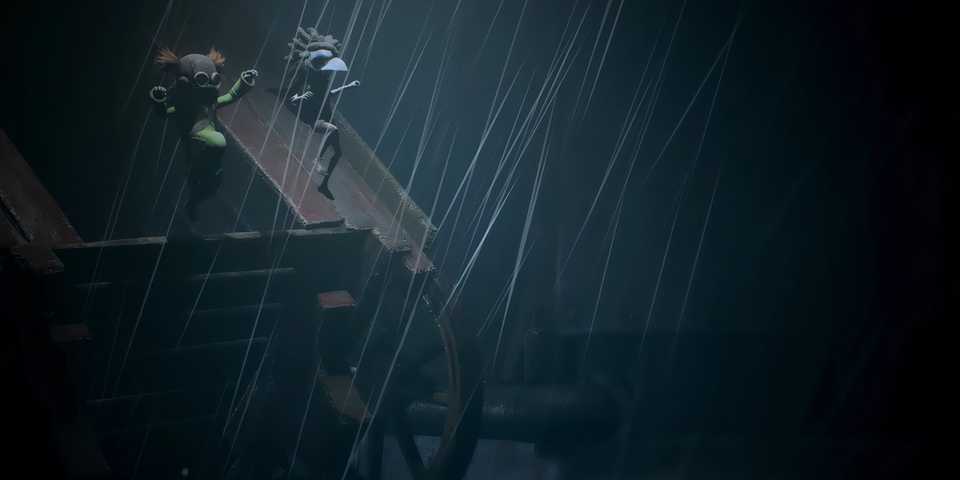
I think it would be too much of a spoiler. But mainly, it’s a story of friendship. You might have seen that Low and Alone are super close, and I really like how they interact within the new Demon Carnival. You’ve seen the small cutscene in there, and the way the relationship works is a bit different in that setting.
I really want players to see the whole relationship—how it evolves from the beginning to the end—and I think that will be the main thread. But then, of course, there is everything else.

The Best War Games: Can you talk about the new setting and how it contrasts with previous settings throughout the series?
Each chapter has a very different setting, and I think that’s something new. In Little Nightmares 1 and 2, the chapters were a bit more similar—except for the last one, the Transmission, which was completely purple and pink.
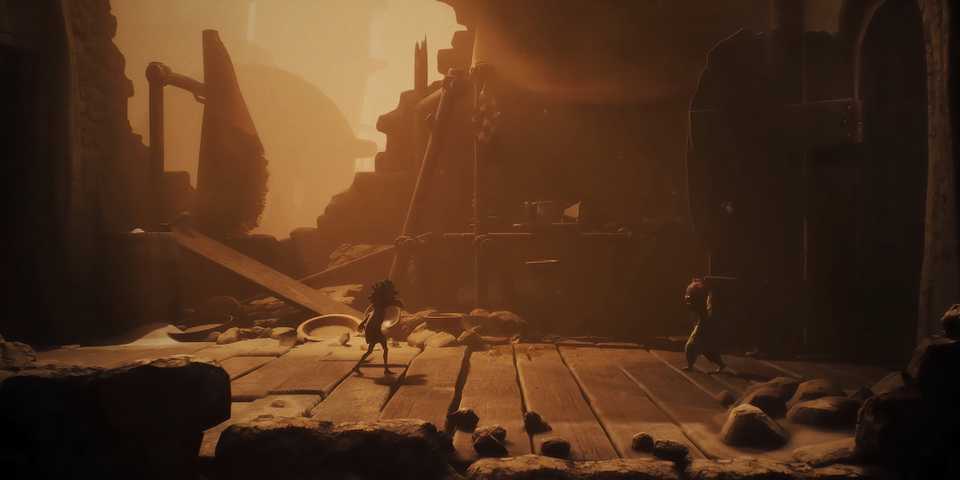
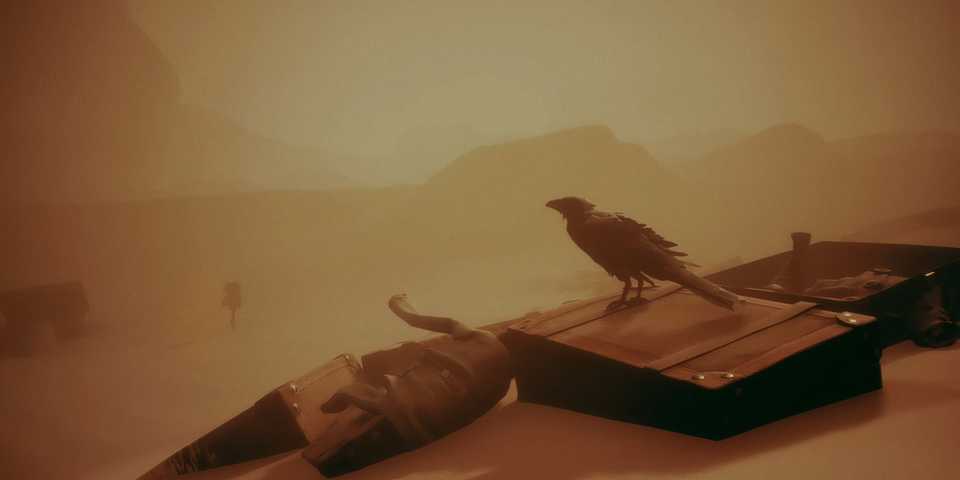
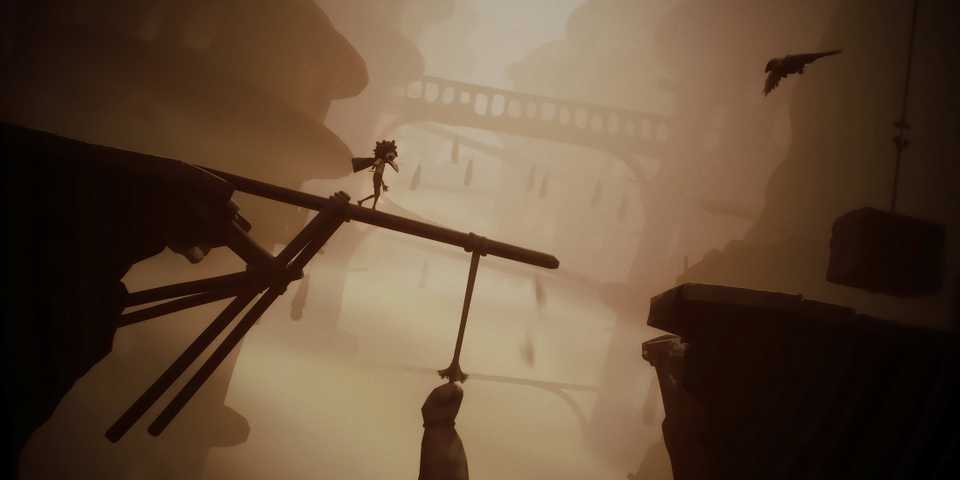
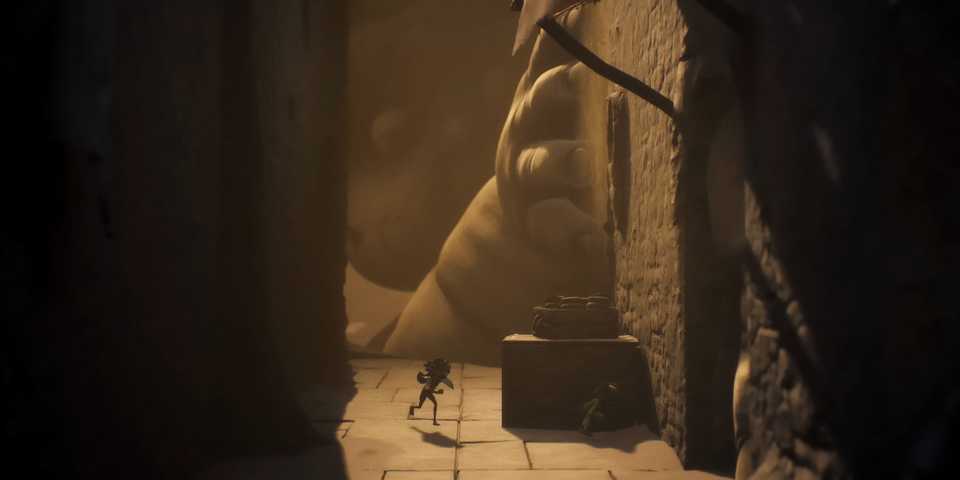
Here, we really wanted to show different places, different environments, and push that further. You can see each chapter has a very specific color grading, and we worked a lot on that. The Necropolis, which is the first chapter we showed when we announced the game, was a big step for us. We wanted to have a chapter that was brighter, with warmer colors than usual. It took a lot of process to reach the right balance—at first it was too bright, so we toned it down until we found that disturbing orange tone.
Each chapter was a bit like that: finding its own personality. This one is the best representation, because it feels so different from the rest. And I think every chapter, and every enemy too, has its own personality. I’m really looking forward to everyone seeing the whole game and all the chapters.
The Best War Games: Little Nightmares 3 is designed from the ground up for co-op. How did that affect your approach to puzzles or combat encounters compared to the previous games?
Yeah, it does change things. In Little Nightmares 1 and 2, at most, you had Six as an AI, but she wasn’t there all the time. Now, with Little Nightmares 3, we had to have another character present all the time. So it was really a challenge from a design perspective, making sure the whole game stayed interesting with two characters.
As you said, we started by developing the multiplayer first, because that was the new element, and it’s more complicated to put in place from the beginning. We also wanted the AI to feel as human as possible. So we began with multiplayer, seeing how people interact with the game and how they play together, and then we tweaked the AI.
When we did playtests—several sessions across development—we always had both multiplayer and single-player. That allowed us to see how people interacted with multiplayer and how we could make the AI more interesting. And yeah, tweaking that AI to keep the balance has been an ongoing process.

The Best War Games: Did you find it difficult to adjust the AI so that it’s not overly helpful to the point where it removes the tension, but still helpful enough to be useful?
Yeah, completely. It’s hard to help the player when they need it without making them frustrated, while still giving them time to think. We’ve been working a lot with what we call “interest points.” Basically, when you get close to the solution, the AI will follow. Sometimes the AI might do something for you, or you might have to interact with something for them to react. Things like that. So we’ve been approaching it in that way.
The Best War Games: Speaking of challenges, what would you say has taken the most effort to get right in Little Nightmares 3?
Yeah, multiplayer is something really interesting from a design point of view. Narration was also quite complex, because you need something simple enough for everyone to understand—even without words—but still complicated enough to stay interesting.
We had the story we wanted to tell in mind from the beginning, but translating that into something everyone would understand was the challenge. We tested with different players to see what they understood from the story and what they didn’t. For me, it’s also very important not to give everything away—we want players to think about things.
It’s always about reaching that balance: where is the frustration? With dying, it’s the same in design. Sometimes we want the player to feel very small, to feel like they don’t belong here, to feel fragile. But if you go too far in that direction, they might become very, very frustrated.

The Best War Games: Is there an aspect of the game that players may not realize you worked especially hard on? Something that’s deceptively complex or challenging to put together?
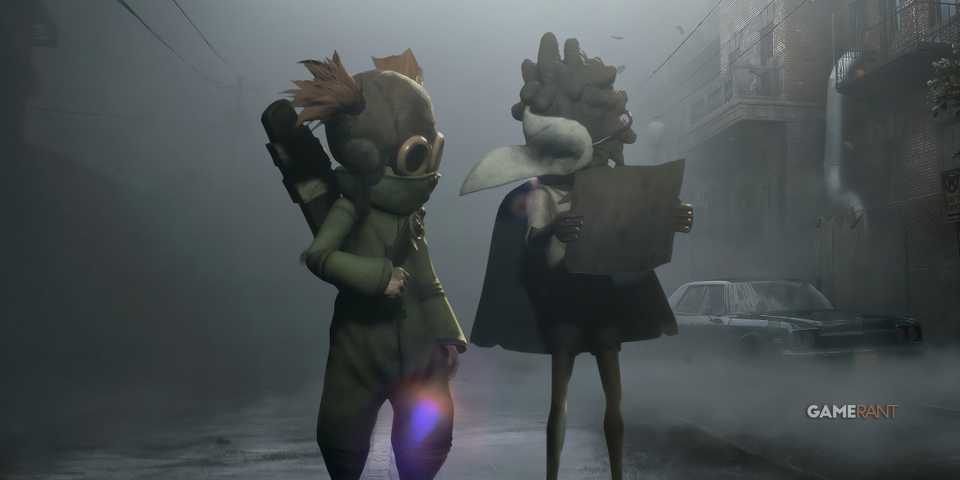
I think the design of each of the two player characters, Low and Alone, is really based on shapes. Alone has the pigtails, Low has the mask, and it was the same for Six and Mono. The idea is to create a silhouette that will be memorable for everyone, and that was the starting point for all the Residents.
It has been super complex to create something that feels like an original atmosphere—something new that doesn’t fall into classic horror, because we don’t want to go too far in that direction. We don’t want gore or things like that. Instead, we talk about “charming horror,” and getting that aspect right is quite hard, especially with the Residents, the enemies.
The Best War Games: What were the early conversations like for Little Nightmares 3? Were there aspects of the game that were decided early on?
We started with the multiplayer because it was something the fans wanted. Since in Little Nightmares 2 we introduced it with the AI, we really wanted to deliver on that this time. So it started there.
Then we continued with the overall narration—deciding what we wanted to tell from start to finish, and who the characters would be. Narration has had a lot of work put into it. I think it’s where we’ve done the most back and forth, testing, and iteration. Because, yeah, as I was saying, non-verbal narration is super hard to get right.

The Best War Games: Do you recall any moments during development where you tried a feature or idea and ultimately decided not to go that route?
Yeah, I don’t know if I can tell you too much about that, because you’ll see it when you play the whole game. There are features I really love now, but wow—it was so hard to get them right.For the chapters you’ve seen, I think it’s more about the animations. It’s been super complicated to figure out how the Residents should move and how to make them feel right. Take the King, for example.
At the beginning, he was nothing like what you see now. I remember telling the team, “Right now, it just looks like a guy who is completely drunk.” We had to find that balance—it needed to feel weird, but not so weird that you couldn’t identify or understand anything.
Animations are super important. We had a lot of back and forth with the team, whether it was the cutscenes you’ve seen or the smaller details. For the good team, we needed them to be cute, but not too cute—more like charming. That balance is really hard to get, because if you push the emotion too far in the animations, it doesn’t feel like Little Nightmares anymore.
And yeah, that’s something I really love—animation is one of my specialties.
The Best War Games: What are the design pillars behind Little Nightmares? Are there aspects that are foundational when you’re working on this series?
The most important thing is the setting. If you look purely from a design and gameplay perspective, it’s not really that complicated. One of the pillars is that it’s very tactile—you take things, you push things, you pull on them, you jump. There really aren’t that many features in terms of controls and character actions.But making that interesting comes down to the setting. Each time the team came up with a puzzle idea, we would always ask, “Okay, that’s interesting—you pull this, the other one does that. Cool. But what’s the setting for it?” That’s where it becomes interesting.
For example, if you take the puzzle where you’ve separated the head and it rolls down, the mechanics themselves aren’t complicated—it’s just placing something. But if it had been a box instead, it wouldn’t be interesting at all. Here, though, you replicate the action with something that’s disgusting, and it makes you feel weird about what you’ve done. I think that’s the main point.
Building Upon the Little Nightmares Series

The Best War Games: The Little Nightmares series balances between horror moments and puzzle-solving. How do you approach that balance and determine how many of each type of sequence to include?
We always start with paper design. We put a level map on paper and lay it out that way. Each room is drawn, because basically—I don’t know how visible it is for you, but with the dollhouse camera you can see the physical rooms, and each one has a name.So we put them on paper and decide, “Okay, this part will be a chase, these parts will be puzzles,” and so on. From there we start trying to balance it. But development is never that easy—it never works perfectly. It’s just a starting point.
Then we put it into the software and see how it feels. Sometimes we tweak it, add new puzzles, and so on. It’s always a back-and-forth process, and really the only way to do it is iterative.
The Best War Games: As the series’s third installment, what aspects of the previous games were you most interested in improving or building upon?
I think the obvious one would be cooperation. In Little Nightmares 2, you had the AI, but she wasn’t there all the time. Now you have two characters together all the time, whether it’s another player or the AI. Cooperation is there from start to finish, and I think that’s the main difference.
Then we have all the different chapters and how they look so different, because atmosphere is very important to capturing childhood fears. In the first and second games, that was very visible for players. In the first one, you had the Janitor, searching under the beds—that’s very tied to childhood fears. In the second, you had the Teacher, which is something everyone can immediately recognize.
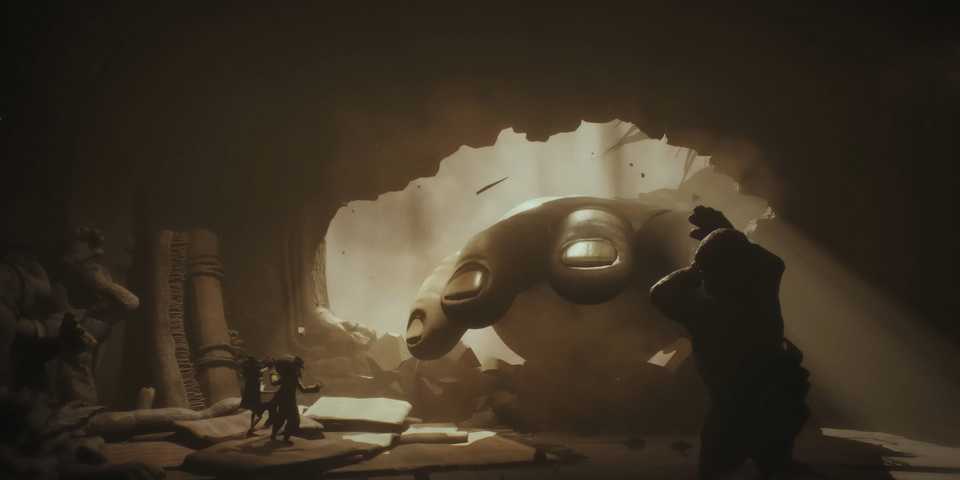
Here, it was more complicated because we went a bit farther from that, but we still needed to keep the feeling of childhood fears. For example, the Monster Baby is just a giant baby, but I think everyone had a doll at some point that made them feel uncomfortable. That’s something that resonates with everyone, even if it’s less direct than the Teacher.
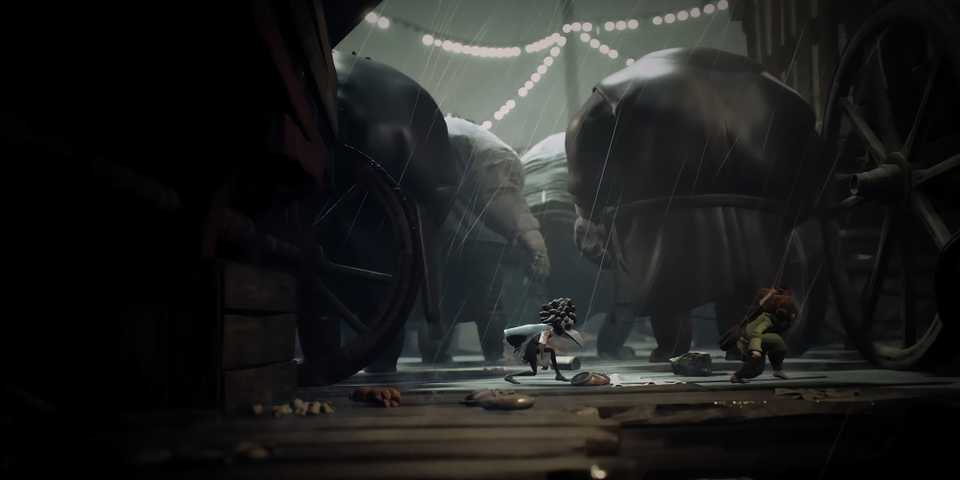
With the Carnival in this one, it’s more about the fun fair—the feeling that when you’re a child, a fair can be fun and exciting, but also overwhelming. There are lots of people, lots of noise, and you can feel very, very small. I remember when I was young, I went to something like that—it was a showcase or a fair—and there was a big clown. It was super scary for me, and I even had nightmares about it. But for my parents, it was just, “Yeah, it’s cool, we brought her to the fair.” So, yeah, everyone has something like that.

The Best War Games: Do personal stories like that come into play often within the team?
Yeah, I think it’s core to the way of developing a game like that. I don’t really have another example… but yes, we had discussions with the team about what your fears are, basically, and things like that.
The Best War Games: With Supermassive Games joining the team on this, did they bring any philosophies or approaches that stand out to you?
The obvious one is the fact that they’ve been working on multiplayer and horror for a long time now, like with The Dark Pictures. So it was something they brought—how do you bring horror, and how do you bring fear to people when they are together? When you’re with someone, talking with someone, it always turns the fear down a bit. So it was really important to have people who understood that. I think that’s the main one.
Beyond that, everyone working at Supermassive loves the series. They checked everything in Little Nightmares 1 and 2, trying to understand how things were done. They spent a lot of time studying all that.
At the same time, they’ve added different elements, like the relationship between Low and Alone. It’s brighter, and it’s really close to friendship—different from what we saw with Mono and Six. It was important to bring something new while keeping the same setting and DNA of the franchise.

The Best War Games: How do you hope players feel, or what would you like them to think about when they step away from the game?
I don’t want to spoil the end of the game, but I think it’s something where, in every detail, you have this kind of bittersweet feeling. I’m really looking forward to seeing the reaction at the end, because I love it. But yeah, it’s really that kind of thing—something you carry with you for a while afterward. That’s always what I want for the players.
The Best War Games: Is Little Nightmares 3 intended to be a capstone for the series, or is there more to come afterward?
With the showcase recently, we’ve shown how much new stuff we’re working on, and there is the VR game as well. I think this is just the beginning.
The Best War Games: Is there anything we didn’t get to that you’d like to mention?
I think we’ve talked about a lot of different things I love about the game so far, but we haven’t really talked about the items for Low and for Alone. That was a design challenge as well. In Little Nightmares 2, Mono sometimes had items—like something to hit with—but we wanted to keep our characters feeling fragile while still adding interesting gameplay with new items.
That was a big challenge, but also really interesting from a design point of view. Giving them different items shows the interaction between the two players even more in co-op. You’ll be talking with the other player—like, when you find something, you tell them, “Okay, I can do this, I can try that.” It leads to a lot of trial and error. I really loved that aspect, and I think it was a very interesting part of development as well.

The Best War Games: It encouraged a lot of communication between me and the person I was playing with. I think trying to figure out how to use the items is a fun part of co-op.
I think in the playtest we’ve seen some couples and friendships being destroyed by the game. Sorry if that happens when the game releases! But that’s also what makes a good game.
The Best War Games: Any last thoughts you’d like to share?
I’m really looking forward to the game’s release on October 10, 2025, and to seeing people play and enjoy the whole story. That’s what I want most—to see their reactions.
It was also super cool to see you playing the Carnival, because it’s a chapter I hadn’t really seen anyone play until recently. Watching people enjoy it has been really, really cool.
[END]




-
 OpenCritic Reviews
- Top Critic Avg: 71 /100 Critics Rec: 61%
- Released
- October 10, 2025
- ESRB
- Teen / Blood and Gore, Violence
- Developer(s)
- Supermassive Games
- Publisher(s)
- Bandai Namco Entertainment




WHERE TO PLAY




- Engine
- Unreal Engine 5
- Genre(s)
- Puzzle, Platformer, Horror
