


Over the last two decades, Double Fine has developed and released over 30 video games. While not all of these projects have been huge commercial or critical successes, the vast majority have, at the very least, embraced Double Fine's core identity, being experimental entries in new genres that often put humor and heart at the forefront. Unfortunately, Keeper is missing a good portion of that trademark Double Fine identity.
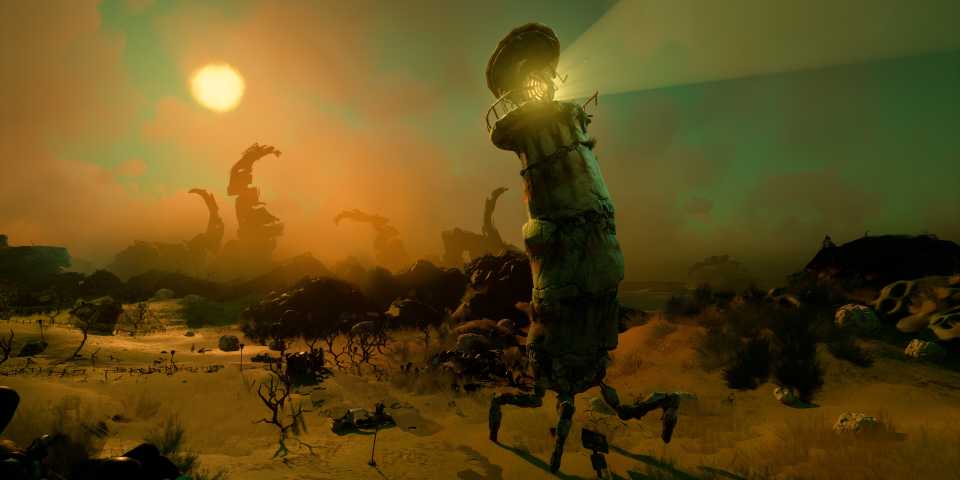
An adventure puzzle game that sees players controlling an anthropomorphic lighthouse on a post-apocalyptic island, Keeper is perhaps Double Fine's best-looking game to date. But Keeper is also one of the studio's safest and monotonous games to play.
Keeper Features a Familiar But Fine Story

Keeper begins with its lighthouse sprouting legs and teaming up with a green bird called Twig to cleanse the island of a mysterious dark presence and reach the top of the island's tallest peak. This general premise is a frequently used one, especially in the indie game space, with games like Ori and the Blind Forest, Kena: Bridge of Spirits, and even this year's Sword of the Sea all revolving around the player-character restoring life and light to a lost world.
Keeper doesn't really go beyond the safe bounds of this tried-and-tested premise. There are very few narrative twists or turns during Keeper's relatively short 3–4 hour runtime, and though there are some emotional beats that land towards the end of the game, fans of this storytelling device will see them coming a mile off.
A lot of Keeper's story content and world-building is actually done via Achievements. Players can find statues off the beaten path that reward them with an Achievement, and the Achievement's description sheds a bit more light on Keeper's world.
Art Style and Atmosphere Is Where Keeper Really Shines

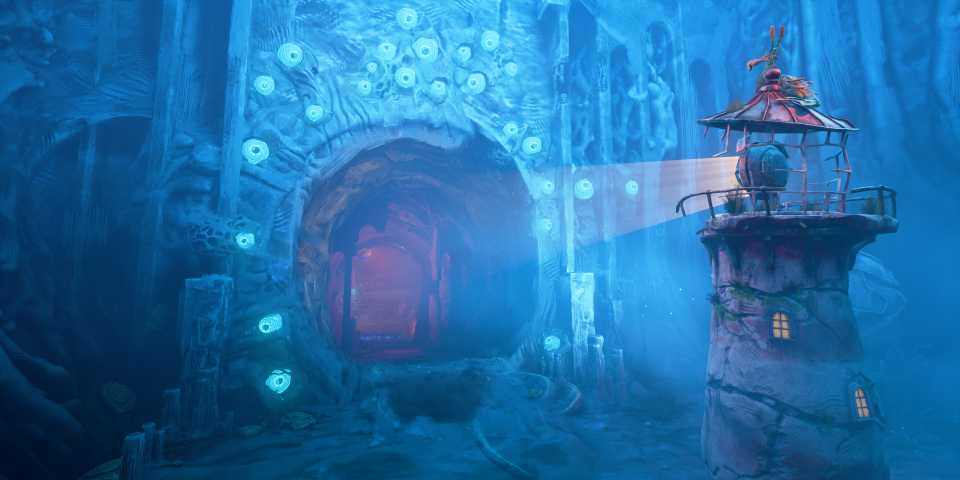
What's far more distinct is Keeper's art direction, and the atmosphere it's able to build with it. Put simply, Keeper's art style feels like a natural evolution of Double Fine's trademark bright, vibrant, and playful aesthetic. More specifically, Keeper looks like Psychonauts 2 cranked up to 11.
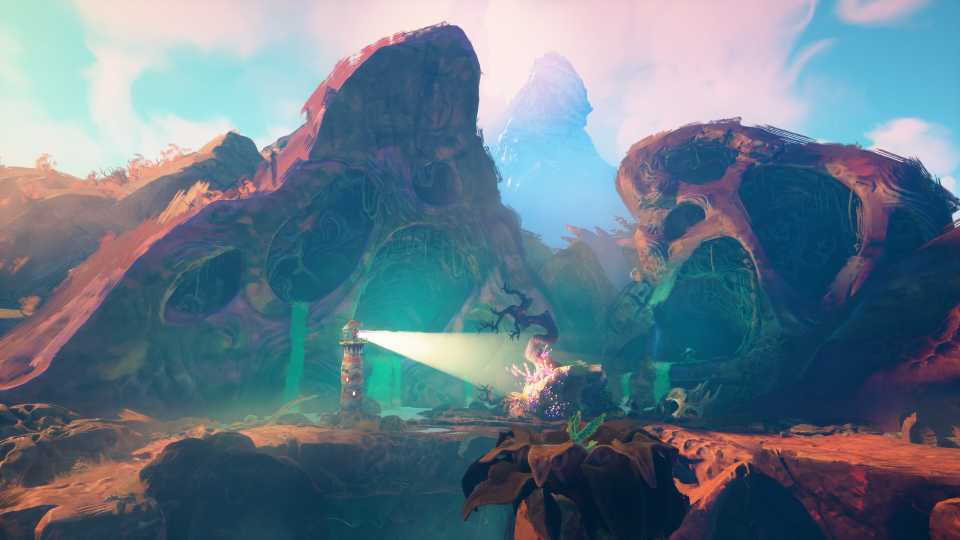
Keeper's lighthouse, Twig, and the game's bevy of dynamic makeshift creatures all boast the intricate carved clay model-like design that's been present throughout Double Fine's history, though here it's given next-gen shading and depth to deliver more expressive, detailed, and lively character models. Keeper's environmental design is similarly impressive, leaning heavily into a surreal, dream-like aesthetic that gives the whole adventure a compelling sense of beauty, but one that deliberately feels slightly unsettling, like a Van Gogh landscape come to life.
Keeper's environmental design is like a Van Gogh landscape come to life.

This sense of unsettling wonder is reinforced by Keeper's use of fixed camera angles, which are often used to demonstrate the overwhelming size of this island and the stunning nature of its organic beauty. That said, these fixed camera angles can get in the way of Keeper's moment-to-moment gameplay, often cutting between angles abruptly in the game's more open spaces.
With its striking art style, energetic character models, and captivating atmosphere, Keeper feels exactly like what a modern Double Fine game should be. But that high level of quality and distinct sense of direction don't carry over to Keeper's gameplay.
Keeper Should Have Kept Its Spotlight on Gameplay

Double Fine has never really been at the forefront of the industry when it comes to gameplay innovations. But at the very least, the vast majority of the studio's past games have had serviceable gameplay with some unique experimental elements that help them stand out from the crowd.
2009's Brutal Legend is a good example of this, delivering enjoyable moment-to-moment hack-and-slash gameplay and some experimental (albeit divisive) tower defense mechanics. Unique, experimental gameplay mechanics are nowhere to be found in Keeper, and its moment-to-moment gameplay occasionally dips even below serviceable.

Most of Keeper's runtime sees players moving clumsily through an environment, awkwardly aiming their beam of light at an object, waiting a few seconds for something in the environment to change, and moving onward. Though there are some variations in the types of puzzles players will encounter, and there are a handful of new mechanics that are drip-fed to the player during the course of its story, none of the gameplay additions are substantial enough to challenge the player or engage them properly.
For example, Keeper's opening hour features some time-manipulation mechanics, whereby players can shine their light on a totem to rewind or fast-forward time, changing the environment they're standing in. Though this mechanic sounds intriguing on paper, its implementation leaves a lot to be desired, with most puzzles in this area still boiling down to walking through an environment and shining a light on the one interactable object in the space, and occasionally sending out Twig to turn a crank or sit on a weighted platform.

Keeper Can Feel Like a Chore to Play
This severe lack of challenge and meaningful variation hindered my enjoyment of Keeper greatly, and the game's pacing certainly didn't help things. Though Keeper is only a few hours long, those few hours can feel like a real slog due to the lighthouse's slow movement speed and clunky controls. Maneuvering the lighthouse through Keeper's narrow levels never felt natural, and while the model's heavy animations do give the lighthouse a sense of weight, it makes the moment-to-moment gameplay feel far too stiff and unwieldy.

On top of some agitating movement mechanics, Keeper also suffers from some poor pacing when it comes to its overall structure. Keeper is roughly split into four acts, each of which introduces one or two new gameplay mechanics. Along with being fairly run-of-the-mill, these mechanics either overstay their welcome or get taken away from the player before they get a chance to use them, with each act differing wildly in length. This uneven pacing often feels jarring.

That said, the final 45 minutes or so of Keeper leave things on a much higher note. Without spoiling anything, this final sequence offers the literal momentum that the rest of the game was lacking, along with some energetic gameplay mechanics and some of the best visuals the game has to offer, which lean all the way into the classic mind-bending psychedelic imagery the studio has previously perfected.

But while Keeper's last 45 minutes finally offered the energy and creativity you expect from a modern Double Fine project, the 3 hours preceding it are sorely lacking those distinctive, integral elements. Keeper is a truly beautiful game where almost any and every frame can be a painting, but it's one that's best enjoyed when the controller is in someone else's hands.




- Released
- October 17, 2025
- ESRB
- Everyone 10+ / Fantasy Violence, Animated Blood
- Developer(s)
- Double Fine
- Publisher(s)
- Xbox Game Studios
- Number of Players
- Single-player






WHERE TO PLAY




- Platform(s)
- PC, Xbox Series X, Xbox Series S
- Beautiful world design
- Captivating atmosphere
- Clunky movement mechanics
- Poor pacing
- Puzzle mechanics are safe and a little dull
- Narrative premise too familiar
Keeper releases October 17, 2025 for PC and Xbox Series X/S. The Best War Games was provided an Xbox code for this review.