


The following contains Act 2 spoilers for Hollow Knight: Silksong.
Hollow Knight: Silksong’s difficulty has been spoken about ad nauseam. However, there are valid explanations for why some elements of the sequel are soul-crushingly challenging. For example, most instances of damage dealing two masks’ worth of players’ health isn’t actually terrible design when players heal for three masks per bind, and individual enemies withstanding so many of the player’s needle strikes before they perish is seemingly intended to give players ample opportunities to replenish the silk they lose every time they bind. That’s not to say every Hollow Knight: Silksong design philosophy is airtight or defensible, though.

Certain areas seem cruel regarding runbacks, let alone simply having Bellways, Ventricas, and benches too far and few between, which can make exploration in Hollow Knight: Silksong more daunting than it arguably should be in a Metroidvania game. Plus, with how few rosaries I leisurely amassed in Act 1 and Act 2 without choosing to farm them, the game’s immense catalog of crest tools has largely gone underutilized while I tried and failed to scrounge beads in the environment and am also expected to pay tolls for maps or donate to a hub’s wishwall. That said, nothing feels more like a knife stabbed between my ribs than Bilewater.
Like Grime I Can’t Wash Clean, Hollow Knight: Silksong’s Bilewater Haunts Me

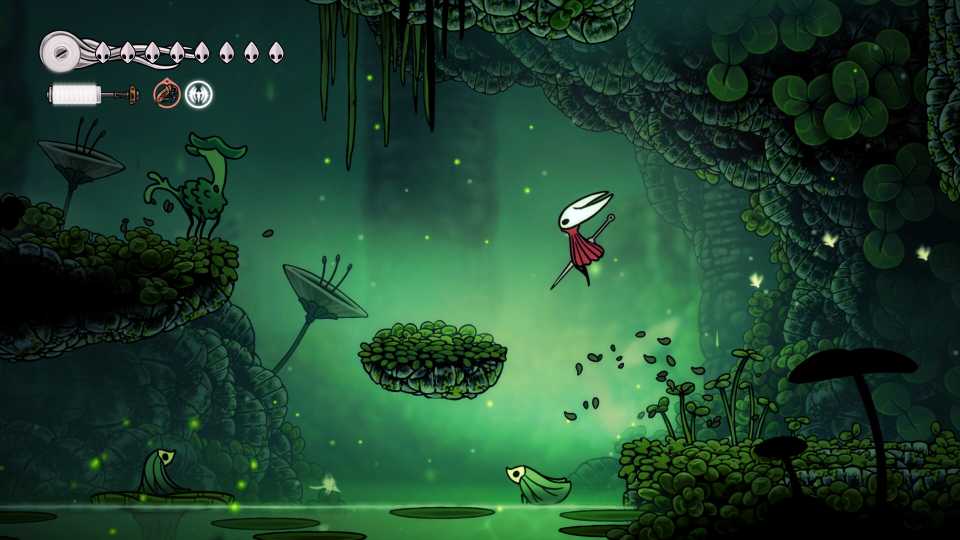
Perhaps I wouldn’t be so perturbed by how disturbing Bilewater is if Hollow Knight: Silksong’s hellish take on FromSoftware’s poison swamps was optional. I believed that it was optional for nearly all of Act 2, where I spent an outrageous amount of time exploring nooks and crannies of maps I had presumed were previously and thoroughly explored, because Hollow Knight: Silksong never gave me a compelling reason to go there.
Because Act 3 is technically optional, Bilewater is, too. Of course, you are denying yourself a ton of fascinating story and additional base game content if you shelve Hollow Knight: Silksong after beating Grand Mother Silk for the first time and receiving the Weaver Queen ending.
Indeed, as was the case with my first playthrough of Hollow Knight, Hollow Knight: Silksong’s optional content is indistinguishable from mandatory, main story-related content and progress, at least when the latter isn’t marked by icons on the map. In Hollow Knight, though, I’d argue that the hardest content is always wholly optional, even if it isn’t discovered that it was supplementary until after the fact.

Rather, the sequel has a three-act structure with a lot of ambiguity concerning what you actually need to accomplish to unlock Act 3 in Hollow Knight: Silksong. There is no indication of what you should pursue once you’ve slain Grand Mother Silk, and all you can do—unless you’re playing with a companion guide—is follow leads in a map’s pathways or finally go back and attempt to kill a boss that you had hit a wall on.
All the while, as I was keeping the heinous, maggot-soaked bog at bay and possibly never returning there if I didn’t absolutely have to, it would ironically come to pass that conquering Bilewater and obtaining the Seeker’s Soul were compulsory if I wanted to reach Act 3. I would do so, begrudgingly, and I’ve since parted ways with Hollow Knight: Silksong’s Bilewater, as well as its less tedious marshland neighbor, the Putrified Ducts, without much gratification.
Bilewater is the Horrid Sum of Hollow Knight: Silksong’s Lackluster Parts

In my experience, revisiting Bilewater when I had seven masks, an elongated silk spool, and two needle upgrades (Hollow Knight: Silksong’s Courier’s Rash quest maybe frightening me more than Bilewater) was the right play. Not having to be in Bilewater until the end of Act 2 was a privilege I took advantage of, then, by not being woefully underleveled anymore. Still, grating Stilkin RNG and heal-negating Muckmaggots, as well as an egregiously long and winding runback to the boss, even with the secret bench secured, make Bilewater a true horror.
I’ve since parted ways with Hollow Knight: Silksong’s Bilewater, as well as its less tedious marshland neighbor, the Putrified Ducts, without much gratification.
One of the key factors in why Bilewater was so dreadful to me was knowing that coming back at any point in my playthrough would theoretically be more exhausting and miserable than planting roots there and refusing to depart until I had swept it clean. In hindsight, I may even despise Hollow Knight: Silksong’s Sinner’s Road more than Bilewater when each other’s enemies go pound for pound—Muckroaches and Roachcatchers, in particular. Bilewater’s immensity simply makes it a war of attrition with few silver linings.

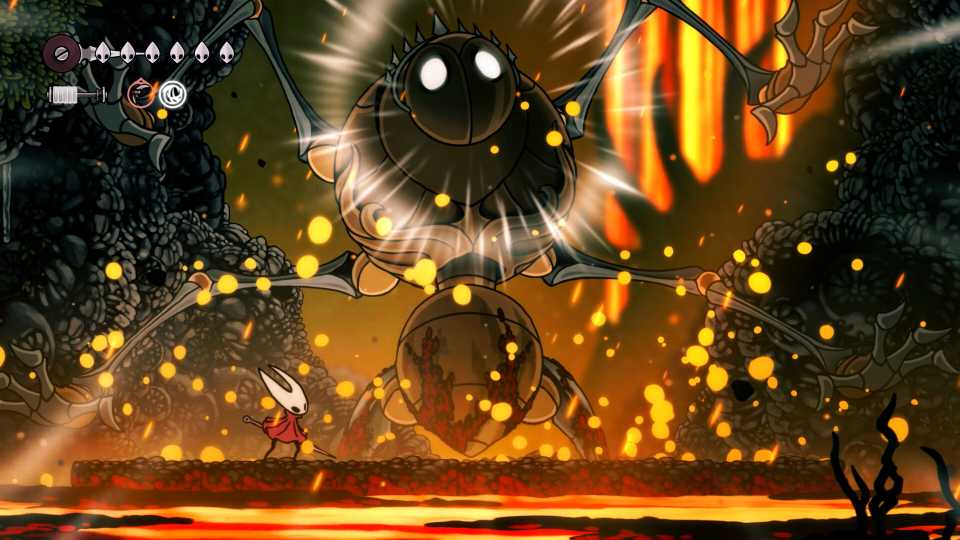
Bilewater’s boss, Hollow Knight: Silksong’s Groal the Great, is a rancid cherry atop a moldy cupcake. Groal themselves isn’t even that grueling of a boss; what makes Groal a nuisance, and the reason why they aren’t as fun to learn as they could be, is that the boss arena plunges you into Muckmaggots—not really ‘poison,’ as it doesn’t slowly drain your health, though this filth prevents you from healing and is purged when you procure enough silk to bind again—and begins with a gauntlet.
Hollow Knight: Silksong’s Wreath of Purity blue tool, which boasts that it can “repel Muckmaggots,” isn’t as much of a balm as you’d think it would be, either, when it can be broken and rendered inactive until you rest at a bench again.

Now, maybe Bilewater is far more palatable to anyone who isn’t having as much trouble with gauntlets as I am. I admit my skills are poor when I find myself hopping and striking nothing but air, unable to detect if a flying enemy is dipping lower or reading my inputs to hurl themselves in my path for a dreadful blow of contact damage. Still, these gauntlet waves rarely feel as satisfying as they are taxing, depending on the assortment of enemies involved in them, and the one in Bilehaven is preceded by an abysmal runback and succeeded by a tanky boss.
Groal can be cheesed, too, if you relent to the Muckmaggots’ debuff, and it hardly feels ‘cheesy’ to do so when the whole map has been cheesing you from the beginning. If nothing else, Bilewater has retrospectively made the rest of Hollow Knight: Silksong’s Pharloom look like a masterpiece in comparison.





-
 OpenCritic Reviews
- Top Critic Avg: 91 /100 Critics Rec: 97%
- Released
- September 4, 2025
- ESRB
- Everyone 10+ / Fantasy Violence, Mild Blood
- Developer(s)
- Team Cherry
- Publisher(s)
- Team Cherry









WHERE TO PLAY






- Franchise
- Hollow Knight
- Number of Players
- Single-player
- Steam Deck Compatibility
- Verified
- PC Release Date
- September 4, 2025
- Xbox Series X|S Release Date
- September 4, 2025
- PS5 Release Date
- September 4, 2025
- Nintendo Switch Release Date
- September 4, 2025
- Nintendo Switch 2 Release Date
- September 4, 2025
- Platform(s)
- PlayStation 5, PlayStation 4, Xbox Series X, Xbox Series S, Xbox One, Nintendo Switch 2, Nintendo Switch, PC
- OpenCritic Rating
- Mighty
- Wiki
