


Perhaps the biggest surprise coming out of the recent PlayStation State of Play was the shadow-drop of God of War Sons of Sparta, a 2D Metroidvania game from Santa Monica Studio and Mega Cat Studios. On paper, it seemed like a smart decision for a beloved video game IP, keeping God of War active and at the forefront of players' minds, while Santa Monica works on the remakes and next mainline entry. There's lower inherent risk, at least in some cases, and it allows developers to be more experimental with the property. And this is just the tip of the iceberg, with a plethora of benefits for expanding a beloved IP with smaller games in beloved genres. Unfortunately, for everything in its favor, God of War Sons of Sparta lands far less than it should.
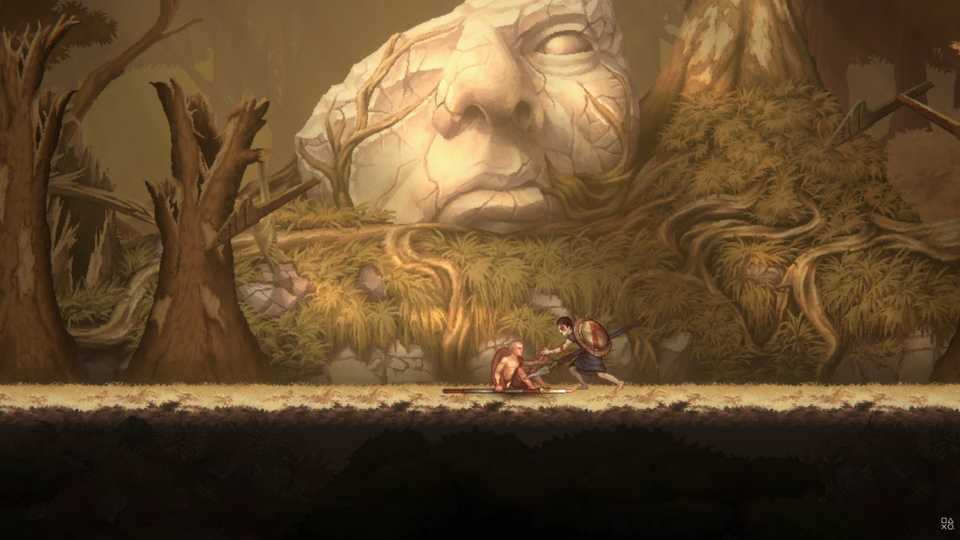
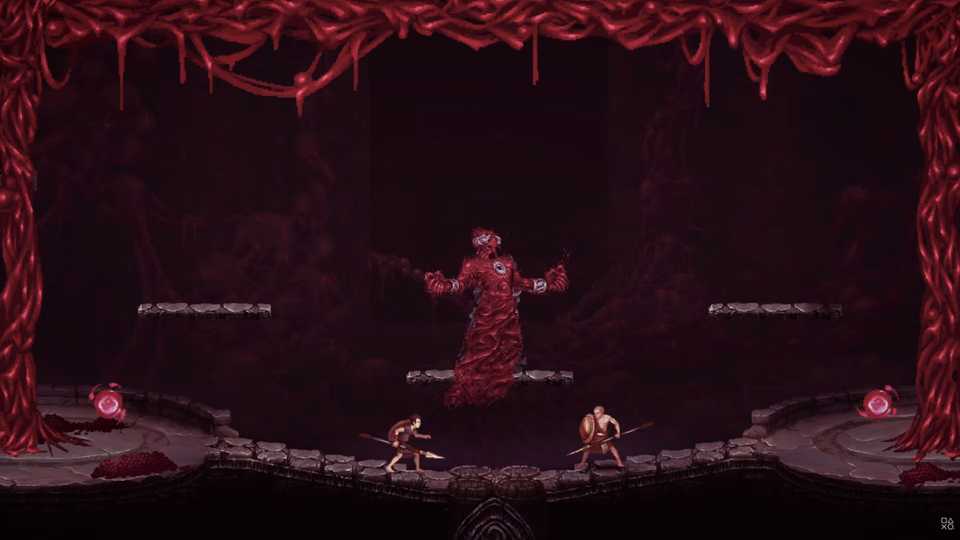
God of War Sons of Sparta's gameplay exists within an interesting narrative frame: Kratos tells his daughter, Calliope, a story from his youth in which he and his brother, Deimos, truly learn the meaning of duty. It ties well into Kratos' background, and it introduces a new aspect of Kratos' character: his youth. But some stories are better left untold. Kratos does not feel like Kratos in this flashback game, save for the narration by original Kratos actor TC Carson, and this is only made worse by the basic art style. God of War Sons of Sparta is not going to impress anyone visually, but if it did elsewhere, then it would be a completely different story. The basic art style, however, is more emblematic of the experience than it is a minor drawback.
Everything about God of War Sons of Sparta could be summarized as "basic." There is no major experimentation within the genre, with the gameplay, with the story, with the characters, or with anything. That bleeds through into everything. And while God of War Sons of Sparta does deliver some strong moments despite this basic approach, they are far and few between.
Who’s That Character?
Identify the silhouettes before time runs out.
Identify the silhouettes before time runs out.
God of War Sons of Sparta Barely Fits the Metroidvania Genre
While God of War Sons of Sparta is described as a Metroidvania game, I'd argue that "2D action-platformer with Metroidvania elements" is more accurate. It's a small distinction, but one that completely adjusts expectations for the gameplay experience. The core traits of a Metroidvania game include a large, interconnected world map that builds upon itself, where abilities lock progression and encourage exploration and backtracking. The best Metroidvania games push exploration over a linear story, letting players find or discover upgrades or story developments organically. And, of course, movement is a key component of any Metroidvania.

God of War Sons of Sparta drops the ball on nearly every front. Its map is large and theoretically interconnected, but not in any way that matters. The areas do not build on each other and instead feel oddly cobbled together. And while there is some expected backtracking, it is not encouraged by the game. God of War Sons of Sparta does have some DPS/skill checks in the form of bosses, but mastery of its systems far exceeds the benefit of any singular upgrade. What's more, navigating to any area on foot is a major pain, and the fast travel is severely limited in the game until it arbitrarily isn't.
Abilities can and do lock progression, but in the most minute of ways. There's rarely a moment when players unlock a new ability, a Gift from Olympus, and feel like they are better prepared to tackle any part of the map. Exploration is important to go ahead and grab upgrades in God of War Sons of Sparta, but that's about it. In fact, the game will prevent the player from exploring or backtracking a few times throughout the run.
God of War Sons of Sparta also emphasizes a linear story, one somewhat worsened by forcing players to sit through slow dialogue. There's no skip option, and Kratos and Deimos essentially have the same conversation throughout the game, until Kratos magically changes his mind. There's a brotherly aspect to it, but it's the same brotherly conversation, argument, and acquiescence until the two eventually agree.
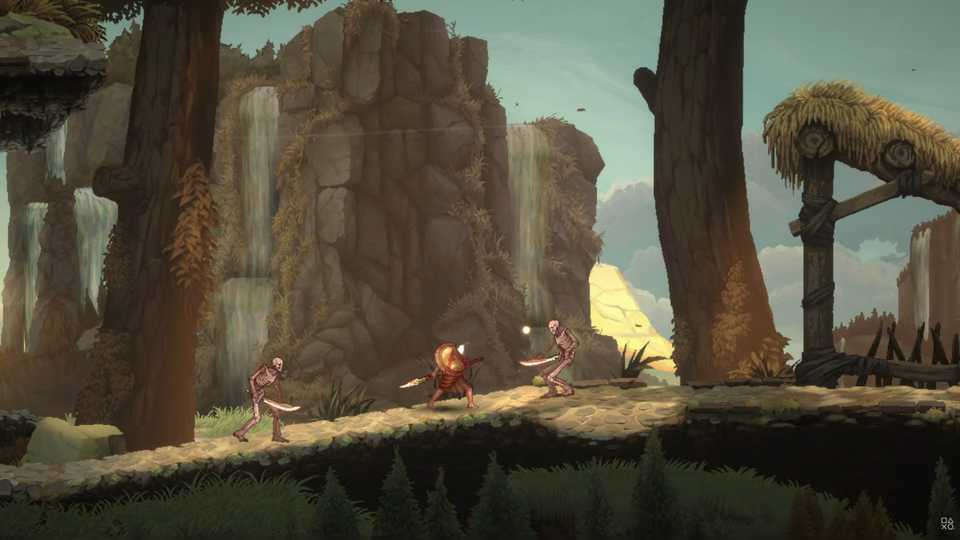
That's why I say the genre distinction matters. God of War Sons of Sparta's map features some Metroidvania-like elements, but it feels more like an old 1990s or 2000s action platformer than a modern Metroidvania. Movement and positioning become key, though, as that's perhaps its best defining feature. Understanding Kratos' movement in attack combos, his positioning on the map, how enemy attack patterns unfold, and similar movement strategies are necessary for mastery in the game. This does grow, however slim, throughout a playthrough. Enemies and bosses will encourage more directional attacks, and equipment/upgrades can and do change certain player strategies, but it's still incredibly basic for most of the runtime.

Around the halfway point, the game gets better and more challenging. The first half is essentially Baby Kratos in elementary school, while the second half feels more like Teenage Kratos in high school. God of War Sons of Sparta's various bosses begin to test and skill check players better, while areas level more environmental challenges and puzzles against the player. But at the end of the day, it's all about a player's ability to attack, dodge, heal, and jump. Had God of War Sons of Sparta gotten to its second half faster and continued to develop that further, it would be a much better game.
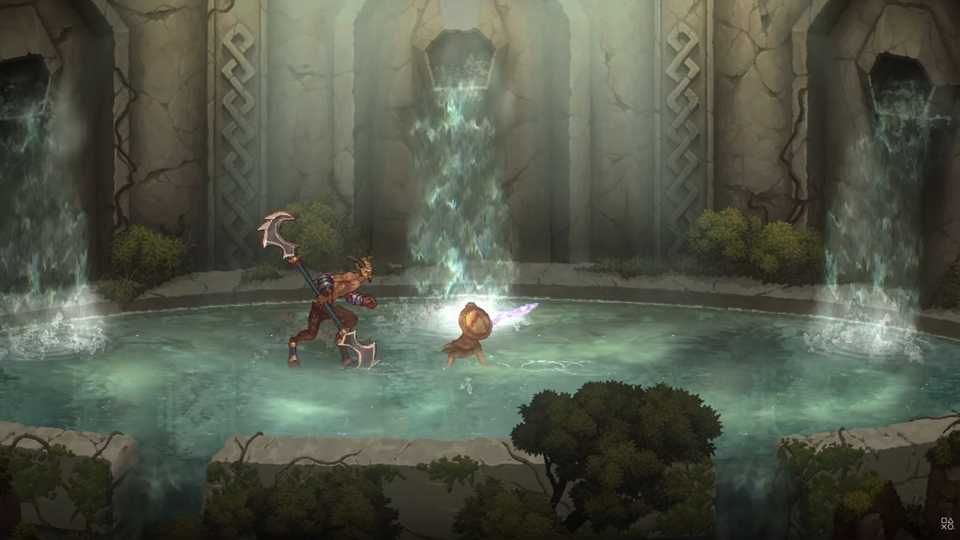
God of War Sons of Sparta features a parry and a dodge mechanic, but dodging is usually far more beneficial than a parry.
God of War Sons of Sparta Has Plenty of Side Content
While the moment-to-moment gameplay will influence your enjoyment, the world of God of War Sons of Sparta has plenty to keep players active. Beyond acquiring upgrades by completing Olive Trees and the like, players can gather lore and owls, find the Mosaic and Gorgon Doors, and face a couple of optional boss fights. God of War Sons of Sparta's co-op mode is also limited to post-game content that finds itself as basic as the rest of the game. If someone can accept the basic nature of many of its activities, then there's plenty to keep them busy. Most of these do not feel too great, more like a barebones collect-a-thon than anything. Perhaps that is the biggest win and loss for God of War Sons of Sparta.

God of War Sons of Sparta is a Prime Example of Playing It Too Safe
Ultimately, God of War Sons of Sparta plays it too safe, as if Mega Cat Studios and Santa Monica were afraid to rock the boat. Nothing is necessarily bad about the game, but neither is anything particularly good. It feels mostly detached from its genre and story, with weak anchors in Metroidvania gameplay or the God of War franchise. In fact, only a moment or two are connected to the franchise at all, and those moments could be better encapsulated in something like a canon comic book. Kratos and Deimos could be replaced with any other Spartans in the world, and nothing would need to change about the game to make it work.
God of War Sons of Sparta is an okay prequel—the problem is that it feels like it was released before the original 2005 game, not just taking place before it. Its safe approach feels like a game made generations ago, not one released in 2026, and makes it a chapter in Kratos' life that is forgettable.



- Released
- February 12, 2026
- ESRB
- Teen / Blood, Violence
- Developer(s)
- Santa Monica Studio, Mega Cat Studios
- Publisher(s)
- Sony Interactive Entertainment
- Franchise
- God of War


WHERE TO PLAY

- The Game Gets Better in the Second Half
- Later Boss Fights Are Fun
- Weak Metroidvania Design
- Uninspired Gameplay and Abilities
- Lackluster Storytelling
- Doesn't Feel Like a God of War Game At All
God of War Sons of Sparta is available now on PS5. TheBestWarGames was provided with a PS5 code for this review.