


It has now been nearly six years since the release of Remedy Entertainment's action-adventure game Control, and now its ambitious cooperative first-person shooter FBC: Firebreak is carrying that legacy forward with a fresh experience set within the iconic Control universe. Set six years after the events of Control, FBC: Firebreak takes players to the Oldest House, where they have been tasked with teaming up to take down enemies who have been infected by the Hiss. Even for those who have never played Control, however, FBC: Firebreak's spontaneous gameplay offers a fresh, accessible entry point into the Remedy Connected Universe. The Best War Games recently spent some quality time with FBC: Firebreak during a remote hands-on event, where we had a few hours with three of its game modes.
As a cooperative first-person shooter, FBC: Firebreak represents a major departure for Remedy Entertainment, as the developer is known for its single-player, action-adventure, narrative-driven franchises — Alan Wake and Control. However, regardless of how significant that departure may be, if there's one thing that to say about FBC: Firebreak after spending nearly three hours with it, it's that it is already shaping up to be a non-stop thrill ride of over-the-top action and hilarious gags.

Why You Should Replay Control Before FBC: Firebreak
With FBC: Firebreak releasing June 17, there is no better time to replay Control and see how the Oldest House went into lockdown.
FBC: Firebreak's Jobs Are Designed for Replayability and Accessibility
FBC: Firebreak is built around four core pillars — Only in Control, Pick Up and Play, Better Together, and Fun on Repeat. Each of these pillars ensures FBC: Firebreak is fun and engaging at the start and remains that way for prolonged periods. While multiple elements within the game see these core pillars realized, FBC: Firebreak's missions (called "Jobs") are one of its primary methods for doing so.
- "Only in Control" emphasizes the uniqueness of FBC: Firebreak's world, with scenarios and enemies that could only exist within the Control universe.
- "Pick Up and Play" is FBC: Firebreak's aim for accessibility, as it avoids daily grinds and mandatory logins, allowing players to enjoy it at their own pace.
- "Better Together" ensures that, while FBC: Firebreak is designed for three-player co-op, players of varying skill levels can enjoy missions together without penalties.
- "Fun on Repeat" fuels replayability through distinct missions, diverse loadouts, and evolving challenges, rather than frequent content drops.
In this particular build of FBC: Firebreak, we had access to three of the game's Jobs — Paper Chase, Hot Fix, and Ground Control. Judging by the looks of things, there will eventually be at least six different Jobs for players to choose when beginning a new session in FBC: Firebreak, but the three that were available during our preview of the game were more than enough to whet our appetite for what may be to come.
All Jobs in FBC: Firebreak have Clearance Level and Threat Level modifiers, each of which determines how much of a Job will be accessible and how difficult it will be, respectively. There are six Clearance Levels for each Job, which not only act as a way for players to know just how long their play session will be, but also how much of that particular Job players will be able to experience. More specifically, each Clearance Level grants players access to the next room in a Job once they've completed the preceding room's main objective, so those looking for a shorter play session would be better off choosing something closer to Clearance Level 1, whereas those hoping to experience all that a Job has to offer should choose Clearance Level 6.
We attempted to play FBC: Firebreak on a Moderate Threat Level, which is the second of four difficulty options in the game. However, it proved to be too much for our team, so we bumped things down to a Low Threat Level, and it gave us a chance to experience the game a bit more.
Where FBC: Firebreak's Jobs truly stand out is in their diversity. Not only does every Job in the game differ in its objectives, enemies, and environments, but they also grow increasingly diverse the deeper players go in their Clearance Level. This adds layers upon layers of replayability to FBC: Firebreak from the get-go, as it means players will be discovering new aspects of the game for quite some time. Each Job's Threat Levels also add significant replayability to the game, as higher Threat Levels introduce more enemies and new, often spontaneous, challenges for players to overcome.
Paper Chase Sees Players Culling an Outbreak of Sentient Sticky Notes
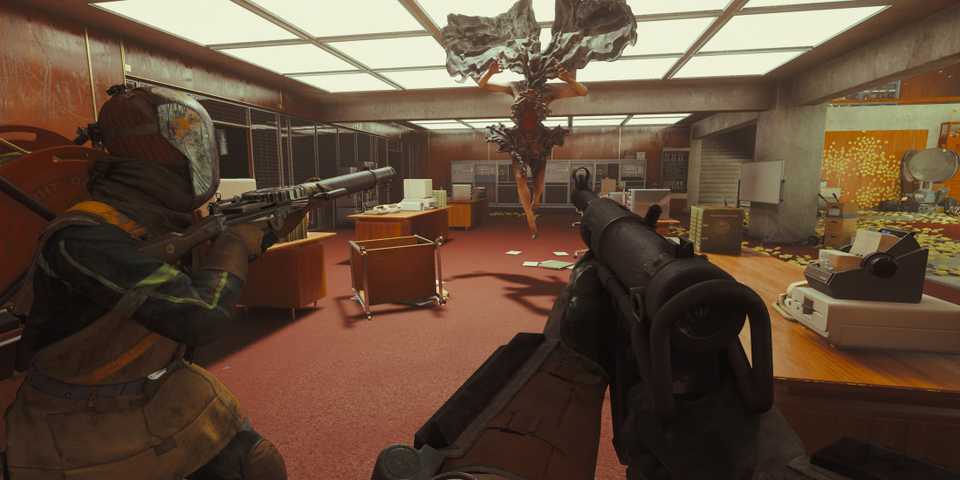
One of our favorite Jobs in FBC: Firebreak is Paper Chase, which sees players culling an outbreak of sentient sticky notes in the Executive Sector. It's a bizarre premise, but it fits right in with Remedy's signature embrace of the absurd. By and large, Paper Chase is the perfect blend of FBC: Firebreak's unfiltered chaos and horror-fueled humor, both of which make up the perfect backdrop for cooperative gameplay.
The objective of Paper Chase in FBC: Firebreak is deceptively simple: destroy sticky notes. However, "deceptively" is the key adjective here, as these sticky notes can be incredibly dangerous. When the Job begins, players can find sticky notes all over the ground that can be destroyed in a variety of ways, and they must destroy tens of thousands of them while fending off waves of Hiss.

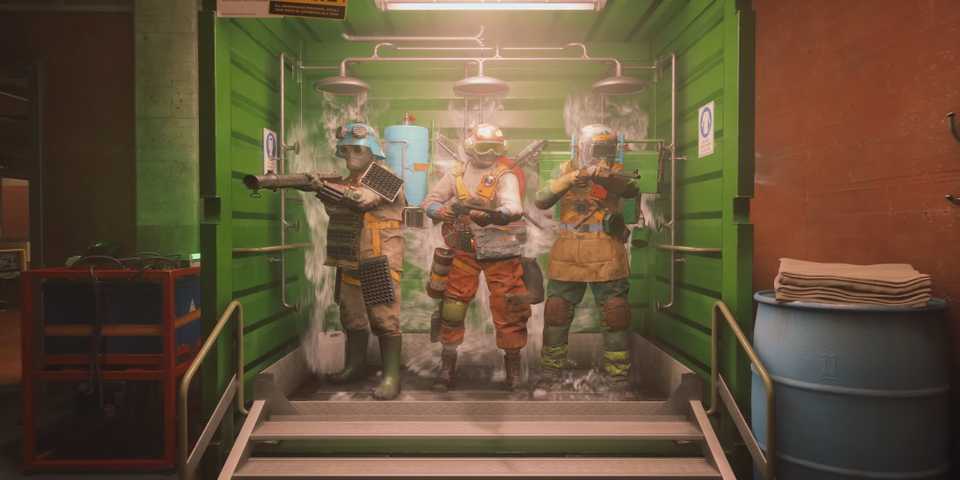
Things take a dramatic turn once players enter each subsequent room at higher Clearance Levels though, as Paper Chase not only requires them to destroy hundreds of thousands and even millions of sticky notes, but these sticky notes also begin forming far more dangerous enemies — including a challenging boss called "Sticky Ricky" in Clearance Level 3. To make things more difficult, players are required to take regular showers to wash off any sticky notes that latch onto them during the session. Should players allow too many sticky notes to stick to them, they will transform into a sticky note Hiss, effectively killing them in the process.
Interestingly enough, showering is also the primary way players replenish their health, which is lost once their shields are depleted, and get rid of any harmful status effects. Shields are also more effective when players are near one another, so it's a great way of passively encouraging teamwork. Each zone has its own shower and ammo station where players can replenish their health and refill their ammo, respectively. However, these stations generally need to be repaired and powered using FBC: Firebreak's Tools, but more on those and the game's Kits later.
There is also friendly fire in FBC: Firebreak, and while players don't deal as much damage to each other as they do to enemies, it is still possible to kill teammates with more powerful weapons.
Should players die during a session in FBC: Firebreak, they can generally be revived by their teammates an unlimited number of times. That being said, it is impossible to revive players in some cases, such as when they become a sticky note Hiss in Paper Chase. If necessary, players can also use one of their team's lives to revive themselves via FBC: Firebreak's Redeploy mechanic, but there is a limited number of lives shared per Job. As such, these are best used when there is no other option.
Once all main objectives in a Job have been completed, players are required to evacuate via an elevator in the Clearance Level 1 area, mowing through an endless wave of Hiss as they attempt to escape. Additionally, this sequence usually sees a more powerful "Dangerous Hiss" spawn in the area, which has to be eliminated before players can even access the elevator. Once that has been done, players can press the elevator button, after which they must wait for it to arrive. This is the most chaotic portion of any Job in FBC: Firebreak, but it's also already one of its most fun and frequently hilarious elements.

FBC: Firebreak – Hazards of the Job Trailer
FBC: Firebreak gives players a better look at the many enemies and hazards they'll be coming up against while exploring The Oldest House.
Hot Fix Sees Players Repairing the Ventilation System in the Maintenance Sector
Hot Fix was another of the three Jobs available during our preview of FBC: Firebreak, and it was arguably the most complex of the bunch. While Paper Chase is more of a straightforward shooter, Hot Fix centers around teamwork-oriented problem-solving. The higher the Clearance Level in Hot Fix, the more complex it becomes, making it a great choice for players who love puzzles.

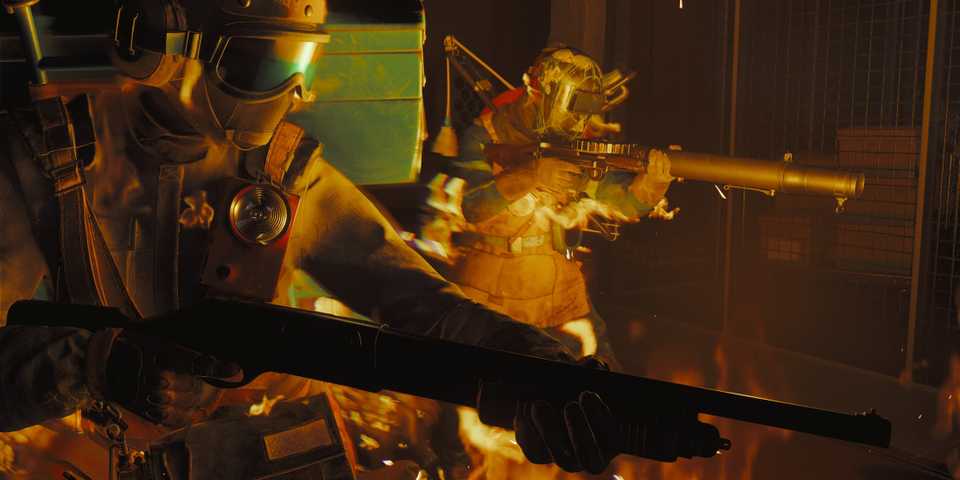
One of the forces at work in the background of Paper Chase are the sticky notes that the team needs to regularly wash off. On the other hand, Hot Fix, as its name suggests, uses temperature to slow players down. As they attempt to repair the ventilation system in the Maintenance Sector through various means, players may find themselves catching fire, which gradually depletes health until they either shower or have one of their partners spray them with water. However, they can also freeze at certain points during the Job, as the temperature fluctuates with each repair. Being frozen slows movement down tremendously, which is especially noticeable during the escape sequence, but cold enemies are affected in the same way.
Again, though, it's Hot Fix's puzzle element that makes it so appealing. This is arguably the most teamwork-oriented Job of the three that we tried during the preview, but it should be noted that everything in FBC: Firebreak can still be completed by solo players. As players go deeper in Clearance Level for Hot Fix, its puzzles become more complex and therefore require more thoughtful solutions. This arguably makes it one of the more rewarding Jobs in the game, though each one has its merits.
Ground Control Sees Players Ridding the Quarry of a Leech Infestation
Ground Control is the third and final Job we had access to during our preview of FBC: Firebreak, and it was less intense than Paper Chase and Hot Fix but nonetheless fun. Unlike Paper Chase and Hot Fix, Ground Control is a bit more of a laid-back experience, as the primary objective sees players collecting Leech Pearls and then loading them into a nearby shuttle that can be moved along the tracks in the area. After shooting Leech Pods hanging from the ceiling, there's a chance a Leech Pearl might drop, after which players are required to pick them up and deposit them in the shuttle.

While Ground Control might be more laid back than the other Jobs, there are still several gameplay mechanics players are required to keep an eye on. Firstly, there are the regular waves of Hiss that come into the area, but these are designed to be more of an annoyance than the primary focus. Secondly, when picking up a Leech Pearl, players subject themselves to radiation, which begins depleting health once the debuff is in full effect. Between zones, players are also required to defeat a large group of Hiss until they've completed their main objective for the Job and evacuate as normal.

FBC: Firebreak is Repeating Alan Wake 2’s Greatest Sin
Even though Remedy Entertainment received criticism for this with Alan Wake 2, FBC: Firebreak appears to be making the same mistake with its release.
FBC: Firebreak's Crisis Kits and Progression Emphasize Customization and Player Agency
FBC: Firebreak's Crisis Kits Are Customizable and Optional
From a gameplay standpoint, FBC: Firebreak excels at offering players plenty of customization and agency, and far more than many cooperative games allow. The beauty of FBC: Firebreak is that almost everything is optional, giving players more than one way to complete each Job's objectives. This is primarily made evident in the game's Crisis Kits, which are specialized loadouts that define players' roles and abilities during Jobs, but the game's progression plays a part there as well.
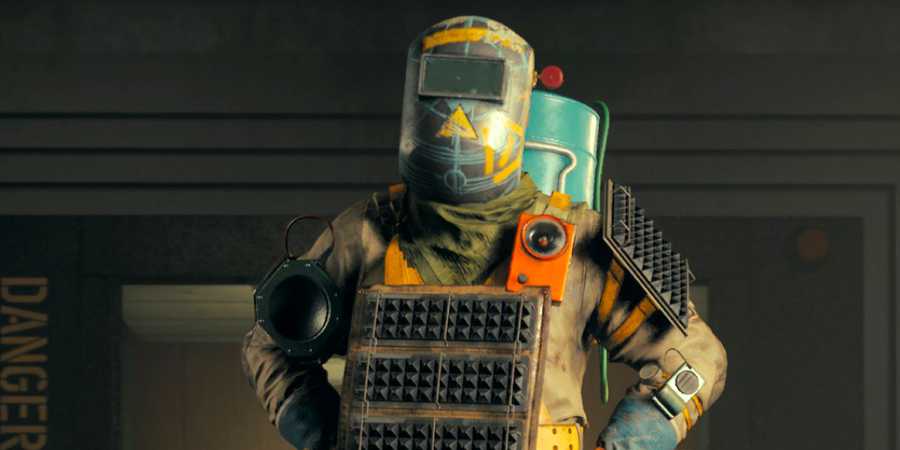
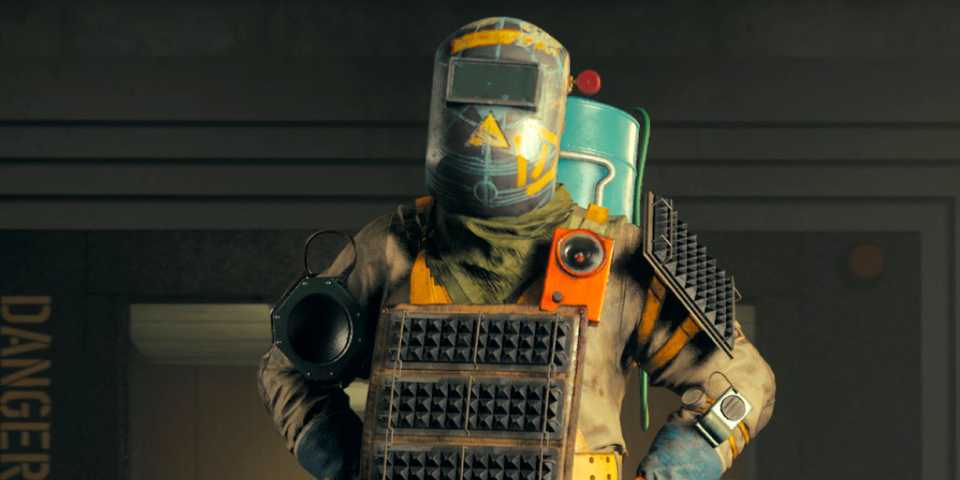
There are three Crisis Kits — the Fix Kit, the Jump Kit, and the Splash Kit — and each one includes a unique Tool, an improvised device, and an Altered Augment, along with customizable slots for a gun and a grenade. The Fix Kit contains the unique Wrench tool, the Jump Kit contains the Electro Kinetic Charge Impactor Tool, and the Splash Kit contains the Crank-operated Fluidic Ejector. With three unique Crisis Kits and a possible team of three players, it's encouraged that each player brings a different Crisis Kit into a Job, but that is entirely up to them.
The main purpose these Crisis Kits serve is making Jobs easier, as FBC: Firebreak's missions can actually be completed without ever using Crisis Kit Tools. For example, the Fix Kit's Wrench can repair broken showers, ammo stations, and fuse boxes (which can turn on the lights in the immediate area) by hitting them with the Wrench once or twice. However, it's possible to fix anything in the game manually by inputting a series of commands. The main downside here is that hitting the wrong button or key on controller or keyboard can inflict harm on the player, so while it's possible to manually repair anything in the game, it's not necessarily encouraged.
We played FBC: Firebreak on the controller per Remedy's recommendation, and repairing things manually saw us inputting a series of commands using the Right and Left Bumpers.
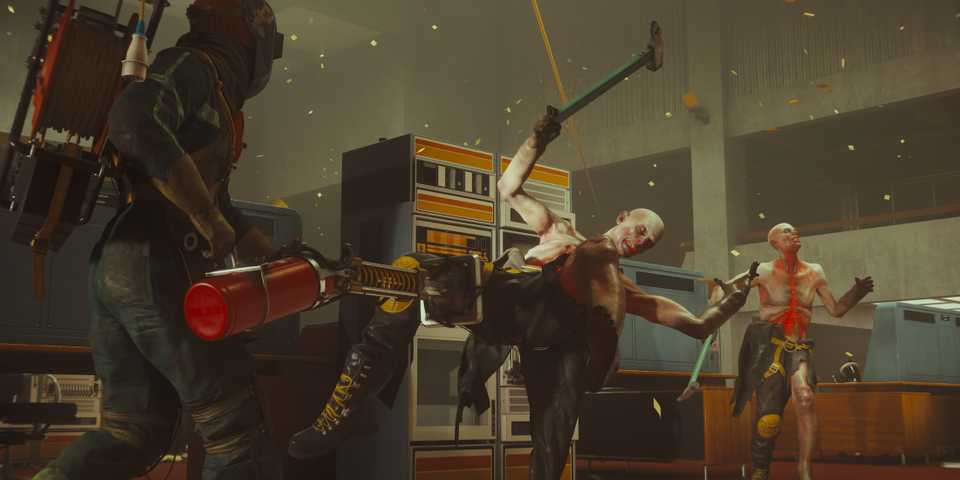
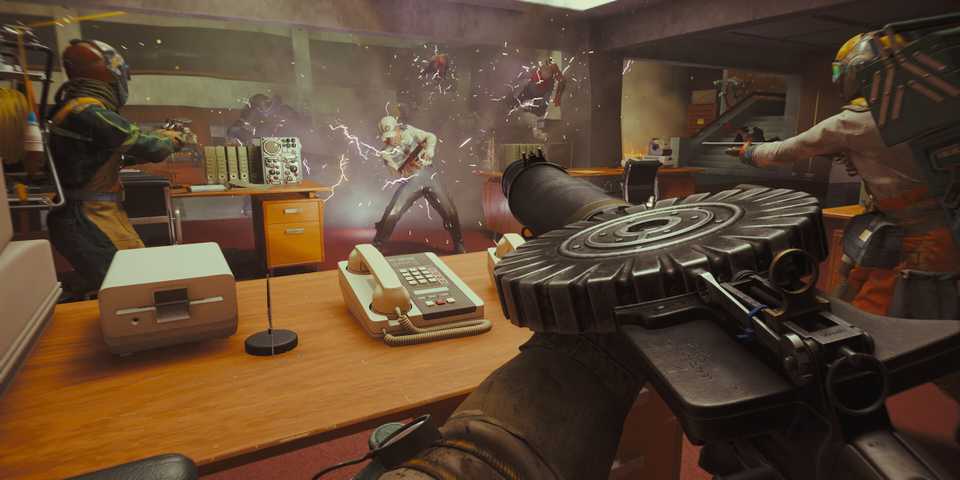
The Wrench can also be used as a melee weapon, and the other Tools are useful in combat as well. The Jump Kit's Electro Kinetic Charge Impactor Tool can power shower water heaters and other electronics in FBC: Firebreak, but it can also be used on wet surfaces for electric area-of-effect attacks. A great example of this in action is in Paper Chase, where large groups of wet sticky notes can be shocked using the Jump Kit's tool. Using this in combination with the Splash Kit's Crank-operated Fluidic Ejector works well, as this tool shoots water globules that can put out fires, cool players down, and even slow enemies.
Needless to say, there's plenty of player agency in FBC: Firebreak. Rather than locking players down to a class and only allowing them to perform certain functions, every player in the game can do almost anything the other players do, albeit less efficiently at times. If a team really wants to, they can all run into a mission with the same Crisis Kit and still get the Job done. Furthermore, players can unlock improvised devices, Altered Augments, guns, and grenades through FBC: Firebreak's progression system, resulting in even more customization.
FBC: Firebreak's Progression Is a Great Incentive for Long-term Investment
Progression in FBC: Firebreak functions similarly to other online games, in that players complete Jobs, gain XP, level up, and so forth. That being said, there are a couple of things at play in FBC: Firebreak that increase customization potential and emphasize player agency.
Firstly, as players gain experience with a specific Crisis Kit, they can unlock and improve perks that augment their gameplay. These perks offer major gameplay bonuses that can change things for players who find certain Threat Levels too difficult. For example, the Courier perk lets players carry items faster, the Shop Vacuum perk allows players to resupply at ammo stations much quicker, and the Rapid Response perk lets players perform manual fixes a bit faster. Each level gained in a Crisis Kit unlocks new perks that players can then spend Lost Assets on to acquire.

Lost Assets are where a large portion of FBC: Firebreak's progression takes place, and these special items are acquired by completing Jobs in the game. There's a bit of a risk-reward element to Lost Assets, however, because if players choose to Redeploy upon death, as opposed to letting their teammates revive them, they drop any Lost Assets they have acquired during the mission and must retrieve them before completing the mission.
After acquiring Lost Assets, players can spend them on Requisitions in FBC: Firebreak. Requisitions include anything from Tool upgrades to guns, grenades, and various cosmetic items. The best part about FBC: Firebreak's Lost Assets progression system, though, is the fact that progression is entirely non-linear. In other words, there aren't any gated items that are locked behind purchasing another one. If players want to, they can start saving up their Lost Assets for their favorite item from the very beginning.
In our preview of FBC: Firebreak is the progression was accelerated for us, so we acquired XP and Lost Assets at a much faster rate than players will at the game's launch. The purpose of this was so that we could see more of what the game had to offer in the short amount of time we spent with it. Nevertheless, in light of that, it's impossible to discern how balanced FBC: Firebreak's progression will be once the game is released.
FBC: Firebreak Preview: Final Impressions
FBC: Firebreak may be Remedy's biggest leap yet and it's also one of the studio's most exciting. It manages to bottle the absurdity, danger, and surreal charm of the Control universe and repackage it into a co-op FPS that never sacrifices the studio's creative identity. Its embrace of player freedom, its clever spin on mission design, and its deliberately offbeat tone give it the kind of personality that many live-service games struggle to capture, and the spontaneity of each session keeps things feeling fresh even in repeat runs. From the Tools and Crisis Kits to its escalating Clearance Levels and threat-based chaos, FBC: Firebreak is constantly offering players more ways to experiment, improvise, and laugh through the madness.
There are still questions about how the full experience will unfold, especially in terms of progression balance and long-term depth, but what's already here makes a compelling case for FBC: Firebreak's potential. It's accessible without being shallow, silly without being throwaway, and chaotic without being frustrating. Whether players are chasing millions of sentient sticky notes or trying to survive malfunctioning fire-suppression systems, every moment is infused with Remedy's trademark weirdness and mechanical sharpness. If the final release can stick the landing, FBC: Firebreak might just become one of the most unexpectedly replayable games of the year.


FBC: Firebreak



-
 OpenCritic Reviews
- Top Critic Avg: 65 /100 Critics Rec: 25%
- Released
- June 17, 2025
- ESRB
- T For Teen // Violence, Blood
- Developer(s)
- Remedy Entertainment
- Publisher(s)
- Remedy Entertainment



WHERE TO PLAY






- Engine
- Northlight Engine
- Genre(s)
- FPS

FBC: Firebreak launches on PC, PS5, and Xbox Series X|S on June 17, 2025.