


Summary
- Oblivion Remastered is not a remake but a remaster with modern touches.
- The new color palette reinforces the game's narrative themes and identity.
- The sparse world design encourages players to discover at their own pace.
The Elder Scrolls 4: Oblivion Remastered may be enough of an upgrade to justify calling it a fully-fledged "remake," but it has nonetheless been dubbed by its owner a "remaster." Yes, there are plenty of improvements to speak of beyond its visual upgrade alone, but for it to be a remake, it would essentially need to have been built from scratch — a more transformative process that severely impacts the game's core systems and structure. Nevertheless, what Oblivion Remastered's "remastered" status means is that it's still by and large the same game that it was before, but with a modern touch to help it feel a bit more relevant.
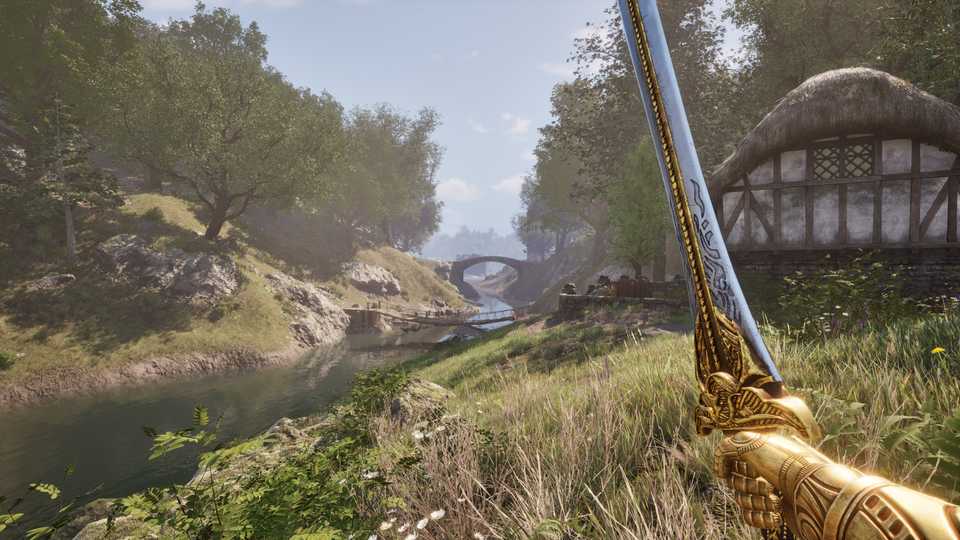
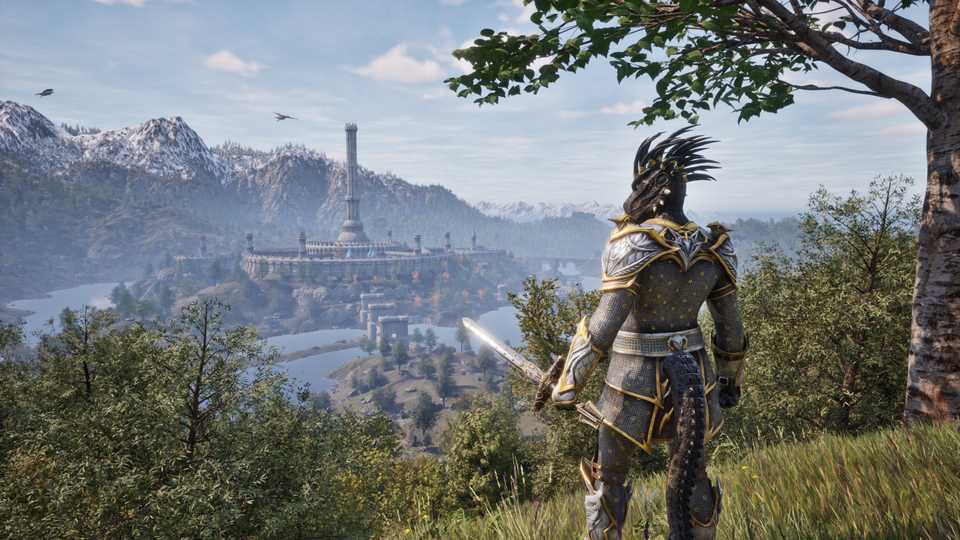
In light of that, Oblivion Remastered effectively highlights (perhaps even more so now that it has received the Unreal Engine 5 treatment) the empty canvas that is its world. Unlike modern open-world games that try to fill every inch of their maps with as much content as possible and all but spoon-feed it to players along the way, Oblivion Remastered retains the classic formula of the original game by letting players discover its world at their own pace. This, in addition to its new muted color palette, helps reinforce the game that Oblivion always was, only with a brand-new coat of paint that makes it resemble something more akin to what players might see in a AAA today.

Why Oblivion Remastered Might Be More Important Than Elder Scrolls 6 Right Now
Oblivion Remastered isn't just filling time because it proves Bethesda still values what made its RPGs iconic, which could mean good things for TES6.
The Emptiness of Oblivion Remastered's World Is Actually a Strength
Oblivion Remastered's New Color Palette Reinforces the Game's Tones
One of the biggest points of contention with Oblivion Remastered has been its new color palette. The original Elder Scrolls 4: Oblivion's world was deeply saturated with vibrant colors, and yet, Oblivion Remastered has made it so that the entire map is blanketed in a muted brown haze. This has likely led some longtime fans of the original Oblivion to feel like the remaster is missing a major part of what gave the original its unique identity. However, that's rather debatable, as the vibrant colors that once coated Cyrodiil didn't necessarily match the undertones of the game's narrative.
Cyrodiil has evolved immensely over the course of the Elder Scrolls series, but Oblivion's depiction is undoubtedly the most memorable.
The Elder Scrolls 4: Oblivion has always been a game about a world that is on the brink of destruction and ruin. In the story, the Septim Dynasty ends abruptly when Emperor Uriel Septim VII is assassinated, and with him dies the last known heir to the throne. Tamriel's safety is tied to the Dragonfires, which are lit by an heir of the Septim bloodline and are part of a covenant that keeps the Daedric realm of Oblivion from bleeding into the mortal world. With no heir to light the fires, the barrier between worlds breaks down, leaving it open to invasion. This is where Oblivion Remastered's new color palette comes in, as it helps underscore those themes and the world to feel a bit less alive and full in the process.
Oblivion Remastered's Sparse World Lets Players Discover at Their Own Pace
Oblivion Remastered doesn't just highlight the beauty of the original game's world with its narratively relevant color palette, though, as it also brings Cyrodiil to life and shows it how it was always meant to be seen. Oblivion Remastered's Cyrodiil is immensely sparse, with very little action going on outside or even inside each town. It all just feels quite empty. Add to that the absence of immediate map makers, and players are encouraged to discover the world at their own pace. Too many modern open-world games throw content at players rather than letting them discover it, so Oblivion Remastered's opposite approach is a true thing of beauty.
The Elder Scrolls 4: Oblivion has always been a game about a world that is on the brink of destruction and ruin.
The emptiness in Oblivion Remastered works because it lets the world breathe. It doesn't press the player to move faster or do more but simply exists, to the point that it truly feels as though players have been pulled into another world entirely. Every stretch of road, every lonely ruin feels like it belongs to a world that has already started to fade away. Rather than filling the space with noise, Oblivion Remastered allows players to make their own noise if they want to. That restraint is rare these days, and it's part of what makes this version of The Elder Scrolls' Cyrodiil feel more true to the story it's telling.




-
 OpenCritic Reviews
- Top Critic Avg: 82 /100 Critics Rec: 87%
- Released
- April 22, 2025
- ESRB
- Mature 17+ // Blood and Gore, Sexual Themes, Violence
- Publisher(s)
- Bethesda







WHERE TO PLAY





- Engine
- Unreal Engine 5
- Genre(s)
- Action, RPG, Open-World, Adventure
