


Even with no DLC on the horizon, Dragon Age: The Veilguard lays narrative groundwork that’s too compelling to ignore. One of the most intriguing elements comes after completing every quest and collectible in the game, when a hidden post-credits scene teases a larger conspiracy. Shadowy figures, speaking cryptically, imply involvement in major events across the franchise—from Loghain’s betrayal in Origins to Solas’ millennia-long imprisonment.
While Dragon Age: The Veilguard never directly names them, the strange symbol and ominous dialogue strongly suggest the involvment of the Executors, a mysterious group previously hinted at in Dragon Age: Inquisition. That group, known only through indirect correspondence, now appears to have played a hidden role in shaping the series’ biggest moments. A future novel or comic could follow a character trying to uncover the Executors’ true purpose, providing fans closure or laying the groundwork for another entry if the franchise resumes.
The Executors are believed to be extra-dimensional beings with access to unknown magic or technology. Their exact nature remains deliberately unclear, offering plenty of room for future storytelling.
Another area ripe for expansion involves the southern reaches of Thedas. During Dragon Age: The Veilguard, players hear disturbing reports from their Inquisitor about unrest in the Anderfels and beyond, but never witness these events. In previous comics like Magekiller and Blue Wraith, BioWare used external media to flesh out parts of the world left untouched by the games. That same strategy could apply here, revealing what truly unfolded in the south while tying back to threads from Inquisition and The Veilguard.

Polish vs. Charm: Comparing Dragon Age: The Veilguard to What Came Before
Explore how The Veilguard builds on and breaks from Dragon Age tradition, from companions and art to tone, gameplay, and narrative choices.
Dragon Age: The Veilguard Comics Can Bridge The Gap
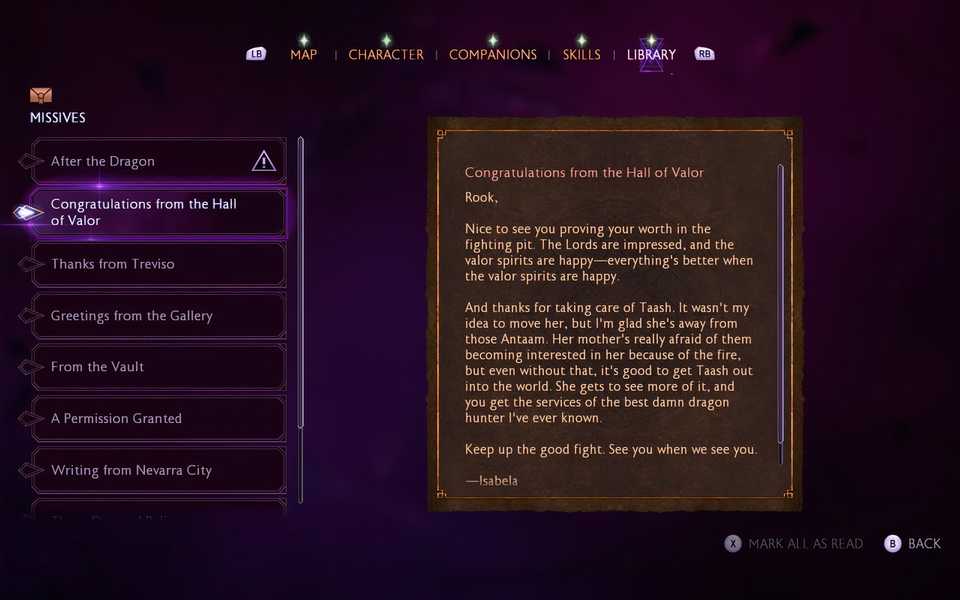
In the past, comics helped transition between games and deepened side characters whose stories were otherwise incomplete. Those Who Speak gave players more time with Varric and Isabella, while Blue Wraith offered Fenris fans a deeper look into his personal mission following Dragon Age 2. These projects were handled by trusted creative partners like Nunzio DeFilippis and Christina Weir, allowing BioWare to stay hands-off while still shaping canon.
Given that BioWare's core team is now focused entirely on Mass Effect 5, reviving this format is one of the few viable ways to keep Dragon Age alive. Fenris, for instance, is a perfect candidate for further development. His past comics successfully built on his hatred of magister oppression without interfering with player-determined romances. A new story could see him working with surviving Inquisition agents to stop rising threats, subtly following up on The Veilguard's global consequences.
External media like comics also serve as a low-cost, low-risk tool to gauge fan engagement. Positive response to post-Veilguard stories could help BioWare determine if another Dragon Age entry is worth pursuing after Mass Effect 5.
Additionally, fan-favorite companions like Dorian Pavus, Scout Harding, or new characters like Neve Gallus could headline their own stories. Each offers a different lens on the game’s conclusion, be it political, academic, or moral. That versatility makes them excellent anchors for future media that can deepen the canon without contradicting player decisions.
Dragon Age: The Veilguard Lore Deserves Novel Continuation
Beyond comics, Dragon Age novels have historically been used to both set up and follow major narrative shifts. The Stolen Throne explored Ferelden's history before Origins, and Last Flight gave the Grey Wardens a dramatic, world-altering arc. Following The Veilguard, a novel could explore the consequences of Solas’ fate, which the game presents in multiple forms depending on the player’s choices.
Using a historian or archivist as the main point-of-view character could offer a clever workaround for the branching endings. Instead of forcing a canon decision, the novel could present varying accounts, keeping ambiguity intact while still expanding on Solas' legacy. This method would honor the player’s role while subtly teasing which choices might matter most in the future (if a new game ever happens).
Equally compelling is the long-standing question about the potential of dwarven mages. With The Veilguard diving deeper into lyrium, Titans, and the Fade, there’s now more reason than ever to explore whether dwarves might evolve new forms of magic. A novel or short story from a dwarven scholar’s perspective could shed light on this possibility and set the stage for further experiments with world-building.
While Dragon Age: The Veilguard was built to stand alone, its legacy doesn’t have to end with its credits. BioWare’s own history—and the resilience of the Dragon Age fandom—shows that even without DLC, Thedas can continue to grow through alternative media. With the right collaborators, there’s still room to ask bold questions, revisit beloved characters, and keep the flame alive while BioWare turns its attention to the stars.


Dragon Age: The Veilguard



-
 OpenCritic Reviews
- Top Critic Avg: 80 /100 Critics Rec: 71%
- Released
- October 31, 2024
- ESRB
- M For Mature 17+ // Blood, Nudity, Sexual Themes, Strong Language, Violence
- Developer(s)
- BioWare
- Publisher(s)
- Electronic Arts





WHERE TO PLAY






- Engine
- Frostbite
- Genre(s)
- RPG
