


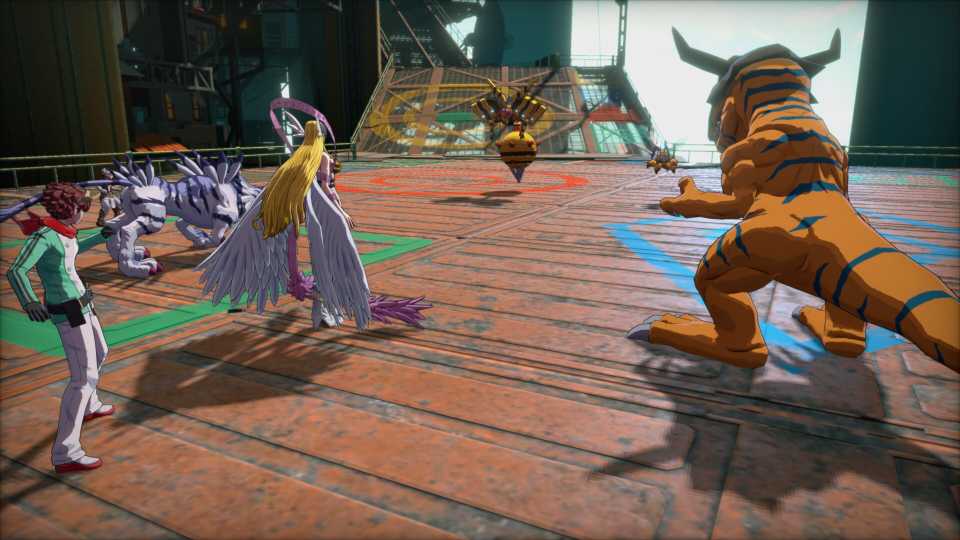
It's taken a while, but Digimon games finally have their groove back. Digimon Story: Time Stranger surprised fans at the beginning of 2025, just a few years after Digimon Survive was released after multiple delays, and this turn-based RPG has slowly drawn players back in as it approaches its launch. Thanks to the popularity of the Digimon Story: Cyber Sleuth games, there's already a lot of hype for Digimon Story: Time Stranger because it seems committed to taking up their torch. This title represents Digimon’s return to the big-budget console RPG space, which means fans and developers alike have a lot riding on Time Stranger’s success.
Although Digimon Survive did have a strategy RPG component, it's Time Stranger’s continuation of the Digimon Story RPG framework that fans have been waiting for. Having spun off from the experimental Digimon World games, Digimon Story built up its distinct monster collection, non-linear Digivolution, and mature storytelling elements until the Cyber Sleuth duo were able to hook fans and outsiders alike. Digimon Story: Time Stranger wouldn't be what it is without all the Digimon World and Story titles that came before it, and chronicling them will reveal where its strengths lie and what twists it's bringing to the table.

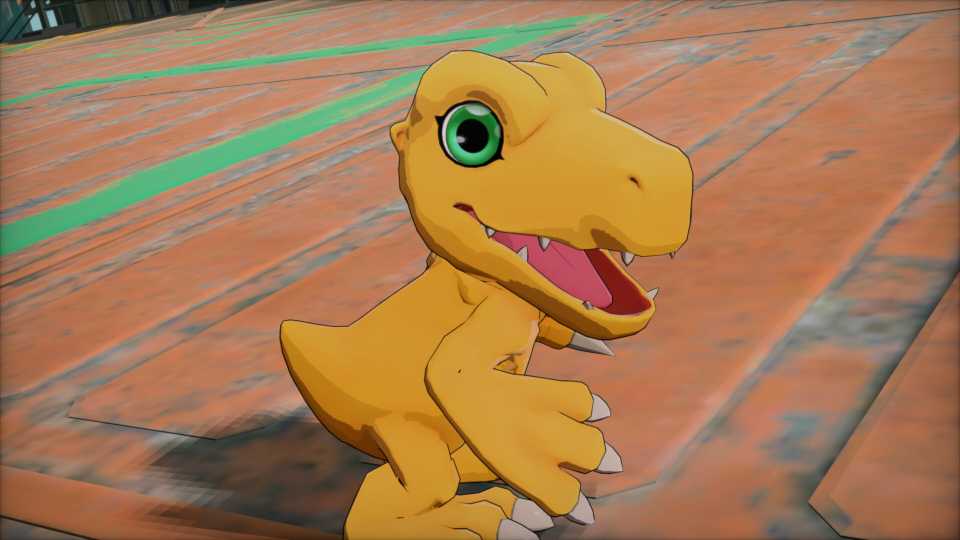
Digimon Story: Time Stranger Confirms 3 Partner Digimon
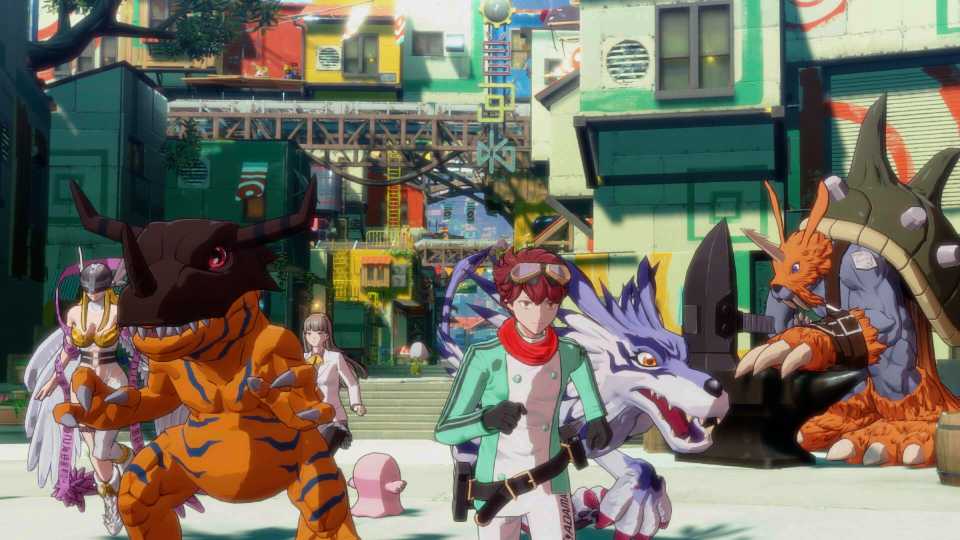
New information about Digimon Story: Time Stranger is revealed at Digimon Con 2025, including the choice of partners at the start of the game.
Digimon Story: Time Stranger Is Digimon’s Latest Blockbuster Title
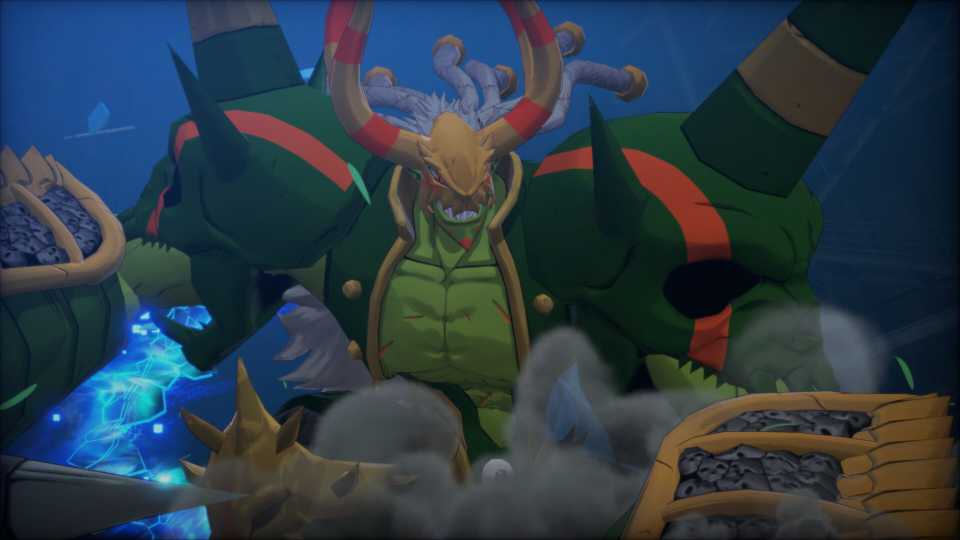
Digimon Story: Time Stranger is a turn-based RPG in the Digimon Story line that was announced and slated for release in 2025. News continues to roll out, but enough is known to paint a clear picture. Media.Vision, creator of the Wild Arms franchise and Digimon’s Cyber Sleuth games, returns as Time Stranger’s developer, with Bandai Namco Entertainment also remaining as the publisher. How long the game has been in development is a mystery, as news of a new Digimon Story title dates back to 2017, but early details concerning the Olympos XII Digimon group’s prominence still hold true.
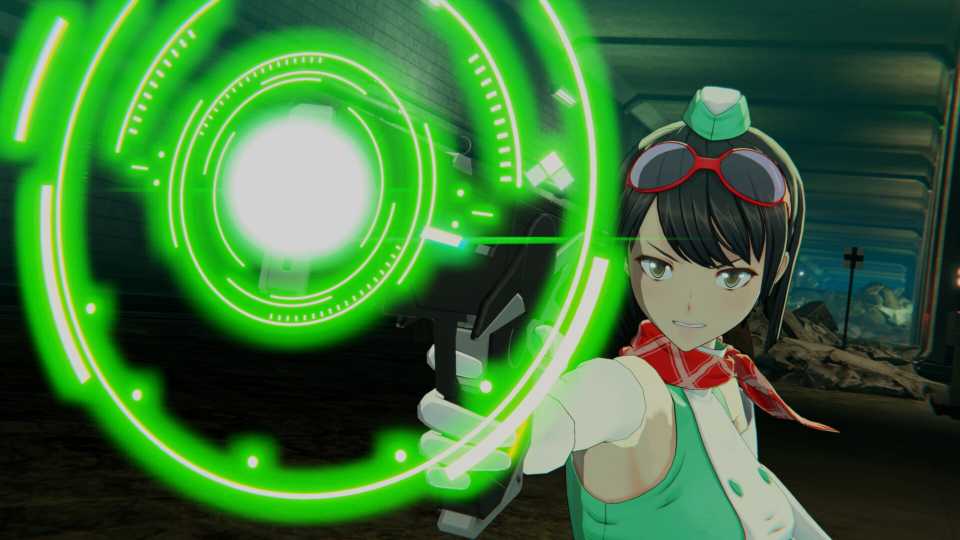
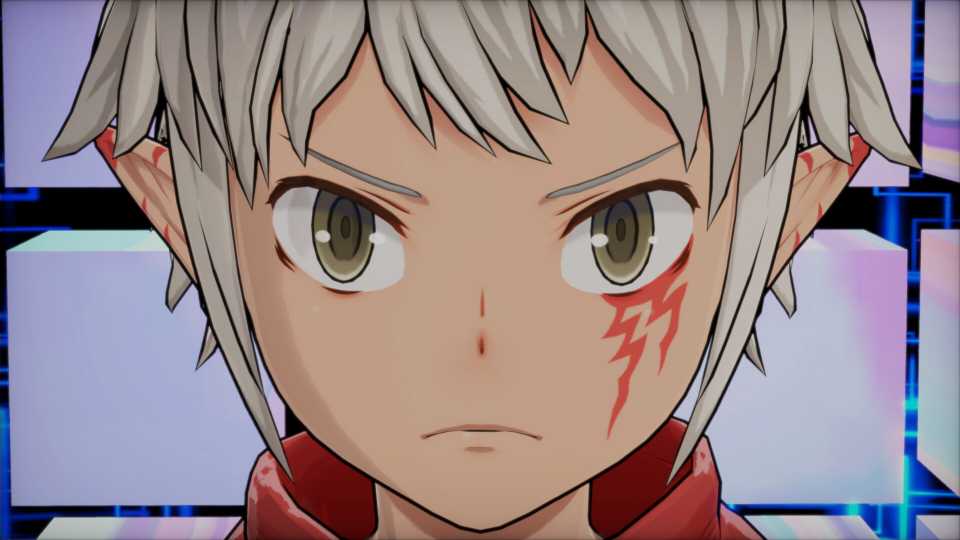
Otherwise, Digimon Story: Time Stranger’s plot concerns an agent of the Special Investigation Bureau ADAMAS, the protagonist, jumping between two points in time as well as Earth’s Tokyo and the Digital World: Iliad. Boasting over 450 Digimon species in Digimon Story’s largest roster ever, Time Stranger is also aiming to be the largest Digimon game ever in every sense of the term. Such ambitions wouldn't be possible without decades of Digimon games backing them up, including a full decade of Media.Vision working on Digimon Story. Fittingly, there are still plenty of elements from those older titles that shine through.
Digimon World Was What Started It All
Digimon owes its ongoing success to key products finding success at the right times, the first being the original Digital Monster virtual pet in 1997 and the second being Digimon World. Released in Japan on January 28, 1999, and arriving in North America in May 2000, Digimon World kicked off the self-titled subseries under a branch of Bandai itself. Digimon World was such a success that it sold over 250,000 copies before it even left Japan and went on to sell enough in North America and Europe to qualify for each region’s respective Greatest Hits and Platinum PS1 labels.
It's a good thing it did so well because Digimon World actually predates the original Digimon Adventure anime and prequel film by a little over one month. The game takes place in Digimon’s iconic File Island setting, with a young human boy being transported there to heal the maddened Digimon population and ultimately save the Digital World. With players able to essentially explore the entire island with Agumon or Gabumon at first, then other Digimon later depending on their choices, Digimon World was a foundational first foray into the Digital World at large.
Digimon World Had A Lot Of Kinks To Iron Out
Or at least, it is in retrospect. Digimon World garnered mixed reviews at the time due to its frustrating gameplay. Digimon World was basically as much of a pet simulator as it was an old-school RPG, and that meant moment-to-moment gameplay was dominated by cryptic and poorly translated pet mechanics. Raising a Digimon wrong and ending up with Numemon was a common experience for a reason. Combat was also frustrating, as it was mostly automated at first, with player input increasing as a Digimon's intelligence stat increased. Digimon World is worth revisiting for its sheer uniqueness, but the franchise wouldn't be where it is if it didn't experiment and begin to work out these kinks.
Digimon World 2 Pioneered A Lot While Doing Its Own Thing
“Roguelike dungeon-crawler” is not a term that modern Digimon fans likely associate with the series, but one showed up as early as Digimon World 2 on the original PlayStation. This game was actually announced at the same time as Digimon World 1 back in 1997, which may explain why both titles are so different. Released in Japan on July 27, 2000, and in North America on May 19, 2001, this is the first Digimon RPG with a turn-based battle system involving parties of three Digimon, even if it had to coexist with Digimon's only roguelike dungeon-crawling stint. It also introduced Digivolution, De-Digivolution, and DNA Digivolution fusion as a central focus in managing one’s team.
All of that may have been a huge step towards defining what Digimon Story would eventually become, but Digimon World 2 had too many flaws and eccentricities for it to see much credit. For one, many of the first World’s frustrations involving poor explanations were replaced by randomized shortcomings coupled with design oversights. Coming to grips with the odd leveling system is mandatory, and, eventually, even making story progress can be RNG-bottlenecked. This game’s merged human-and-Digimon setting is interesting enough to revisit and fans of Mystery Dungeon games may already be able to tolerate its flaws, but Digimon World 2 is ultimately a stopover on the way to better things.
Digimon World 3 Is The Prototype Of Digimon Story
The second Digimon World was an interesting, if flawed, game that could be used as the basis for a more successful modern Digimon roguelike, but the RPG elements it introduced were refined and remixed in Digimon World 3 and would go on to shape Digimon's modern years. Released mid-2002 and co-developed by Boom Corp., this entry opted for a JRPG approach similar to other PlayStation RPG hits like Final Fantasy 7 and Legend of Dragoon. It didn’t boast the same writing chops as those titles, but it did boast a similar epic adventure and more conventional RPG mechanics, broadening its appeal.
Set in the virtual world of the fictional MMO Digimon Online, Digimon World 3 was made up of the series’ first sprite-based overworld and one-on-one battle screens with full 3D models. Both styles are well-remembered for being gorgeous, surpassing even the acclaimed visuals of prior PS1 Digimon games and rendering the 56 playable Digimon and even larger enemy Digimon cast in stunning detail. Unfortunately, Digimon World 3 was only a little better received than its World fellows, with fans and critics alike decrying how slow it was on top of an excessive amount of forced grinding. It sold well for its price, but Digimon World 3 was merely a prelude to later Digimon RPGs. In this phase, Digimon was still very much laying the foundation.
Digimon World 4 Was A Bizarre Diversion
Those RPGs will have to wait, however, because Digimon World’s first entry on Nintendo GameCube, PlayStation 2, and Xbox is completely different from any other game in the franchise. Digimon World 4 is a co-op action RPG hack-and-slash in the vein of Final Fantasy Crystal Chronicles and was released in 2005 to the same middling reviews the series usually saw. This time, it was because the game was generally underwhelming, with even fans admitting that it’s a good game but not a good Digimon game. With only four Digimon unlocked at first and just as many regions to fight through, it’s a compact curiosity whose only development of note is the introduction of non-Digimon enemies.
Digimon World Isn't All Numbered Titles
More Digimon World games exist, but they don’t have the impact of the main Digimon World titles. Digimon World: Digital Card Battle was a card-based game released in Japan in 1999, and Digimon World: Digital Card Arena, localized as Digimon Digital Card Battle, was released globally over the next three years. Another Japan-only game taking the original Digimon World’s approach to monster-raising called Pocket Digimon World launched in June 2000 and gained three Battle Disc expansions in the next eight months. Four other games gained the “World” subtitle due to its dominance in North America, but of these, Digimon World Data Squad and Digimon World Championship were standalone titles, while Digimon World, DS, Dawn, and Dusk were actually the beginnings of Digimon Story. This is where the foundation began to shift in earnest and the strengths of the franchise were put under the spotlight.
Digimon World Re:Digitize and Digimon World: Next Order Defined Digimon World’s Identity
But before Digimon Story can be covered in earnest, its rise to power as Digimon’s dominant game series was actually interrupted by Digimon World’s sudden return. Digimon World Re:Digitize was launched on the PSP by developer tri-Crescendo in July 2012, and its updated 3DS port Digimon World Re:Digitize Decode came out roughly a year later. These games’ claim to fame was their return to the original Digimon World’s focus on virtual pet mechanics with AI-driven action-RPG battles on the side, and they also marked the first time that Cyber Sleuth and Time Stranger’s character designer Suzuhito Yasuda brought his signature style to Digimon’s humans.
Yasuda would sit out the 2016 Digimon World: Next Order for the PlayStation Vita, but PAL and North American regions would finally get in on the Digimon World revival with Digimon World: Next Order International Edition in 2017 on the PS4, and later on PC and Nintendo Switch in 2023. The International Edition boasted not only 232 partner Digimon but the first English dub that Digimon games had seen in years, something which Digimon Story has lacked so far. With a revival of the original World’s more open navigation and the addition of a second partner Digimon to raise and command, Next Order has solidified Digimon World’s distinct role in the franchise.
Digimon World DS Marked The Transition To Digimon Story
It’s good that Digimon World got a few more chances to revisit the virtual pet formula it started with because Digimon’s “main” line of video games was already shifting gears. Back in 2006, Bandai released Digimon Story, localized as Digimon World DS, for the Nintendo DS system, and unknowingly kicked off Digimon RPGs’ most prosperous era. Just by comparing the review scores and general sentiments surrounding Digimon Story’s humble beginning to the Digimon World series’ reception, it’s apparent that Bandai stumbled onto a winning formula in this game that is still carrying the Digimon Story line to this very day.
Specifically, that formula is Digimon World 3’s JRPG format, with some improvements and a few battle tips from Digimon World 2. The story still isn't up to par with the Cyber Sleuth games or even Next Order, but it's slowly getting more ambitious. More importantly, Digimon World DS is where Digimon Story began solidifying its mechanics, both through more complicated evolution paths involving 239 Digimon and in combat. Teams of up to three Digimon on each side have returned, and both DS screens are made use of to give players a look at the turn order, enemy Digimon’s battlefield positions, and a closer look at the impressive sprite art that all the DS games are composed of.
Digimon World Dawn and Dusk Tried A Pokemon Twist
This approach would be refined across the following Digimon RPGs, starting with Digimon Story Sunburst/Digimon World Dawn and Digimon Story Moonlight/Digimon World Dusk. Released for Japan and North America in 2007, this DS entry took a page out of its lifelong rival Pokemon's playbook and released two versions of itself to encourage partner Digimon trading, with the shared species total rising to 397. This also had the unintended side effect of jacking up experience requirements for some of the stronger Digivolutions, contributing to fans pointing to the dual game system as this entry's ironic worst feature. Otherwise, Dawn and Dusk are solid refinements of what Digimon World DS started.
Digimon Story's Unlocalized Games
Japan had a couple more DS Digimon Story entries that never made it elsewhere, as Digimon Story: Lost Evolution and Digimon Story: Super Xros Wars Red and Blue were both further refinements of Digimon Story's gameplay. Lost Evolution was released in 2010 with 314 Digimon, while the series’ last dual release came in 2011 with a combined 393 Digimon. Notably, although various Digimon games have adapted anime seasons or included characters from elsewhere in the Digimon franchise, Super Xros Wars is the only instance of an official Digimon World or Story game directly adapting the anime, with Xros Wars being the season in question.
Digimon Story: Cyber Sleuth Was Where Digimon Story Hit Its Stride
The game side of the Digimon franchise has long had the problem of lacking a “big hit” for its fanbase to rally around. Digimon Story: Cyber Sleuth didn’t entirely succeed at becoming one, but with it, its re-release, and its sequel pulling a combined 2.5 million sales by March 2025, it’s the closest a Digimon game has come. Arriving in Japan on the PlayStation Vita in 2015 and in other regions on PS4 as well in the following year, Digimon Story: Cyber Sleuth seems like another humble Digimon title on the surface, but it turned Digimon on its head.
Cyber Sleuth’s claim to fame was pivoting to focus on older demographics, introducing a much more ambitious story that included frequent mature elements. There was even an original antagonist faction, called the Eaters, that was narratively and visually distinct from Digimon themselves. Layering in a streamlined version of Digimon Story’s combat and Digivolution, a Digital World aesthetic that recalled the famous Our War Game OVA, adapted into Digimon: The Movie, and employing Danganronpa’s Masafumi Takada as the composer, Digimon Story: Cyber Sleuth got a lot right. Its handheld origins and low budget held it back and contributed to a rough translation with no vocal dubbing efforts, but there’s no doubt that Digimon was back in a big way.
Digimon Story: Cyber Sleuth - Hacker’s Memory Kept The Train Rolling
Following up Cyber Sleuth was Digimon Story: Cyber Sleuth - Hacker’s Memory, a midquel that is considered even better than its predecessor by those who know about it. Sales of Hacker’s Memory likely suffered due to consumer confusion over Digimon World: Next Order International Edition releasing before it and being so different from Cyber Sleuth, but at least this game’s December 2017 launch in Japan included the Vita and the PS4 and its global release only came a month later. Both RPGs reached their best form when Digimon Story: Cyber Sleuth Complete Edition brought both Cyber Sleuth games to Nintendo Switch and PC worldwide in October 2019, while also backporting the mechanical changes and extra Digimon from Hacker’s Memory back into the first game.
Before Complete Edition, Hacker’s Memory enjoyed various advantages over its predecessor like the aforementioned jump from 249 Digimon species to 341 and an increased number of enemies in battles, but the big winner was the story. Hacker’s Memory isn’t just a great companion to Cyber Sleuth’s events; it tells its own, more personal narrative that drills down on its original protagonist more than other Digimon titles have. There’s even a surprise Digimon World Dusk crossover to complement the Digimon World Re:Digitize Decode characters that appeared in Cyber Sleuth, so, while remaining low budget, Hacker’s Memory is still very much worth experiencing.
Where Digimon Story: Time Stranger Fits In Its Franchise’s History
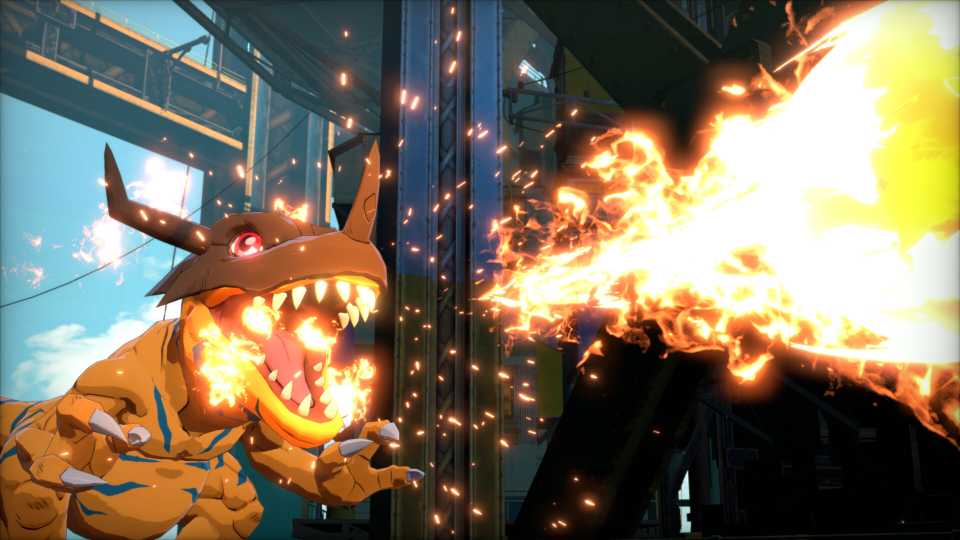
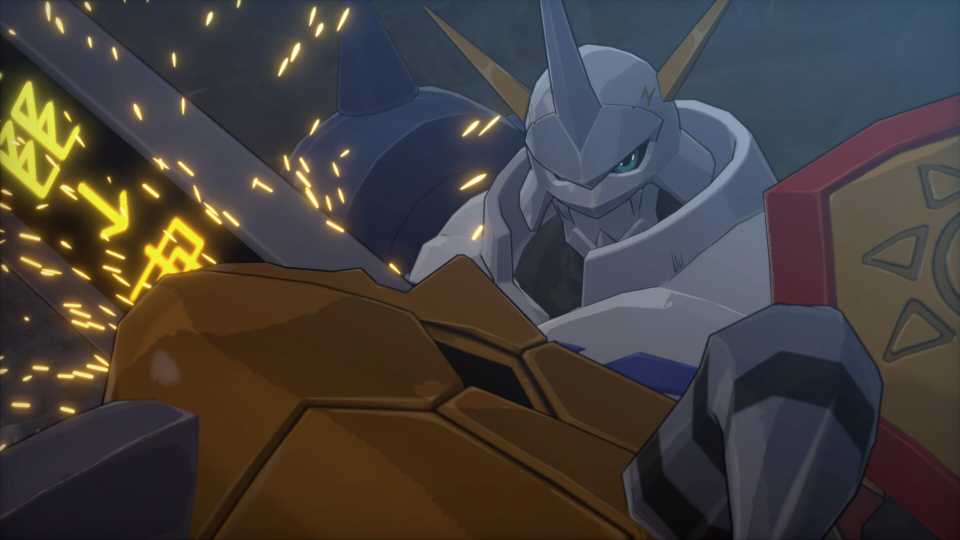
That brings the focus back to Digimon Story: Time Stranger. Nitty-gritty mechanical details are currently unknown, but it has trumped every other Digimon game’s roster with its 450+ species count. One other improvement is that this will be the first Digimon Story title not native to handheld hardware. Not only does that mean that Digimon is returning to Xbox hardware for the first time outside of Digimon Survive in years, but it also means that the game's visuals and area design can be more ambitious than even what the Cyber Sleuth games attempted. Footage of the player using Digimon to sprint, swim, and fly has already shown the fruits of this labor.
Right now, Digimon Story: Time Stranger is on track to be the best Digimon RPG yet, assuming it doesn't run into any major writing or mechanical foibles along the way. The notion that Time Stranger’s world is already on the brink of collapse, multiple time eras are involved, and that the player avatar who isn't selected will receive more characterization as the player’s operator shows a lot of promise, as does its high potential for an English dub based on rumors. Digimon Story: Time Stranger might not mark the moment that Digimon games hit the big time, but it should be able to raise their bar of quality to the highest it's ever been.




- Released
- October 3, 2025
- ESRB
- Teen / Fantasy Violence, Mild Language, Suggestive Themes, Use of Alcohol
- Developer(s)
- Media.Vision
- Publisher(s)
- Bandai Namco Entertainment






WHERE TO PLAY



- Genre(s)
- JRPG, RPG, Creature Collector
