


"Action RPG," Crimson Desert has often been called, despite developer Pearl Abyss refraining from putting the RPG label on it. The definition of "RPG" has become increasingly muddled over the years, as games seemingly only need to have RPG elements now for them to be considered a new entry in the genre. Naturally, that has led to plenty of confusion about what a game really is if it claims the RPG label, and for that reason, Crimson Desert's developer has explicitly stated that it doesn't describe the game as one. During a recent breakdown of the game during Episode 457 of the Dropped Frames podcast, PR director Will Powers stated that, while there are an "absolute ton of RPG elements...the developers don't want to call this an RPG."
The reason for that hesitancy ultimately boils down to Crimson Desert's skill and leveling systems, as well as the connotations that are generally associated with the RPG genre. "With the term RPG comes a lot of connotations around a character creator," Powers said, "specifics [like] experience points and leveling systems and stuff like that. Those, as players would expect them, are absent from this game." As such, Crimson Desert falls more on the action-adventure side of the aisle than action RPG, and its character growth and skill systems are a direct result of that.
Crimson Desert's Non-Traditional Leveling System
As Powers strongly implied, Crimson Desert does not have progression systems one might find in a traditional RPG. There is still character growth in the game, but it isn't fueled by the XP-based leveling mechanics of the RPG genre. Instead, character power in Crimson Desert increases as players explore the world of Pywel, find important items, defeat bosses, and take advantage of stat enhancements provided by weapons and armor.
Who’s That Character?

Identify the silhouettes before time runs out.
Identify the silhouettes before time runs out.
How Leveling Works in Crimson Desert
- NO TRADITIONAL LEVELS — The game does not feature XP gains or level bars at all.
- EXPLORATION-DRIVEN GROWTH — Character power increases from exploration and discovery rather than grinding enemies.
- ARTIFACT STAT BOOSTS — Abyss Artifacts boost core stats like health and stamina, replacing level growth.
- GEAR PROGRESSION MATTERS — Weapons and armor upgrade core attributes, influencing strength.
- BOSS AND QUEST REWARDS — Defeating big foes and completing major tasks yields meaningful progression items.
Unlike traditional RPGs where players gain experience points and level up their character, Crimson Desert avoids the XP/leveling system entirely. There are no defined character levels that automatically increase through combat or quests, so players don't "level up" in the normal RPG sense. To fill that void, Crimson Desert puts its world front and center, inviting players to explore it if they want their character to become stronger. Ultimately, that makes character progression in the game more emergent, with players deciding how they grow, as it depends on what they do and where they go.

That being said, simply wandering around the world won't get players anywhere. Rather, they'll need to keep an eye out for valuable items known as Abyss Artifacts, which are directly tied to stat growth in Crimson Desert. These artifacts can be found in the possession of powerful bosses, hidden in discreet areas across Pywel, and even lying within the Abyss itself. Upon acquiring Abyss Artifacts, players can spend them on state enhancements like health and stamina in the game's skill trees. This system effectively replaces the XP and skill point-based progression systems of typical RPGs, meaning the primary "grinding" players will need to do is exploration.
Unlike traditional RPGs where players gain experience points and level up their character, Crimson Desert avoids the XP/leveling system entirely.
Gear also plays a significant role in character growth in Crimson Desert, and players can buy, find, and craft equipment to give them a greater advantage in combat. Their gear can then be upgraded to improve its stats, and materials for doing so can be found through mining, hunting, defeating bosses, completing quests, and uncovering them in various locations across Crimson Desert's open world of Pywel. Equipment can also be customized with extra stats and special effects, encouraging experimentation but allowing for a more personalized approach to progression than even the XP-based character growth of an RPG might offer.
Crimson Desert's Skill System Explained
Because Crimson Desert avoids using traditional leveling mechanics as a means of progression, its skill system is also affected. In most RPGs, players earn experience, level up, and then use skill points they earn after leveling to unlock new abilities for their character. In Crimson Desert, however, with character growth broadly tied to exploration, skills are primarily unlocked as players venture off the beaten path, find Abyss Artifacts, defeat powerful bosses, and even learn those abilities from the world around them.
How Skills Work in Crimson Desert
- ARTIFACT-BASED UNLOCKS — Skills gained by finding Abyss Artifacts scattered throughout the world.
- LEARN FROM THE WORLD — Some abilities are earned by watching NPCs use them.
- COMBO-FOCUSED SYSTEM — Skills emphasize combat chaining and player choice, not static presets.
- GEAR SYNERGY — Many skills interact with weapon types and enhancements for varied playstyles.
Just as Abyss Artifacts can be used to enhance a character's core stats in Crimson Desert, players can also use them to unlock new skills. This makes these items more valuable than just about anything else in the world if players want to make their character a powerhouse to be reckoned with and create avenues to more distinct playstyles.
With character growth broadly tied to exploration, skills are primarily unlocked as players venture off the beaten path, find Abyss Artifacts, defeat powerful bosses, and even learn those abilities from the world around them.
Skills aren't only acquired through Abyss Artifacts, though, as players can also learn them by observing NPCs firsthand who are scattered throughout Pywel. It's currently unclear how players will be notified once a skill can be observed, but considering it is one of the primary ways players can unlock new abilities outside of Abyss Artifacts, Crimson Desert should make it evident when it's possible.

Another way players can acquire new abilities in Crimson Desert is by defeating challenging bosses and equipping their gear. Upon doing so, players can potentially learn that boss' signature abilities or gain unique effects and other bonuses, making seeking out those encounters all the more worth it in the end. These three methods for unlocking new skills reinforce Crimson Desert's emphasis on freedom in playstyle, whether players prefer to make their journey more explorative or combative.
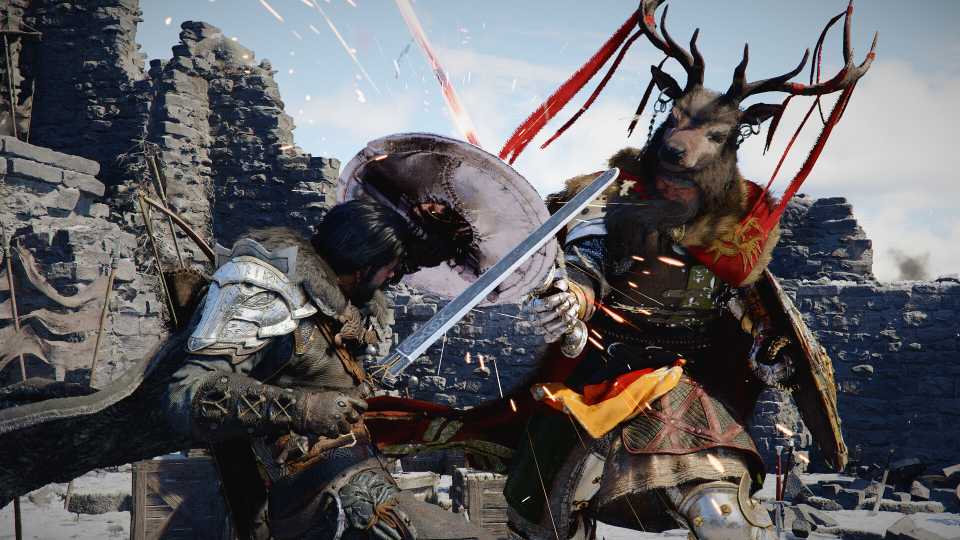
The player's combat skills and playstyle in Crimson Desert will also be affected by which weapon they are using—like sword and shield, spears, greatswords, axes, and various ranged weapons.
In the end, Crimson Desert really isn't an RPG by definition. Even so, what matters is that its progression systems clearly reject the genre's most recognizable pillars and replace them with something more world-driven and discovery-based. There are no experience bars to fill or arbitrary levels to chase, only the tangible rewards of exploration, preparation, and mastery. Strength comes from where players go, what they find, and which battles they choose to fight.




 OpenCritic Reviews
- Released
- March 19, 2026
- ESRB
- Mature 17+ / Blood, Drug Reference, Intense Violence, Strong Language
- Developer(s)
- Pearl Abyss
- Publisher(s)
- Pearl Abyss







WHERE TO PLAY




- Genre(s)
- Action, Adventure, Open-World, Exploration
