


Since the days of the NES, games have been teleporting players to fantastical realms, granting them the ultimate escape from reality. Although not the only genre to bring to life fully-fleshed-out universes, open-world games are arguably best-equipped to craft lively environments, cities, and kingdoms.
Cliché as it might be to say, an open-world that feels alive is something truly special that only a handful of titles can claim to have accomplished. Just to be clear, a game can still be fantastic even if its world does not feel particularly alive. However, certain titles emphasize this aspect, crafting realistic NPCs and an ecosystem that suggests the world continues even when the player is not around.
What makes an open-world feel alive? The answer will likely vary from person to person, but it revolves around interactivity and reactivity. NPCs often have routines or seem like they have lives outside the player's bubble. The player's actions do not happen in a vacuum either, with the world and its inhabitants remembering them beyond mainline scripted events.
Honorable Mentions
- Assassin's Creed Odyssey
- Cyberpunk 2077
- Kenshi
- The Legend of Zelda: Tears of the Kingdom
- The Outer Wilds
- Shenmue 1 & 2
- Sleeping Dogs
- Subnautica
- The Witcher 3
8 Special Mention: S.T.A.L.K.E.R.: Shadow of Chernobyl
The Most Alive World (That Is Technically Not Open-World)

S.T.A.L.K.E.R.: Shadow of Chernobyl
- Released
- March 20, 2007


WHERE TO PLAY


- Developer(s)
- GSC Game World
- Genre(s)
- FPS, Survival Horror
- Platform(s)
- PC, PlayStation 4, Xbox One

S.T.A.L.K.E.R. Is arguably the most consistent franchise for creating worlds that feel alive. That said, finding an entry that 100% fits this topic is easier said than done. S.T.A.L.K.E.R.: Shadow of Chernobyl's A-Life technology was and still is ground-breaking, ensuring that NPCs and monsters can move fairly naturally without being tied to scripts. However, the game is arguably not fully open-world.
S.T.A.L.K.E.R. 2: Heart of Chornobyl expands greatly on a lot of the original game's ideas, all the while introducing a massive map that can be explored without many limitations. While very good overall, the world has plenty of spots that are just empty without being immersive. Call of Pripyat also has a somewhat similar issue, albeit on a smaller scale.
S.T.A.L.K.E.R.'S mods like Anomaly arguably have the most "alive" worlds.
7 Yakuza 0 (The Games In General)
Small But Dense Open-Worlds

Yakuza 0
- Released
- January 24, 2017


WHERE TO PLAY


- Developer(s)
- Ryu Ga Gotoku Studio

Sega's Yakuza has been producing gold for decades by this point, but the series has been particularly great since 2015. That year marked the release of Yakuza 0, a fantastic prequel that launched the IP into the stratosphere in terms of international popularity. Nowadays, a new release is a huge deal, regardless of whether it is a mainline sequel or a spin-off.

The Mainline Yakuza/Like A Dragon Series, Ranked
The mainline Yakuza series has some truly awesome games. These are all of them, ranked.
Unlike so many open-world games, Yakuza prioritizes small urban cities that can be largely traversed in a few minutes. Based on real Japanese locations, the franchise has a knack for crafting tiny worlds that are packed with so much content that every square meter has a story to tell. Although consisting of two cities, Yakuza 0's Kamurocho is particularly impressive in its sheer density of NPCs, restaurants, shops, random encounters, mini-games, and side stories. The latter is particularly crucial to making Yakuza 0 feel like a living world, as players get a first-hand look at the daily struggles of so many different citizens.
Now, it should be said that Yakuza's worlds are filled with interactive content, but are not reactive outside those moments.
For example, if Kiryu engages in a vicious brawl within a fast food restaurant, the employees will not acknowledge anything if he buys something a second later. This aspect can make the world feel very "gamey," but everything else makes up for it.
6 Watch Dogs 2
Highly Interactive World (That Can Be Hacked)

Watch Dogs 2

- Released
- November 15, 2016
WHERE TO PLAY




- Developer(s)
- Ubisoft Montreal
- Genre(s)
- Open-World, Action, Adventure
Watch Dogs is kind of an odd franchise. All three games are decent or great, but the series failed to live up to its potential. The original title was arguably a letdown that couldn't match its hype, while Legion buckled under the weight of an ambitious mechanic. Caught in the middle is Watch Dogs 2, a sequel that transposes its predecessor's high interactivity into a far more colorful and lively city.
San Francisco is an absolute joy to explore, and Watch Dogs 2's hacking means that players are encouraged to constantly interact with the city and its NPCs. Even putting aside all the random chaos that hacking can trigger, San Francisco is filled with people who are believably going through their day, all of whom can have their lives temporarily ruined by the player.
5 Ghost Of Tsushima
As Immersive As Players Want It To Be

Ghost of Tsushima
- Released
- July 17, 2020


WHERE TO PLAY
- Developer(s)
- Sucker Punch
- Platform(s)
- PC, PlayStation 4, PlayStation 5
The way somebody approaches an open-world game plays a significant role in determining how alive it feels. Along with several Ubisoft projects, Ghost of Tsushima is arguably the best example of this influence. Through the map's checklist system, the game gives players a lot of guidance on where to go, which can take away any sense of discovery. By jumping from one quest to another without pause, the world's organic nature is lost.
However, Ghost of Tsushima is fantastic at providing environmental direction and crafting random-feeling events, to the point that the map's markers can be largely ignored. While there is "empty" space, for lack of a better word, these areas of the map are typically gorgeous and filled with graphical touches that help enhance immersion. The Guiding Wind mechanic alone makes the world feel continuously alive, despite ultimately serving the same purpose as a directional arrow.
There is nothing wrong with sticking to map markers either, as it can be relaxing to just complete quests by going down a checklist.
4 Morrowind
A World That Just Makes Sense

The Elder Scrolls III: Morrowind
- Released
- May 1, 2002


WHERE TO PLAY

- Developer(s)
- Bethesda Game Studios
- Genre(s)
- RPG
- Platform(s)
- PC, Xbox (Original)
Morrowind is a bit of a special case. Compared to Oblivion or Skyrim, Morrowind's presentation of its world is understandably more stripped-down and stuck in place, lacking the dynamism that would come to define Bethesda's latter open-world masterpieces. For better or worse, NPCs will be found in the same place as they repeat the same few actions.
Yet, Morrowind feels oddly alive, arguably even more so than its (equally brilliant) sequels. The world is consistent, with nearly every part of the map making sense within the context of the larger society. Even if quite a few areas do not have all that much interactive content within them, it is believable that they would exist in this setting. The game has a few encounters that add an illusion of randomness, even though they are scripted. Even the fast-travel mechanic makes sense.
That said, Skyrim and especially Oblivion also have open-worlds that feel alive.
3 Gothic & Gothic 2
A World Defined By Its Characters
-
Checkbox: control the expandable behavior of the extra infoRating block community and brand ratings Image

Gothic
Display card tags widget Display card system widgetDisplay card community and brand rating widget Display card open critics widget Display card main info widgetSystems
 Display card main info widget end Display card media widget start
- Released
- November 23, 2001
- ESRB
- t
- Developer(s)
- Piranha Bytes
Display card media widget end 3 Images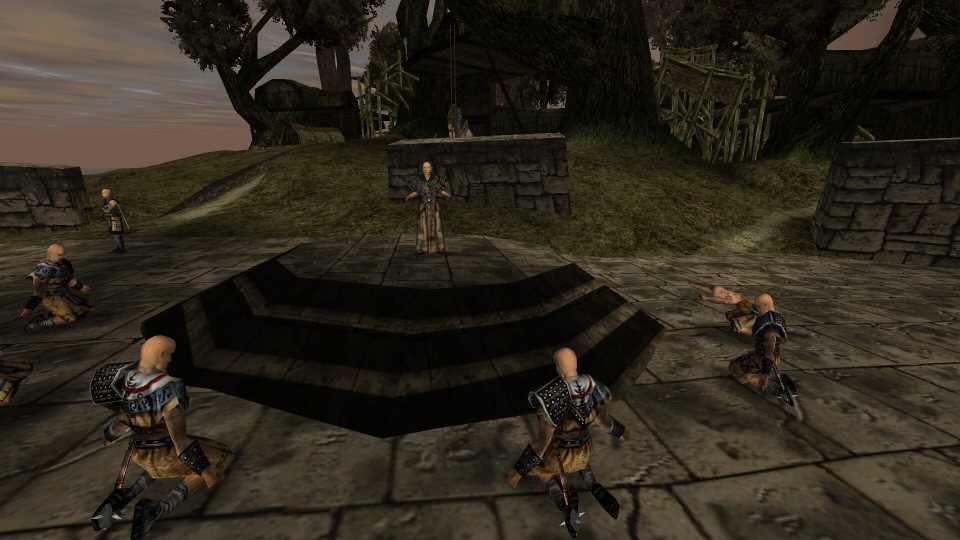
WHERE TO PLAY
DIGITAL -
Checkbox: control the expandable behavior of the extra infoRating block community and brand ratings Image

Gothic 2
Display card tags widget Display card system widgetDisplay card community and brand rating widget Display card open critics widget Display card main info widgetSystems
Display card main info widget end Display card media widget start- Released
- October 28, 2003
- ESRB
- m
- Developer(s)
- Piranha Bytes
Display card media widget endWHERE TO PLAY
DIGITAL- Genre(s)
- Action RPG
- Platform(s)
- PC


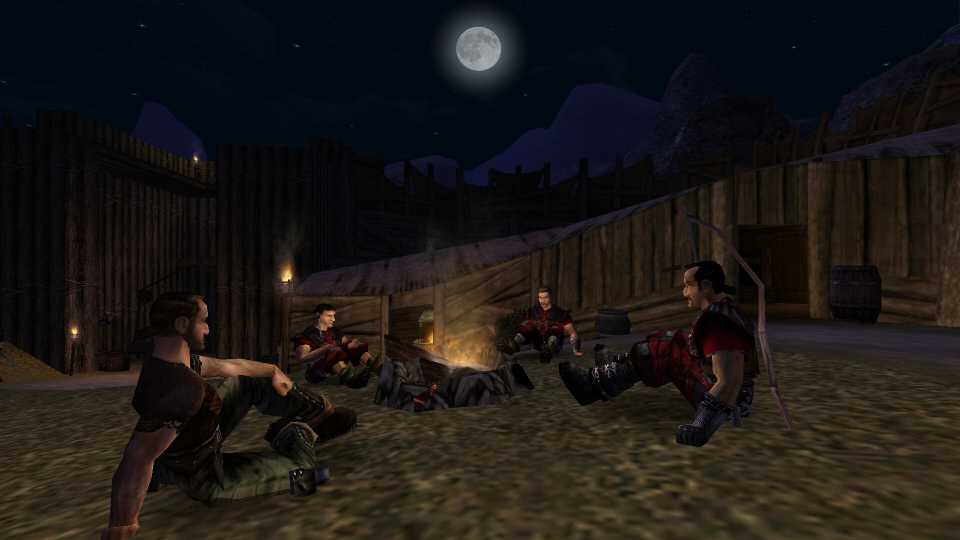
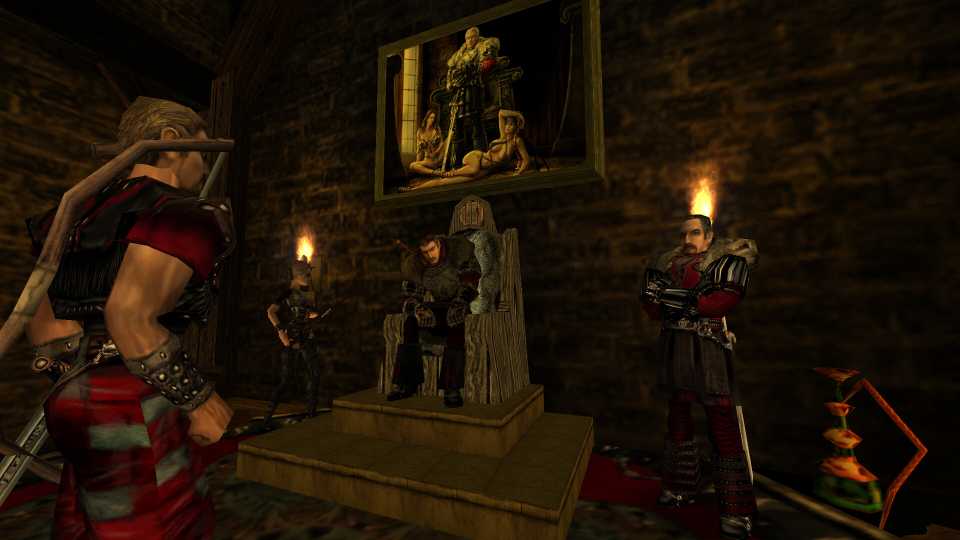
Compared to modern open-world games, Gothic and its sequel might not seem that impressive. They have very small maps, ugly visuals, and underwhelming gameplay, even by the standards of the early 2000s. Neither game has all that many epic or grand landmarks, and the first entry takes place almost exclusively in a self-contained prison mining colony.

Every Game By Piranha Bytes, Ranked
Piranha Bytes has experienced a mixed bag of success, to say the least. Here's how every game stacks up.
Most open-world games tend to prioritize their environments, but Gothic instead opts to focus exclusively on the characters who inhabit this universe. With a fantastic faction system and NPCs who adapt to the player's actions, Piranha Bytes created a moving society that felt 100% grounded in the overall story and setting. The NPCs do not only exist to give quests to the player, but they have long-standing goals that go beyond the protagonist's presence. They have relationships with each other and have routines. Even though all these elements are executed in a relatively simple way due to that era's available technology, their implementation should still be lauded.
2 Kingdom Come: Deliverance 2
An Authentic Medieval World

Kingdom Come: Deliverance II
- Released
- February 4, 2025
WHERE TO PLAY

- Developer(s)
- Warhorse Studios
- Genre(s)
- RPG, Action-Adventure, Open-World
- Platform(s)
- PlayStation 5, Xbox Series X, Xbox Series S, PC
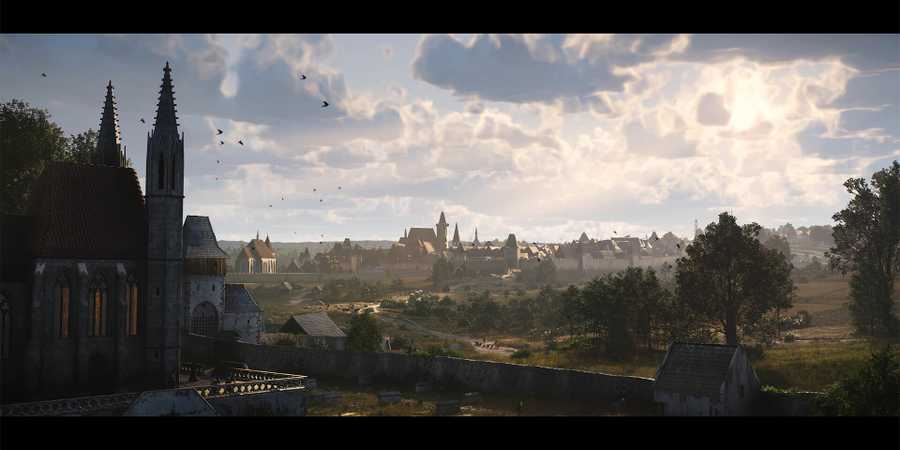
Following one of the most immersive open-world games of the 2010s, Kingdom Come: Deliverance 2 is bigger and better in nearly every single way. Somehow, Warhorse did the impossible, crafting a far more accessible sequel that is still as hardcore and dedicated to realism as its predecessor. KCD2's brilliance is simply easier to appreciate, as it is not buried under clunky combat, exhausting group fights, and a storyline that takes quite a while to pick up steam.
Historical accuracy is the name of the game, and that goes beyond just Medieval-era weapons and armor. Bohemia's towns are bustling with activity and interactions that have nothing directly to do with the protagonist, creating a lived-in open-world that does not revolve around the player (but reacts to them accordingly). The areas between cities are just as impressive, and NPCs have schedules they generally stick to. Even Henry's progression involves directly interacting with people who inhabit this world, rather than just leveling up stats.
1 Red Dead Redemption 2
A Living, Breathing Open-World

Red Dead Redemption 2
- Released
- October 26, 2018
WHERE TO PLAY
Red Dead Redemption 2 has its share of quirks that might push away some people. The combat is not particularly amazing, and Arthur's heavy movement can take some getting used to. The story, while overall brilliant, is very long and gets off to a slow start. For all its more polarizing aspects, RDR2's world cannot be faulted. It just feels real in a way that very few games can match.
Although it can be overdone at times, the game's dedication to authentically repeating Arthur's small and seemingly insignificant behavior helps immerse players fully in the protagonist's shoes. The campaign's story-driven nature also helps, as the focus is on experiencing Arthur's journey rather than crafting a unique one. The NPCs are also crucial, as not only do many of them have engaging stories, but they also react to Arthur in realistic ways that reflect their history with him.

Red Dead Redemption 2: Every Random Encounter In Saint Denis
There are countless random encounters in Saint Denis that players can hope to trigger in Red Dead Redemption 2, and here are all of them.