


Summary
- John Romero's games shaped fast-paced, moddable shooters with complex level designs and distinct personalities.
- Romero's influence on Hexen added intricate puzzle elements, non-linear maps, and unique character classes.
- From Wolfenstein to Quake to Doom, Romero's design philosophy revolutionized FPS gameplay and level design.
John Romero isn’t just a name etched into gaming history—he’s the guy whose fingerprints are all over the DNA of modern shooters, modding culture, and the very concept of level design as art. Co-founding id Software and co-creating DOOM would’ve been enough to cement his legacy, but his portfolio is deeper, weirder, and way more influential than most people realize.

15 Best Retro-Inspired FPS Games Ranked, According To Metacritic
The FPS genre is experiencing a retro revival of sorts, and here are 15 awesome new titles to check out for those nostalgic for 90s shooters.
Across a mix of genre-defining shooters and cult classics, Romero’s games have shaped what it means to play fast, die faster, and mod everything in sight. Here are the seven best titles that carry Romero's design touch—ranked not just by their fame, but by their raw creative impact.
7 Dangerous Dave
You Could Die Just From Playing Around In The Menu
|
Platforms |
PC, DOS, Apple II, iOS |
|---|---|
|
Released |
October 1988 |
|
Developer |
John Romero |
|
Genre |
Platformer |
Before the rocket launchers and lava-filled deathmatch arenas, there was Dangerous Dave—a scrappy little platformer built in 1988 while Romero was still working at Softdisk. The game looks simple, even by the standards of late-80s PC gaming, but it has something most early DOS platformers lacked: real personality. Dave, a red-hatted daredevil, traverses a house filled with spike traps, disappearing platforms, and killer wildlife—all while Romero slips in subtle touches that feel way ahead of their time.
The real charm of Dangerous Dave is how unforgiving it is without ever feeling unfair. There’s no coddling here, no tutorials—just trial, error, and a whole lot of quick reflexes. Considering it was written in Turbo Pascal with code borrowed and iterated on in future id Software tools, Dangerous Dave is practically the proto-Commander Keen, making it foundational to Romero's evolution as a game dev. It's a game that punishes recklessness and rewards experimentation, which, if players squint hard enough, kind of feels like the Romero design ethos in embryo form.
6 Hexen: Beyond Heretic
The Cleric’s Book Is Mightier Than The Rocket Launcher

Hexen: Beyond Heretic



- Released
- October 30, 1995



WHERE TO PLAY



- ESRB
- m
- Genre(s)
- FPS


Romero didn’t directly design levels for Hexen, but his fingerprints are all over its DNA. Developed by Raven Software using id’s DOOM engine and published by id Software, Hexen evolved from Heretic by cranking up the complexity and branching paths. What started as a dark fantasy shooter became something more intricate—almost a puzzle box of a game. And that complexity? A lot of it came from Romero encouraging Raven to stretch what the engine could do.

5 Best First-Person Shooter Games With Class Systems
Some first person shooters revolutionized the multiplayer genre with their class systems. Here are the some of the best.
Players could now choose between three distinct classes—Fighter, Cleric, and Mage—each with different weapons, strengths, and puzzle-solving approaches. This meant one person’s run through a level might feel totally different from another’s, making Hexen feel less like a linear shooter and more like a labyrinthine RPG-lite experiment. Hubs, teleporters, and puzzles that stretched across multiple levels were introduced, redefining how FPS maps could be structured. Romero’s role as a producer might’ve been one step removed, but his push for ambitious, non-linear level design clearly shaped the final product.
5 Heretic
When A Shotgun Meets Sorcery

Heretic
- Released
- December 23, 1994
- ESRB
- t
- Developer(s)
- Raven Software
- Genre(s)
- FPS

Here’s where things start to get more magical—literally. Heretic, released in 1994 and developed by Raven Software under Romero’s supervision, brought fantasy into the DOOM mold. Players weren’t blasting demons on Mars anymore. They were an elven mage named Corvus, casting spells and dodging flaming skulls in a corrupted medieval realm.
Romero helped Raven adapt the DOOM engine for inventory management, flying enemies, and looking up and down—none of which DOOM supported natively. That’s why Heretic doesn’t just feel like a reskin but an evolution. The world was dripping with atmosphere, with levels built around flooded cathedrals, cursed dungeons, and cryptic runes that looked like they’d been scrawled in blood and spite.
The arsenal, from the dragon claw to the hellstaff and every weapon in between, was distinct, loud, and dripping in dark fantasy flavor. Heretic was where Romero’s love for fast-paced action met Raven’s world-building, creating a strange but brilliant hybrid that players still mod and speedrun to this day.
4 Wolfenstein 3D
Mein Leben!

Wolfenstein 3D


- Released
- May 5, 1992
WHERE TO PLAY
- ESRB
- m
- Genre(s)
- FPS

When Wolfenstein 3D dropped in 1992, it didn’t just kick the doors open on a genre—it kicked them open with an MP40 and screamed in digitized German. It’s easy to forget how radical this game was at the time. First-person games had existed in small pockets before, but nothing played like Wolfenstein. It was fast, violent, unapologetically pulpy, and designed by Romero with a level of fluidity that left everything else in the dust.
From the maze-like layouts to the power-up placements to the cathartic “kill everything in the room” pacing, Romero’s level design made every floor of Castle Wolfenstein feel like a murder playground. And the enemies? Nazis, mutants, and a chaingun-wielding mech-Hitler. Subtle it was not, but it didn’t need to be.

Every Wolfenstein Game, Ranked
Wolfenstein is a franchise that has often played second fiddle to others in the gaming industry, but it deserves recognition for some of its games.
Romero’s code contributions—like smooth movement, optimized raycasting, and cleverly hidden secrets—laid the groundwork for the FPS genre’s entire identity. Without Wolfenstein 3D, DOOM wouldn’t have been made. That’s not just legacy—that’s architecture.
3 Doom 2: Hell On Earth
Twice The Shotguns, Twice The Trouble

Doom 2
- Released
- October 10, 1994

WHERE TO PLAY


- ESRB
- M For Mature 17+ // Blood and Gore, Violence
- Genre(s)
- FPS
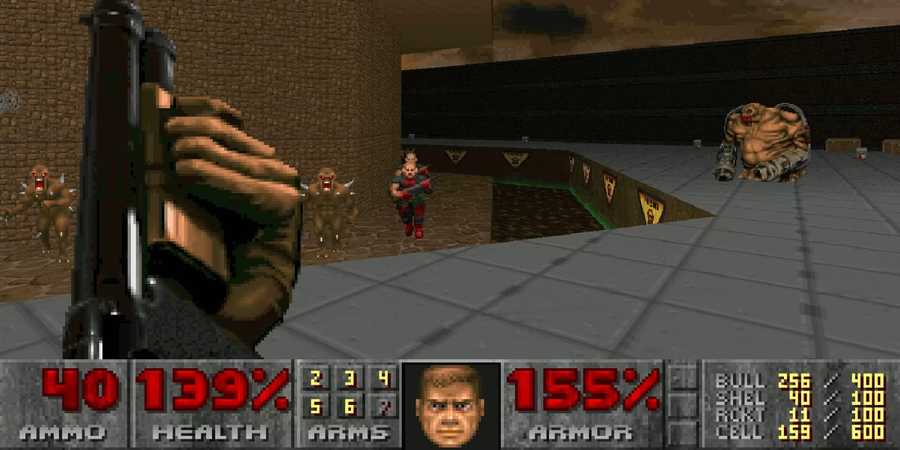
Doom 2 didn’t reinvent the wheel—it just strapped a chaingun to it. Building directly on the bones of DOOM, the 1994 sequel is bigger, meaner, and more crowded with demons than ever before. While the engine mainly stayed the same, Romero and the rest of the team focused on dialing everything up, especially the level design.
Romero’s contributions included Circle of Death (MAP11) and Nirvana (MAP21), both pushing players into brutal arena fights and ambushes that punished tunnel vision. The Super Shotgun debuted here, and it’s still considered one of the most satisfying weapons in FPS history—an absolute hand cannon that made even Hell Knights flinch.
The levels were more vertical, more interconnected, and more punishing. And unlike the Martian corridors of the first game, Doom 2 spilled its demons onto Earth, adding urban decay and twisted versions of human cities into the mix. It felt rawer, dirtier, and somehow even more metal. For many fans, this is where Doom’s legacy truly hardened into legend.
2 Quake
The Slipgate That Launched A Thousand Mods

Quake
- Released
- May 22, 1996

WHERE TO PLAY




- ESRB
- M for Mature: Blood and Gore, Violence
- Developer(s)
- id Software
- Genre(s)
- First-Person Shooter
When Quake arrived in 1996, it didn’t just bring id Software into the 3D era—it rewired the entire FPS genre. Full 3D models. Real-time lighting. LAN and internet multiplayer. And a grungy aesthetic that fused Lovecraftian horror with tech-heavy industrial design. Romero’s design philosophy was all over Quake, especially in its brutal difficulty spikes, wide-open spaces, and secrets that rewarded daring movement.
Despite tensions during development and Romero’s eventual departure shortly after launch, his influence on the original level design and multiplayer concepts helped solidify Quake as more than a tech demo. It was a culture shift. Deathmatch mode exploded in popularity, becoming a staple of LAN parties and a precursor to eSports. Modding also exploded—Team Fortress started life as a Quake mod.
Romero’s famously unfinished fifth episode, Sigil, was later released in 2019 as a spiritual continuation of his vision. This brought things full circle for fans who remembered rocket-jumping through dimly lit corridors and wondering if they’d just seen Cthulhu blink.
1 DOOM (1993)
One Shot. One Sound. A Million Clones

Doom (1993)

- Released
- December 10, 1993

WHERE TO PLAY

- ESRB
- M for Mature: Blood and Gore, Intense Violence, Strong Language
- Genre(s)
- First-Person Shooter
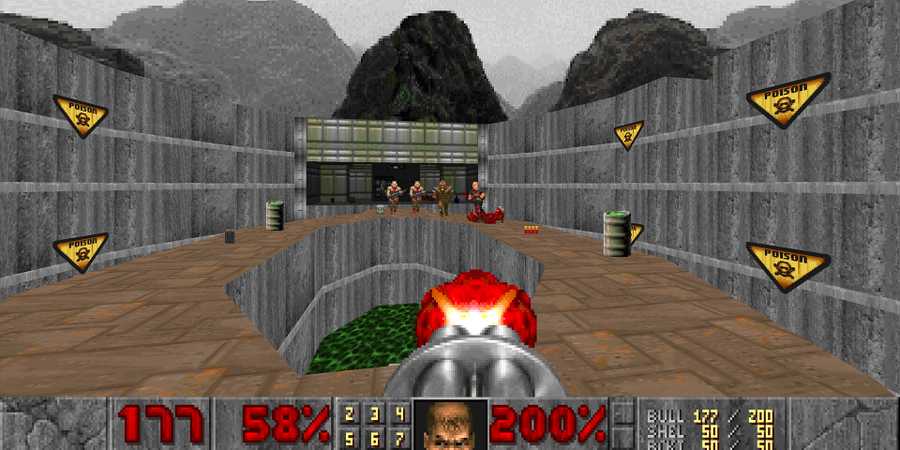
This is where everything snapped into place. DOOM wasn’t the first FPS, but it’s the reason FPS games became the blueprint for 90s gaming. The shotgun blast sound. The frantic pace. The demonic level design that looked like Dante met an industrial metal band. It all came together here, and Romero’s fingerprints are on every wall.
From E1M7: Computer Station to E2M4: Deimos Lab, Romero’s levels weren’t just violent—they were puzzle boxes, full of fake exits, collapsing floors, and secrets tucked behind misaligned walls. Everything taught the player something. Enemy placement wasn’t random. Rooms were designed to flow like combat arenas, with rhythm, pressure, and escape valves.
Multiplayer deathmatch, texture-based storytelling, skyboxes that hinted at something worse waiting outside—all of this came from DOOM. Romero’s insistence on speed, flow, and player expression turned a shareware experiment into a global phenomenon. And the WAD modding scene? That legacy of giving players the tools to remix the game came straight from Romero’s own passion for tinkering.

34 Brutal Games Like Doom You Need To Play
Doom may be one of the most brutal games out there, but for anyone looking for a similar experience, any of these games would be a great choice!